

Is your phone secretly stealing the sleep you think you’re getting?
Blue light from phones, tablets, and TVs tells your brain it’s still daytime, so you feel wired instead of sleepy and it can take 30 to 60 minutes longer to fall asleep.
This piece breaks down how evening blue light delays sleep, shifts your internal clock, and makes rest lighter and more fragmented.
It also gives simple, doable steps you can try tonight to protect your sleep.
Immediate Sleep-Related Effects of Blue Light Before Bed
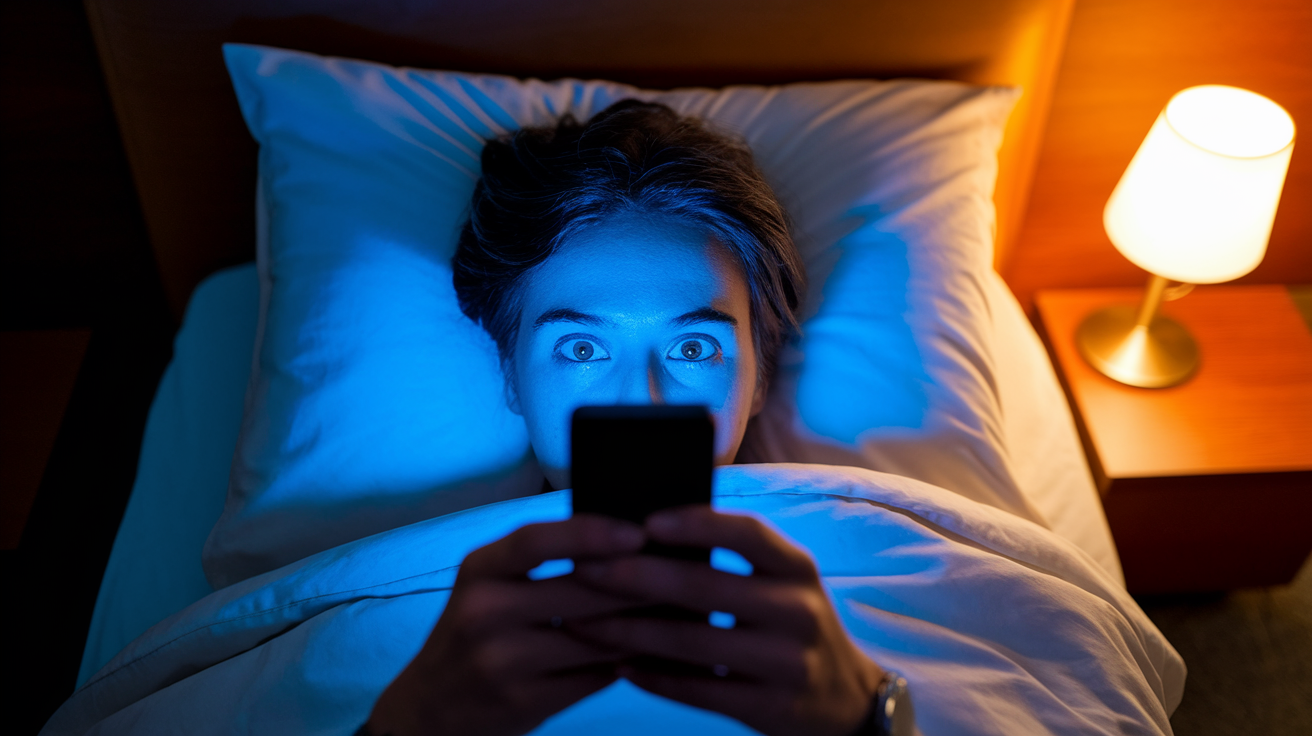
When you scroll through your phone or watch TV right before bed, you’re probably going to feel more alert than relaxed. Blue light from screens keeps your brain stuck in “daytime mode,” making it harder to wind down even when you’re exhausted. Instead of easing into sleep, a lot of people notice their thoughts stay active, their eyes feel more awake, and the usual drowsy signals just don’t show up.
The most obvious outcome? How long it actually takes to fall asleep once you’re in bed. Studies show that evening screen use can delay sleep onset by 30 minutes to over an hour. You might lie there awake, feel restless, or wake up repeatedly during the night. Your overall sleep quality drops, so even if you get seven or eight hours in bed, you wake up feeling unrested.
Smartphones, tablets, laptops, desktop monitors, LED and fluorescent lights, and flat screen TVs all put out blue rich light. Timing matters most. Using these devices in the hour or two before bed directly messes with your body’s ability to transition into sleep. The closer to bedtime you’re exposed, the stronger the interference. Scrolling at 10 PM has a bigger impact than an afternoon video call.
How Blue Light Disrupts Melatonin and Circadian Rhythms
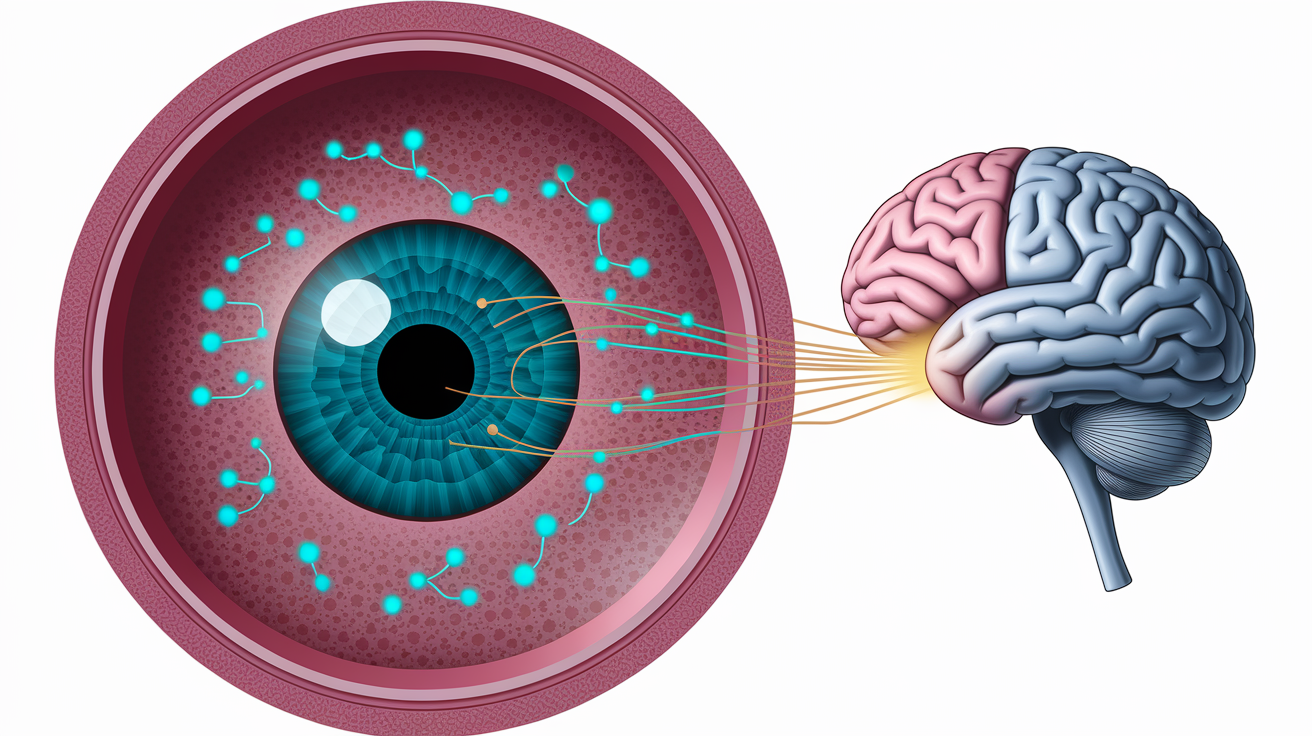
Blue light sits in the 380 to 500 nanometer range of the visible spectrum. Your eyes contain specialized cells called intrinsically photosensitive retinal ganglion cells (ipRGCs), packed with a photopigment called melanopsin. Melanopsin is most sensitive to light around 480 nm, right in the heart of the blue wavelength range. These cells don’t help you see images. They detect brightness and color temperature to keep your internal clock on track.
When blue light hits the retina, ipRGCs send signals along the optic nerve to a tiny region in your brain called the suprachiasmatic nucleus (SCN). The SCN acts as your master circadian clock. At night, when it’s supposed to be dark, the SCN tells your pineal gland to release melatonin, the hormone that makes you feel sleepy. Blue light exposure tells the SCN it’s still daytime, so melatonin release is suppressed or delayed. Without that melatonin signal, your brain and body stay alert.
Evening blue light doesn’t just block melatonin. It can shift your entire circadian rhythm. If you’re exposed to bright, short wavelength light late at night, your internal clock can drift later by one to three hours over several days. The later your exposure, the bigger the shift. This is why binge watching a series until 1 AM can leave you wide awake well past your usual bedtime and struggling to wake up the next morning.
Four key steps from light to melatonin suppression:
- Blue light enters your eye and reaches the retina at the back.
- Melanopsin in ipRGCs absorbs the short wavelength light and activates.
- ipRGCs signal the suprachiasmatic nucleus in your brain.
- The SCN instructs your pineal gland to hold off on melatonin release, keeping you alert.
Quantified Sleep Consequences of Nighttime Blue Light Exposure
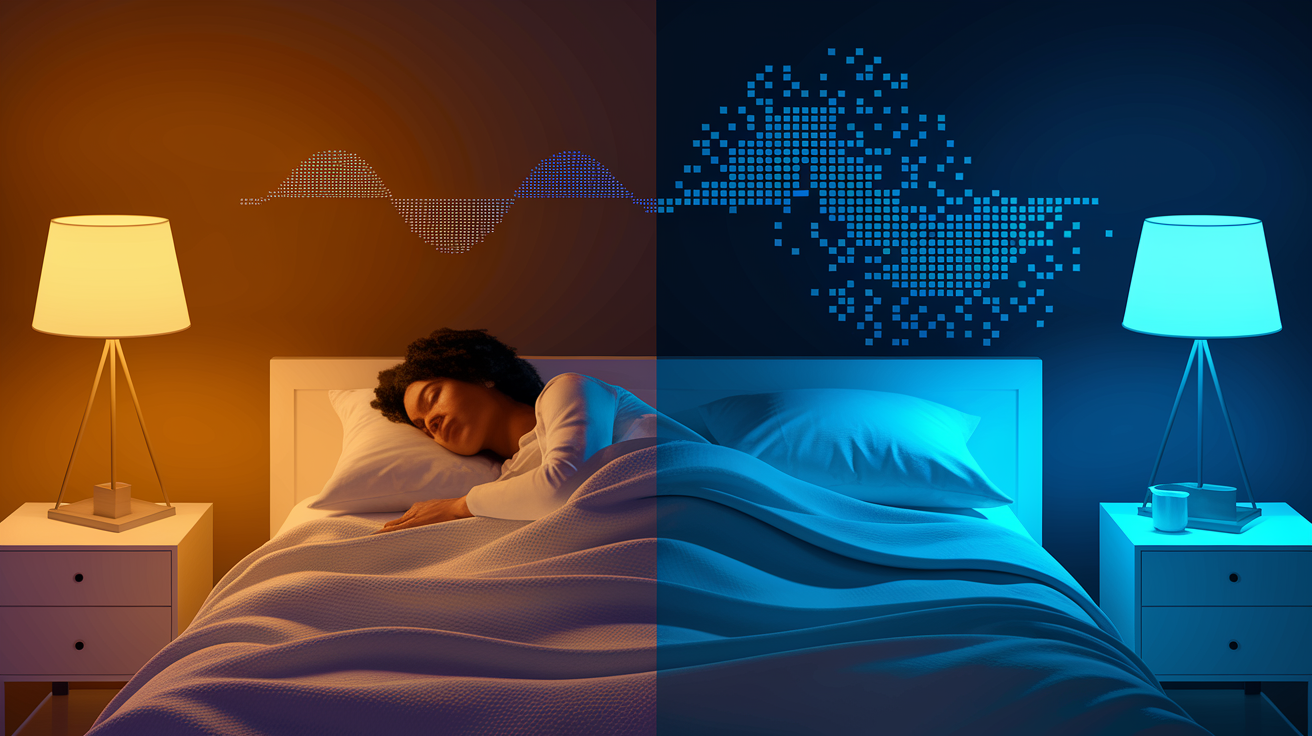
Research consistently shows that evening blue light delays when you fall asleep and cuts into total sleep time. In controlled studies, participants exposed to blue rich light before bed took an average of 10 to 30 minutes longer to fall asleep compared to those in dim or warm light. Sleep architecture also changes. REM sleep (the stage tied to memory consolidation and mood regulation) can drop, and deep slow wave sleep may be shortened. The result is lighter, more fragmented rest.
The next day, these sleep disruptions show up as fatigue, trouble concentrating, slower reaction times, and increased irritability. Over weeks and months, chronic circadian misalignment from repeated evening blue light exposure has been linked to higher risk of metabolic problems like type 2 diabetes, cardiovascular disease, mood disorders including depression, and even some cancers. Your body needs consistent, high quality sleep to repair tissue, regulate hormones, and support immune function. Disrupted sleep undermines all of that.
| Effect | Description |
|---|---|
| Delayed sleep onset | Takes 10 to 30+ minutes longer to fall asleep after evening blue light exposure |
| Reduced total sleep time | Less time asleep overall due to later sleep onset and earlier wake times |
| Altered sleep stages | Less REM and deep slow wave sleep, more light, fragmented sleep |
| Next day impairment | Fatigue, poor focus, slower reactions, mood changes, and increased stress |
Eye Health Effects of Blue Light Exposure at Night

Digital eye strain, sometimes called computer vision syndrome, is incredibly common. Surveys show that around 59% of American adults who use screens for more than two hours a day report symptoms. These include tired, achy eyes, a gritty or dry feeling, occasional blurred vision, headaches, and even neck or shoulder pain from poor posture while looking at a screen.
One of the biggest culprits? Reduced blinking. When you’re focused on a screen, your blink rate can drop by more than 50%. Blinking spreads tears across the surface of your eye and keeps it moist. Fewer blinks mean drier eyes, which feel uncomfortable and can make your vision temporarily blurry. Evening screen use compounds the problem because you’re often in dim lighting with high screen brightness, which increases glare and forces your eyes to work harder. Headaches often follow, especially if you’re squinting or straining to see detail.
Blue wavelengths penetrate all the way through the cornea and lens to reach the retina. Over many years, there’s concern that cumulative exposure may contribute to retinal cell stress and increase the risk of age related macular degeneration (AMD), cataracts, and other long term eye problems. Children absorb even more blue light than adults because their lenses are clearer and transmit more short wavelength light to the retina, putting them at higher risk for both immediate eye strain and potential long term damage.
Timing, Intensity, and Duration of Evening Blue Light Exposure
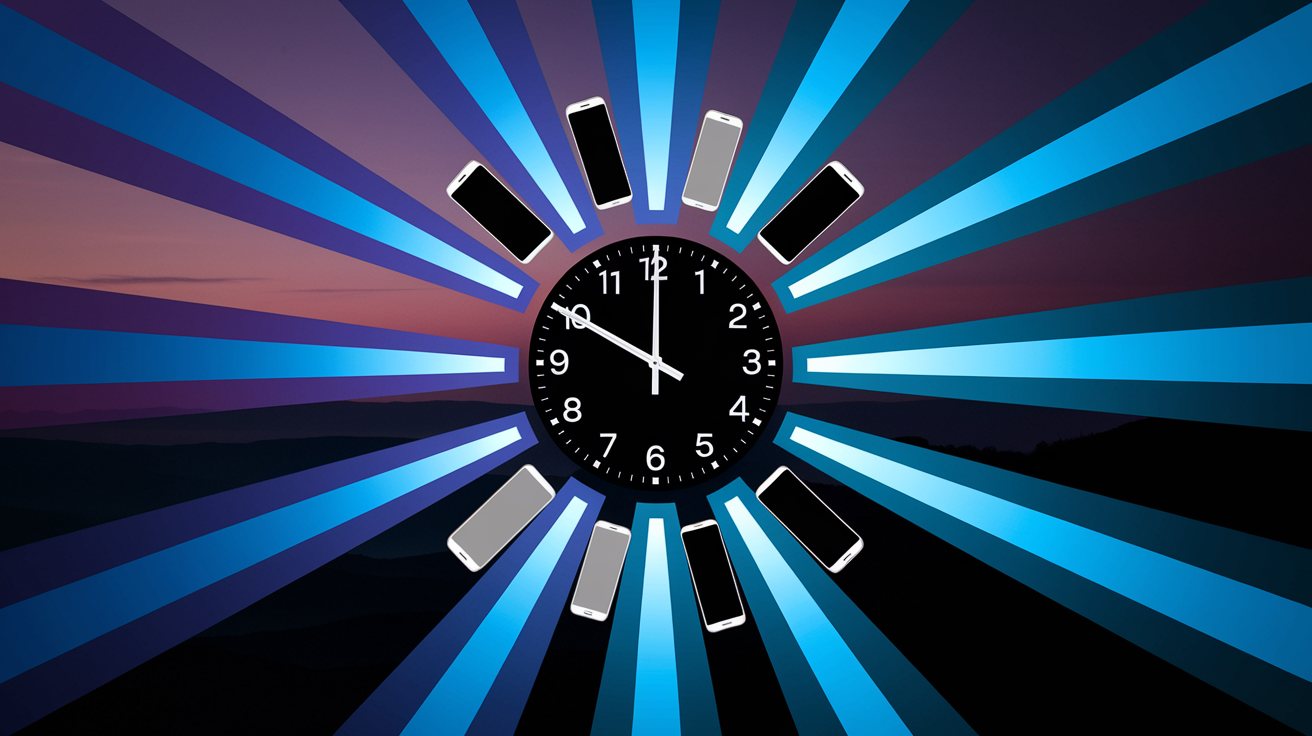
The circadian system is most sensitive to blue light in the evening and at night. Exposure within one to three hours of your usual bedtime has the strongest impact on melatonin suppression and sleep delay. General guidance suggests stopping screen use at least one hour before bed, but aiming for two to three hours of reduced blue light exposure gives you a bigger benefit, especially if you already struggle with falling asleep or waking up feeling unrested.
Intensity and duration both matter. Bright screens in a dark room create a stronger melatonin suppressing signal than dimmed screens in ambient light. Watching a two hour movie on a tablet right before bed has a much larger cumulative effect than checking your phone for five minutes. Even short bursts of bright blue light can delay melatonin release, but longer exposure compounds the delay and makes it harder to reset your rhythm the next day.
Three primary factors that determine melatonin suppression severity:
- Timing. Exposure closer to bedtime (especially in the 1 to 3 hour window before sleep) has the greatest effect.
- Intensity. Brighter screens and higher lux levels suppress melatonin more strongly than dim displays.
- Duration. Longer cumulative exposure throughout the evening increases the total disruption to your circadian clock.
Blue Light Filters, Glasses, and Device Settings

There are several tools you can use to cut down on blue light exposure without giving up your devices entirely. Each option works a little differently, and some people find one method more helpful than another.
Software and Built In Screen Filters
Most smartphones, tablets, and computers now include a “night mode,” “night shift,” or “blue light filter” setting. These features shift the display toward warmer tones (more red, orange, and yellow) by reducing the amount of short wavelength blue light the screen emits. Studies show these filters can cut blue light output significantly without making the screen hard to read. You can usually schedule the filter to turn on automatically at sunset or a specific time each evening.
Blue Light Blocking Glasses
Blue light blocking glasses come in a wide range of styles and filtering strengths. Generic lenses often block around 10% to 23% of blue wavelengths, which may reduce eye strain during the day but won’t make a big difference for sleep. Higher quality or prescription blue light glasses can block more than 90% of wavelengths below 450 nm. Research on their effectiveness is mixed, but some randomized trials have found that wearing these glasses in the evening improved sleep onset and reduced insomnia symptoms for certain users.
Amber Lenses
Amber or orange tinted lenses are specifically designed to filter out most blue and green light. Some studies report that people who wore amber glasses for two to three hours before bed experienced better melatonin production and fell asleep faster. They’re especially popular among shift workers and people with diagnosed sleep disorders. The tint is noticeable, so they’re not ideal if you need to see accurate colors, but for pre bedtime reading or casual screen use they can help.
Practical steps to adjust device settings at night:
- Enable night mode or warm color temperature on all screens you use after sunset.
- Set automatic brightness so your display dims along with ambient light.
- Schedule your device’s blue light filter to activate at least one hour before your target bedtime.
- Use app based filters or browser extensions if your device doesn’t have a built in option.
Practical Habits to Reduce Evening Blue Light Exposure
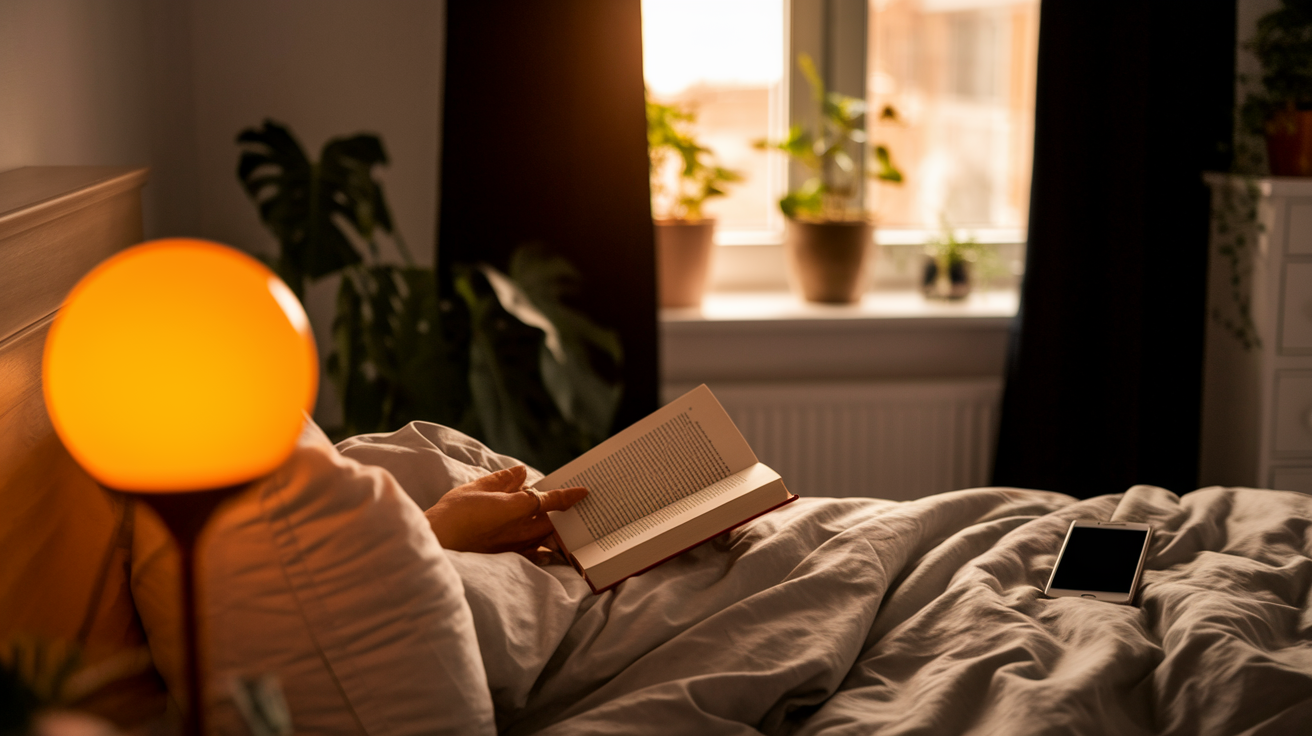
Small changes to your lighting and routines can make a noticeable difference in how quickly you fall asleep. Start by swapping out bright white LEDs and fluorescent bulbs in your bedroom and living areas for warm toned, lower wattage options. Red, orange, or amber lamps are ideal for the hour or two before bed. Dimming overhead lights and using table lamps instead creates a gentler transition from daytime alertness to nighttime rest.
Setting a screen curfew is one of the most effective strategies. Pick a cutoff time (ideally two to three hours before bed, but even one hour helps) and stick to it most nights. Use that time for screen free activities like reading a physical book, journaling, light stretching, or talking with family. If you need your phone as an alarm, charge it across the room so you’re not tempted to scroll. Consider buying a simple alarm clock so your phone can stay out of the bedroom entirely.
Adjust your environment to reduce glare and eye strain throughout the evening. Position screens so they’re not directly in front of a bright window or lamp. Keep your monitor or tablet at arm’s length and slightly below eye level. Follow the 20 20 20 rule during any screen time: every 20 minutes, take a 20 second break and look at something 20 feet away. This gives your eye muscles a rest and reminds you to blink.
Five actionable habit changes for pre bed routines:
- Turn off all screens at least one hour before your planned bedtime.
- Replace bright overhead lights with warm bedside lamps in the evening.
- Keep your phone out of the bedroom or place it face down across the room.
- Read, listen to calming music, or do light household tasks instead of watching TV.
- Set a recurring alarm on your phone to remind you when it’s time to power down devices.
Special Populations: Children, Teens, Shift Workers, and Older Adults

Children’s eyes let in more blue light than adult eyes because their lenses are clearer. This makes kids more vulnerable to both digital eye strain and sleep disruption from evening screen use. Many children and preteens use tablets and smartphones for homework, games, and videos right up until bedtime, which can delay sleep onset and reduce total sleep time. Limiting screen access in the hour before bed and encouraging dim, warm lighting in their rooms can help protect developing circadian rhythms and support healthy sleep.
Teenagers are especially sensitive to circadian shifts. Their natural sleep wake cycle already tends to run later during adolescence, and evening blue light pushes that delay even further. Teens who use screens late at night often struggle to fall asleep before midnight, then have to wake early for school, resulting in chronic sleep deprivation. This affects concentration, mood, and academic performance. Encouraging earlier screen cutoffs and using blue light filters on devices can make it easier for teens to get the sleep they need.
Shift workers face unique challenges because their work schedules conflict with natural light dark cycles. Many rely on screens and bright lighting during night shifts to stay alert, but this suppresses melatonin and makes it hard to sleep during the day. Strategic use of blue light blocking glasses during the latter part of a night shift, combined with blackout curtains and dim red lighting at home, can help reset circadian cues and improve daytime sleep quality.
Older adults often experience weaker circadian signals and produce less melatonin overall, which can lead to lighter, more fragmented sleep. Evening blue light exposure can worsen these issues. For older people, maintaining consistent light dark routines (bright light exposure during the day and minimal blue light at night) helps strengthen circadian rhythms. Using warm lighting in the evening and avoiding screens before bed supports better sleep quality and may reduce the risk of sleep disorders common in aging.
Final Words
Wired at night and staring at the ceiling? That’s the immediate effect we described: screens can make you more alert, slow your wind‑down, and push back the time you fall asleep.
We also covered how blue light shifts your clock and lowers melatonin, measurable hits to REM and total sleep, eye strain risks, and practical fixes—timing limits, filters, dimmer lights, and short screen curfews.
Try small changes for a week. blue light exposure before bed effects often ease with consistent tweaks, so there’s reason to feel hopeful.
FAQ
Q: Is it bad to have blue light before bed?
A: Having blue light before bed is generally bad for sleep because it raises alertness, delays winding down, and suppresses melatonin, making it harder and longer to fall asleep and lowering sleep quality.
Q: How to detox from blue light?
A: Detoxing from blue light means cutting evening exposure: stop screens 1–2 hours before bed, use warm lamps, enable night mode or wear blocking glasses, and dim lights so melatonin can return.
Q: What hormones does blue light release?
A: Blue light doesn’t release hormones; it suppresses melatonin and can raise alertness systems, sometimes causing short-term cortisol increases, which together delay sleepiness and shift your circadian timing.