
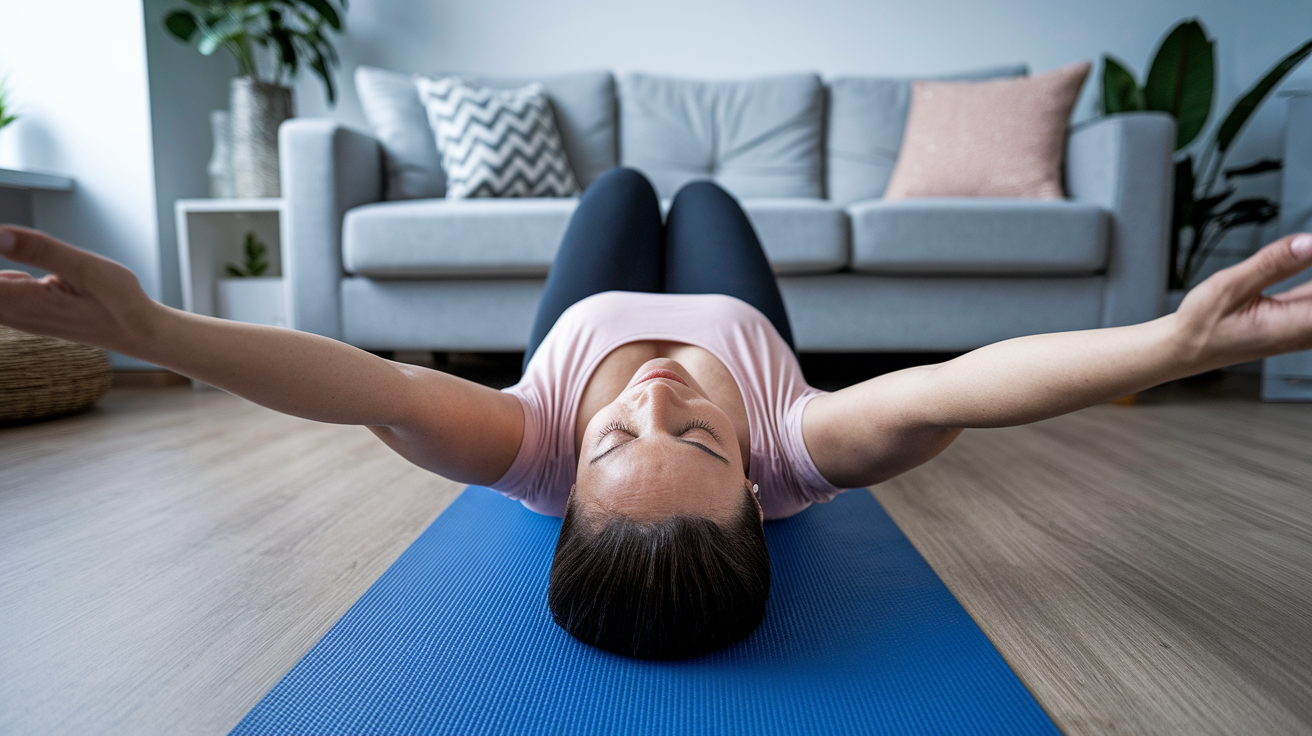
What if loosening your jaw could quiet your anxious brain?
If you’ve ever felt your shoulders creep up while paying bills or before a meeting, that tightness is part of why stress feels stuck.
Progressive muscle relaxation teaches you to tense a muscle, hold for a few seconds, then let it go so your nervous system gets the cue to calm down.
It’s simple, needs no gear, and many people notice a real change after one short session.
Read on for easy steps, quick versions you can do at work, and a 5‑minute routine to try today.
Core Principles of the Progressive Muscle Relaxation Method

Progressive muscle relaxation, or PMR, teaches you to tense each muscle group deliberately, hold it for about 10 seconds, then let go completely. That squeeze and release cycle activates your body’s natural relaxation response, pulling you out of the fight or flight state that stress keeps firing up. It’s built on a simple truth: your muscles hold tension when you’re worried, and releasing that physical tightness cues your nervous system to calm down.
A lot of stress comes from “what if” thoughts that loop in your head while you’re paying bills, managing kids, or checking the news. Your brain reads those imaginary threats the same way it reads real danger. So your shoulders creep up, your jaw clenches, and your breathing gets shallow. PMR interrupts that loop by giving your attention a concrete task: feel the difference between tight and loose. That shift pulls you back to the present instead of letting worry borrow your whole day.
Here’s what PMR changes about how stress affects you:
You lower fight or flight activation so your heart rate, breathing, and muscle tension drop. You improve present moment focus by anchoring your attention in what your body feels right now. You reduce perceived physical pain when chronic tension amplifies discomfort. Your judgment and decision making clear up by calming the mental fog stress creates. And you boost self control so you respond to situations more calmly instead of reacting on autopilot.
PMR works for beginners because it doesn’t require any special equipment, years of practice, or perfect conditions. You pair simple muscle tension with normal breathing and a few minutes of quiet. Most people notice something shift after one try, maybe looser shoulders or steadier breathing, and that small win makes it easier to try again tomorrow.
How to Practice Progressive Muscle Relaxation: Step-by-Step Tension and Release Guide
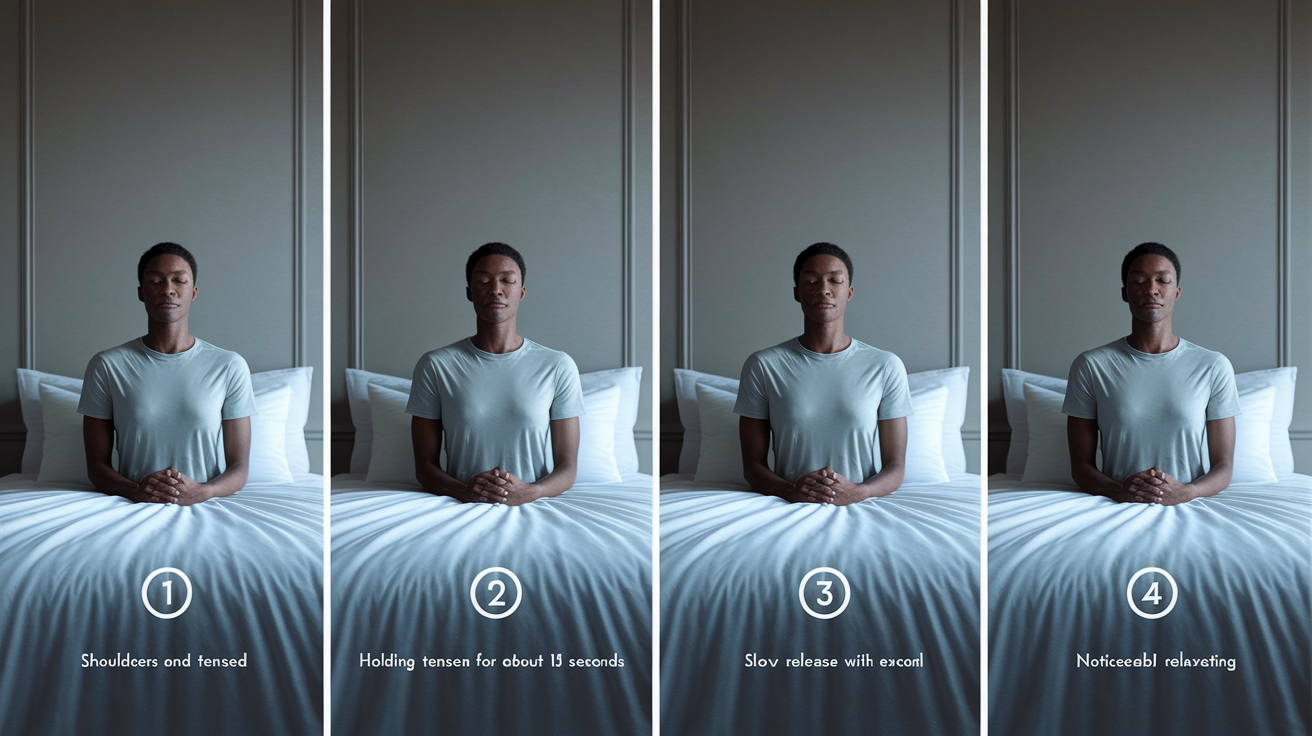
Sit somewhere comfortable or lie down flat, whichever lets your body settle without straining anything. You can close your eyes if that helps you focus, or keep them open and soft. Breathe normally the whole time. Don’t hold your breath when you tense, and don’t force deep inhales. Just let air move in and out at its own pace.
When you tense each muscle group, squeeze as tightly as you can without causing pain. Hold that squeeze for about 10 seconds, then release all at once and rest for 10 to 20 seconds before moving to the next area. You can start at the top of your body and work down, or begin at your feet and move up. Either sequence works. If one area feels especially tight, spend an extra cycle there. A full PMR session usually takes 15 to 20 minutes, but there’s no strict time limit. You can stop when you feel ready.
Muscle Groups Used in Traditional PMR
A complete PMR routine moves through your entire body in sections. The classic order starts at your forehead, then shifts to your eyes, jaw, shoulders, arms, hands, abdomen, lower back, thighs, calves, and feet. Each area gets its own tension and release cycle so nothing gets skipped.
- Forehead and scalp: Raise your eyebrows as high as they’ll go. Hold for 10 seconds. Let them drop and rest for 10 to 20 seconds.
- Eyes and nose: Squeeze your eyes shut tightly. Hold for 10 seconds. Release and rest for 10 to 20 seconds.
- Jaw: Clench your teeth and press your tongue to the roof of your mouth. Hold for 10 seconds. Let your jaw fall open slightly and rest for 10 to 20 seconds.
- Neck: Tilt your head back gently, pressing the back of your head toward your shoulders. Hold for 10 seconds. Bring your head back to neutral and rest for 10 to 20 seconds.
- Shoulders: Shrug both shoulders up toward your ears as high as possible. Hold for 10 seconds. Drop them and rest for 10 to 20 seconds.
- Upper arms: Bend your elbows and flex your biceps like you’re showing muscle. Hold for 10 seconds. Let your arms straighten and rest for 10 to 20 seconds.
- Forearms and hands: Make tight fists and curl your wrists inward. Hold for 10 seconds. Open your hands and relax your wrists for 10 to 20 seconds.
- Chest: Take a normal breath in and tighten your chest muscles as if bracing for impact. Hold for 10 seconds. Exhale and rest for 10 to 20 seconds.
- Abdomen: Pull your belly button in toward your spine. Hold for 10 seconds. Let your stomach soften and rest for 10 to 20 seconds.
- Lower back: Arch your lower back slightly, as if pressing it into the floor or chair. Hold for 10 seconds. Flatten it back out and rest for 10 to 20 seconds.
- Thighs: Squeeze your thighs together and tighten the muscles on top. Hold for 10 seconds. Let them go slack and rest for 10 to 20 seconds.
- Calves and feet: Point your toes away from your body, or curl them under. Hold for 10 seconds. Let your feet relax completely and rest for 10 to 20 seconds.
Evidence-Based Benefits of Progressive Muscle Relaxation for Stress Relief

Research shows PMR helps with anxiety, insomnia, tension headaches, high blood pressure, digestive discomfort, and chronic pain. It’s not a cure all, but it’s a solid tool when stress is making your body and mind feel stuck. The technique lowers the background hum of fight or flight activation, which gives your system space to settle.
A 2009 comparison found mindfulness meditation and PMR equally effective for reducing stress in a general population. A 2012 study with high stress college students showed that even abbreviated PMR sessions produced measurable drops in mental and physical tension. In 2016, competitive athletes and dancers used PMR to improve sleep and manage performance anxiety without medication. A 2017 randomized trial looked at parents of children receiving cancer treatment and found that PMR combined with guided imagery reduced anxiety and improved mood. Even one or two sessions can give you noticeable relief. Looser muscles, calmer breathing, less mental noise.
Consistency is what builds deeper benefits. When you practice PMR a few times a week, your nervous system starts recognizing the relaxation cue faster. You might notice you recover from stressful moments more quickly or that tension doesn’t pile up as much by the end of the day. It’s not magic, but it’s measurable, and the habit compounds over time.
| Study Year | Population | Key Outcome |
|---|---|---|
| 2009 | General community sample | PMR and mindfulness equally effective for stress reduction |
| 2017 | Parents of children with cancer | Reduced anxiety and improved mood with PMR + guided imagery |
| 2016 | Competitive athletes and dancers | Improved sleep and reduced performance anxiety |
Guided PMR Audio, Scripts, and Beginner-Friendly Resources

Guided audio helps you stay on track when you’re learning PMR. A calm voice walking you through each muscle group keeps you from overthinking the sequence or rushing through steps. It’s especially helpful if your mind wanders easily or if you’re using PMR to wind down before sleep.
Short guided audio sessions under 10 minutes work for quick stress relief during lunch breaks or before meetings. Full length audio routines of 15 to 20 minutes fit bedtime or weekend practice. Kid friendly PMR videos with animations or simple language are useful if you’re teaching children or prefer lighthearted guidance. Downloadable scripts let you read to yourself or customize for specific muscle groups. Mobile apps offer multiple muscle group modes, nature sounds, or music tracks to match your mood. And practitioner written scripts from institutions use clear, step by step wording.
When you’re picking audio or an app, listen to the voice tone first. Some people relax best with a neutral, even delivery. Others prefer warmth or a little more personality. Soundscapes like rain, streams, or forest sounds can help if silence feels too empty. If you’re using PMR at night, look for bedtime specific scripts that skip the post session instructions to get up and move around.
Daily Application of Progressive Muscle Relaxation in Real Stress Scenarios
PMR works well before bed when your mind won’t stop replaying the day. Lie down, run through the full sequence, and let the muscle release cue your body that it’s time to sleep. Many people notice they fall asleep faster and wake up less often when they make PMR part of their nighttime routine.
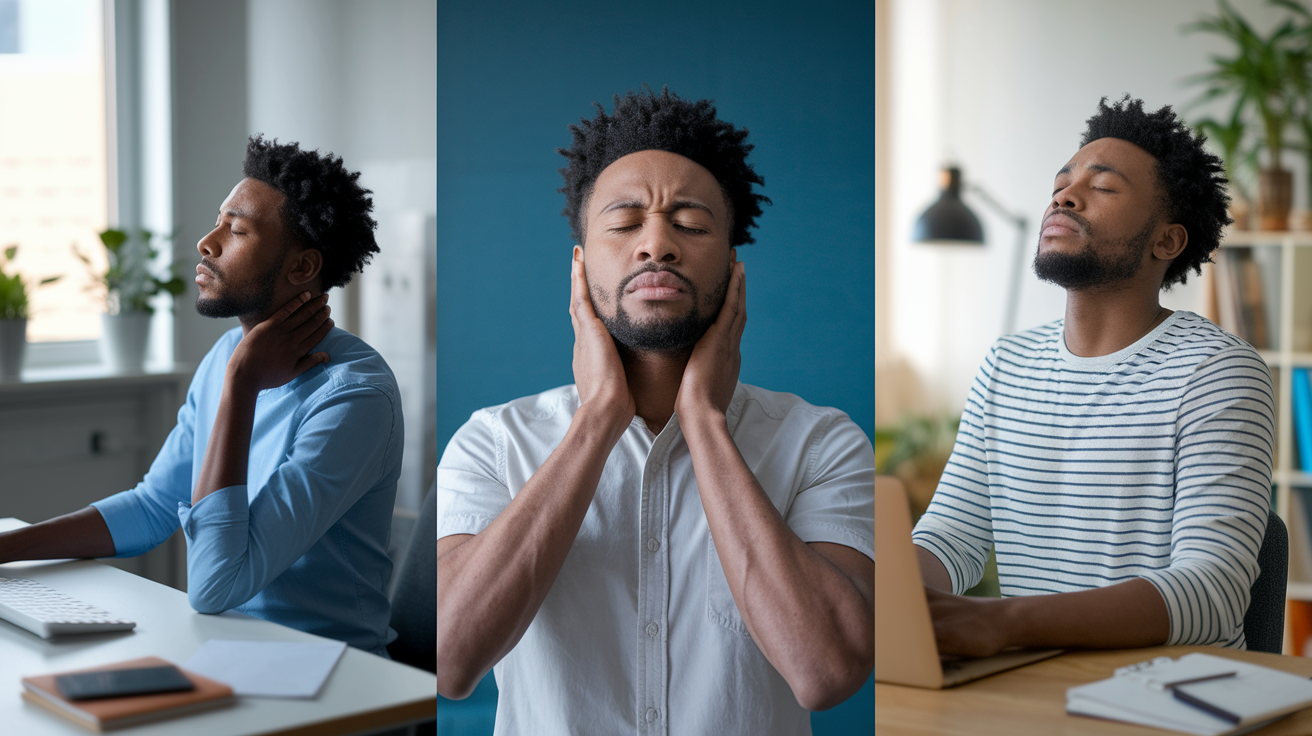
At work or during study sessions, abbreviated PMR helps when stress builds between tasks. You don’t need 20 minutes. Just tense and release your shoulders, jaw, and hands while sitting at your desk. It takes about 5 minutes and can stop tension from snowballing into a headache or that wired but exhausted feeling by 3 pm.
Before a test or presentation, run through your hands, shoulders, and jaw to release the physical grip of nerves. During a work break, tense and release your neck and upper back when you notice your posture collapsing from stress. When a tension headache starts, focus extra cycles on your forehead, eyes, jaw, and shoulders, the spots where stress tends to camp out. After a difficult conversation or conflict, use PMR to bring your heart rate and breathing back to baseline instead of staying revved up.
Shorter PMR sequences still work. Even targeting two or three muscle groups can interrupt the stress spiral. You can pair a quick PMR cycle with deep breathing: inhale for 4 seconds, hold for 2, exhale for 4, and repeat for at least 2 minutes. Together, they pull you back to the present faster than either one alone.
Safety, Adaptations, and Common Mistakes in Progressive Muscle Relaxation Practice
Don’t practice PMR over broken bones, pulled muscles, or any area with acute injury. The tension phase can make inflammation worse or delay healing. If you have a medical condition that limits physical activity, like uncontrolled high blood pressure or a recent surgery, check with your doctor before adding PMR to your routine.
Tensing too hard, squeezing past discomfort into pain, defeats the purpose. Aim for firm tension, not maximum force. Breath holding activates stress instead of relaxing it. Keep breathing steady and normal. Rushing the sequence by skipping rest phases between muscle groups doesn’t give your nervous system time to register the release. Practicing during active physical pain doesn’t work. PMR works best when you’re not already hurting. Use it preventively or during low pain windows. And ignoring shaking or tremors isn’t necessary. Light shaking during tension is normal and harmless. If it feels painful or lasts after you release, stop and adjust your tension level.
If you have limited mobility, chronic pain, or you’re pregnant, you can modify PMR by reducing how much you tense each area or skipping groups that don’t feel safe. For example, if lower back tension aggravates sciatica, move through that section with a gentler squeeze or just focus on noticing the difference between your usual tension and a slightly softer state. PMR is flexible. You’re aiming for awareness and release, not a specific amount of force.
Creating a Sustainable Progressive Muscle Relaxation Routine

A good starting plan is to practice PMR twice a day while you’re learning it. Once in the morning or midday when you’re calm, and once before bed. That repetition helps your body recognize the relaxation pattern faster. After a few weeks, you can drop to once a day or three to four times a week, depending on your stress level and schedule.
Tracking your experience in a simple journal, just a few lines after each session, helps you notice patterns. Write down which muscle groups felt tightest, how long the session took, and whether you felt calmer, sleepier, or more focused afterward. Over time, you’ll see which version of PMR works best for different situations and how your baseline tension changes with regular practice.
| Routine Type | Frequency | Session Length |
|---|---|---|
| Learning phase | Twice daily | 15–20 minutes (full sequence) |
| Maintenance | Once daily or 3–4 times per week | 10–15 minutes (abbreviated or full) |
| Acute stress relief | As needed | 5–10 minutes (targeted muscle groups) |
Final Words
Tense, hold, release — move through the step-by-step sequence we covered. That simple action, paired with steady breathing, helps interrupt the fight-or-flight loop and ease physical tightness.
Research-backed benefits include better sleep, less anxiety, fewer headaches, and lower blood pressure. Use guided audio, a short bedtime routine, or a quick workplace cycle, and adapt if you have injuries or pain.
Progressive muscle relaxation for stress can make you feel steadier. Try a short practice today — you might notice relief right away.
FAQ
Q: How to get rid of muscle tension due to stress and anxiety? How do you do progressive muscle relaxation for stress?
A: To get rid of muscle tension from stress and anxiety, use progressive muscle relaxation: tense each muscle group for about 10 seconds, then fully release while breathing normally, moving head-to-toe until you feel calmer.
Q: How to lower stress in 5 minutes? How to destress immediately?
A: To lower stress in five minutes, try focused breathing (inhale 4, hold 2, exhale 4), do a quick tense-and-release of a tight muscle, name three things you see, and sip water.