

What if most insomnia isn’t about willpower but about bad timing?
If your nights are scattered and you wake wired, you’re not imagining it.
This post shows how to fix your sleep schedule fast and naturally by using simple, same-day signals—one steady wake time, morning light, no naps, and dim evenings—so your body starts relearning when to sleep within 24 to 72 hours.
You’ll get a clear, doable plan to try today and a short 3 to 7 day routine that nudges your internal clock back without strict rules or fancy gadgets.
Immediate Actions to Reset a Disrupted Sleep Cycle
Your sleep system responds fast to the right signals. When insomnia’s knocked your schedule sideways, targeted same-day changes create momentum within 24 to 72 hours. The circadian clock in your brain reacts most strongly to light, wake time, and activity patterns. You can start realignment before the day’s over.
These first moves set the foundation. They tell your body when to expect wakefulness and when to get ready for sleep. Even if you were awake until 4 a.m. last night, today’s wake time becomes the anchor for every hour after.
Consistency speeds the shift. Sporadic effort keeps the cycle bouncing around. Locked-in timing pushes your internal rhythm back toward something predictable.
Six same-day steps to start:
-
Set one fixed wake time and use it today, tomorrow, every day. Wake at the same hour every morning, even after two hours of sleep. This single anchor is the most powerful tool you’ve got.
-
Get 10 to 20 minutes of bright outdoor light within the first hour of waking. Morning sunlight (or a 10,000 lux lamp) signals your circadian system that day’s started and shuts down lingering melatonin.
-
No naps today. Any daytime sleep reduces the pressure to fall asleep at night. If you’re struggling to stay awake, take a five-minute walk or splash cold water on your face.
-
Eat meals at the same times each day. Breakfast, lunch, and dinner become backup time cues that reinforce your wake schedule. Try to eat breakfast within 90 minutes of waking.
-
Cut bright light in the two hours before your planned bedtime. Dim overhead lights, switch to warm bulbs, keep screens off or use night mode if you need them.
-
Use stimulus control if you can’t fall asleep within 20 minutes. Leave the bedroom, go somewhere dimly lit, do something calm. Read a printed book, stretch gently, listen to quiet music. Return to bed only when you feel genuinely sleepy, not just tired.
These actions begin realigning your schedule right away. You might still have trouble sleeping the first night, but the wake time and light exposure set the circadian phase forward. By the second or third morning, sleep pressure builds earlier in the evening. Your internal clock starts expecting the routine you’re teaching it. The cycle doesn’t reset all at once, but these steps create a cascade that speeds the process from weeks down to days when you apply them without exception.
Structured Protocol for Shifting Sleep Timing Safely

Abrupt jumps usually backfire. If you try going to bed three hours earlier tonight when you’ve been falling asleep at 2 a.m., you’ll lie awake and reinforce the insomnia loop. Gradual shifts of 15 to 30 minutes per day let your circadian system adjust without fighting back.
This works because your internal clock can’t leap forward or backward in big blocks. Small, consistent nudges allow melatonin secretion, core body temperature, and alertness patterns to follow the new schedule without triggering rebound wakefulness or middle-of-the-night awakenings.
To shift earlier (moving bedtime from 1 a.m. to 10 p.m. over 10 to 12 days):
-
Move wake time 15 to 30 minutes earlier each day. Wake at 9 a.m. today, set your alarm for 8:45 a.m. tomorrow, then 8:30 a.m. the day after.
-
Get bright light immediately after waking every morning. This advances your circadian phase and makes you sleepy earlier that evening.
-
Dim lights and reduce activity starting 90 to 120 minutes before your target bedtime. Wind down in low light to encourage melatonin release.
-
Go to bed only when you feel sleepy, not just when the clock says it’s bedtime. If you’re not sleepy at the new time, wait 15 minutes and try again rather than lying awake.
-
Avoid afternoon and evening light after 5 or 6 p.m. Close curtains, wear sunglasses outdoors, keep indoor lighting low to prevent phase delay.
To shift later (moving wake time from 5 a.m. to 7 a.m. for early waking insomnia):
-
Move wake time 15 to 30 minutes later each day. Set tomorrow’s alarm 15 minutes later than today’s, continue the pattern.
-
Delay morning light exposure by 15 to 30 minutes each day. Usually go outside at 5:30 a.m.? Wait until 5:45 a.m. tomorrow, then 6 a.m. the next day.
-
Get bright light in late afternoon or early evening (around 5 to 7 p.m.) to shift your circadian phase later. A 20-minute walk outdoors or time near a window works.
-
Avoid bright light in early morning until you reach your new target wake time. Keep lights dim, wear blue-blocking glasses, or stay indoors with curtains closed.
-
Go to bed 15 to 30 minutes later each night, only when you feel genuinely sleepy. Don’t force wakefulness if you’re tired, but don’t crawl into bed early out of habit.
Keep a simple daily sleep log. Write down when you got into bed, when you think you fell asleep, when you woke, when you got out of bed. After three to five days, review the pattern. If sleep onset’s moving in the direction you want and wake time’s becoming consistent, continue the shifts. If progress stalls or reverses, hold the current schedule steady for two to three days before the next adjustment. Most people reach their target in 7 to 14 days when adjustments stay small and wake time never varies by more than 15 minutes, even on weekends.
Optimizing Environmental and Behavioral Sleep Cues
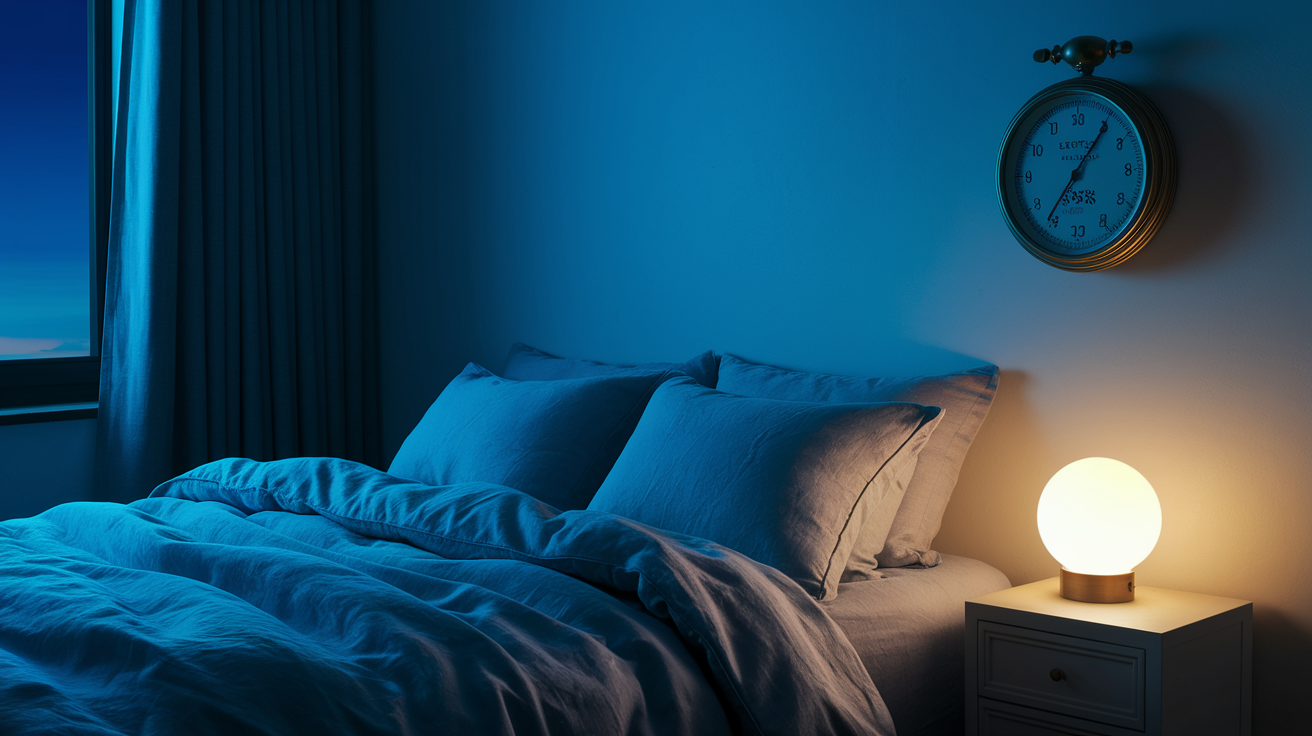
Your bedroom and evening habits either reinforce the new schedule or quietly sabotage it. Temperature matters more than most people expect. A cool room (around 60 to 67°F) helps core body temperature drop, which is a biological trigger for sleep onset. A room that’s too warm keeps your body in low-grade alertness. If you wake frequently or can’t fall asleep even when you’re tired, check the thermostat before assuming the problem’s purely mental.
Blackout curtains or a simple eye mask eliminate stray light from streetlamps or early sunrise. Even small amounts of light during sleep can fragment your rest and delay melatonin clearance the next morning. Earplugs or white noise smooth out environmental sounds that might not fully wake you but still lighten sleep stages and prevent deep rest.
Pre-sleep behaviors build anticipation. Your brain learns to associate certain actions with the transition to sleep. A warm shower 60 to 90 minutes before bed raises your skin temperature briefly, then triggers a compensatory drop in core temperature when you step out, mimicking the natural evening decline that promotes sleepiness. Reading a printed book, doing gentle stretches, listening to calming music in dim light all send the same message that the day’s ending. Avoid anything that spikes alertness, worry, planning, or problem solving in the hour before bed. If you need to write a to-do list or answer an email, finish it earlier so your mind isn’t churning when you lie down.
Evening routines don’t need to be elaborate. The goal’s consistency and low stimulation. Brush your teeth, change into comfortable sleepwear, dim the lights, settle into one or two calming activities in the same order each night. After a week, your body starts responding to the sequence itself. The routine becomes a cue, like how your mouth waters when you smell food. When the cues stay consistent and the environment supports rest, sleep onset becomes smoother and the new schedule holds without constant effort.
Troubleshooting When the Schedule Still Won’t Reset

Sometimes the protocol stalls. You’ve locked in a wake time, controlled light exposure, followed the gradual shift plan, but sleep onset still wanders or you lie awake for hours. A few common patterns usually explain the resistance.
Inconsistent wake times are the most frequent problem. Even one or two mornings of sleeping in by 60 to 90 minutes can reset your progress. Wake at 7 a.m. Monday through Friday but sleep until 9 a.m. on Saturday? Your circadian clock treats Saturday as the new baseline and Sunday night insomnia returns. Weekend drift is one of the top reasons schedules fail to stabilize.
Hidden naps, even brief ones, reduce sleep drive. A 20-minute “rest” on the couch at 4 p.m. can steal enough pressure to delay sleep onset by an hour that night. Caffeine after 2 p.m. lingers in your system and blocks adenosine receptors that build sleep pressure. Alcohol in the evening may make you drowsy initially but fragments sleep in the second half of the night, leaving you under-rested and more likely to nap the next day.
When progress stalls, try these six adjustments:
-
Audit your actual wake time for the past seven days. If it varies by more than 15 minutes, tighten it immediately and hold steady for at least five consecutive days before making further shifts.
-
Eliminate all naps, no matter how short, for one full week. Genuinely exhausted? Go outside for a five-minute walk instead of lying down.
-
Move your last caffeine intake to before noon. Even if you think afternoon coffee doesn’t affect you, trial a week without it and compare your sleep onset time.
-
Check your evening light environment. Walk through your home after 7 p.m. and note every bright overhead light, screen, or device. Dim or turn off anything that isn’t essential, see if sleep onset improves within three nights.
-
Use stricter stimulus control. In bed longer than 20 minutes without sleep? Leave the room every single time. No exceptions. This retrains your brain to associate the bed only with actual sleep, not lying awake.
-
Review your weekend schedule. If Saturdays and Sundays look different from weekdays, treat the next weekend as if it’s a workday. Wake at your target time, follow the same morning routine, keep meal times identical.
Applied all six adjustments for a full week and sleep onset or wake time still hasn’t stabilized? Return to the first section and restart the protocol from day one. Set a new fixed wake time, prioritize morning light, eliminate naps as if you’re beginning fresh. Sometimes the system needs a hard reset rather than incremental tweaking. Give it another 7 to 10 days of strict consistency before trying additional changes.
Expected Timeline for Fixing a Disrupted Sleep Schedule
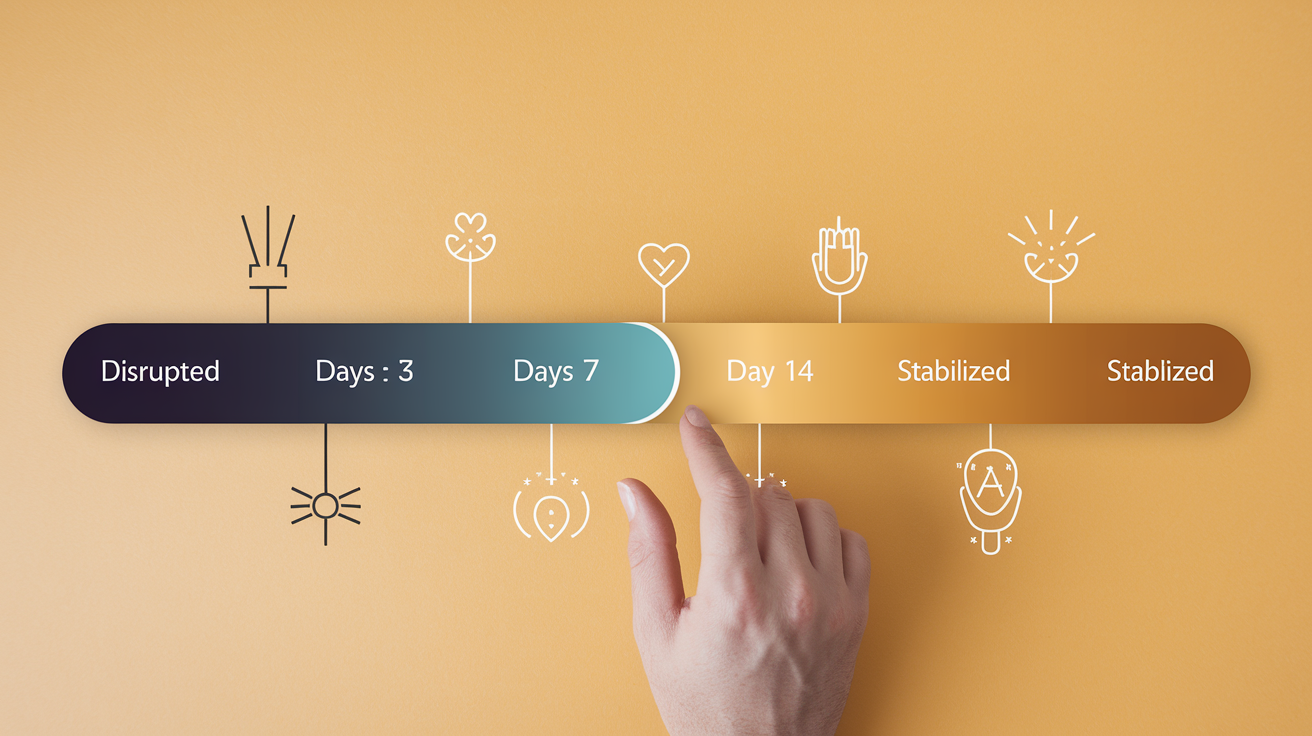
Most people see noticeable improvement in 3 to 7 days when they apply a fixed wake time and morning light exposure without exception. Sleep onset may still feel difficult the first two nights, but by the third or fourth night, the pressure to fall asleep builds earlier and the window of natural sleepiness aligns closer to the target bedtime. Full stabilization, where you fall asleep within 20 minutes and wake naturally near your alarm time, usually takes 10 to 14 days of consistent effort. Schedule was severely disrupted (falling asleep at 5 a.m., waking at 1 p.m.)? Expect the longer end of that range.
Several factors influence speed. A history of chronic insomnia, high evening anxiety, or ongoing shift work can slow progress, sometimes extending the timeline to three or four weeks. Inconsistent wake times, even by 30 minutes on weekends, can add an extra week. On the other hand, combining a strict wake schedule with strategic light exposure, stimulus control, and elimination of all naps tends to compress the timeline.
Age plays a role too. Circadian rhythms become less flexible after 60, so older adults may need an additional week or two to lock in a new pattern. The same principles still work, though. The key’s patience and refusal to abandon the routine during the first rough nights.
Progress isn’t always linear. You may sleep well on night four, poorly on night five, then see steady improvement from night six onward. That variation’s normal. Trust the process and keep the wake time fixed.
When to Seek Professional or Medical Support

Followed a consistent wake time, controlled light exposure, applied the troubleshooting steps for three to four weeks without meaningful improvement? Time to involve a professional. Chronic insomnia that persists for three months or longer often has underlying drivers that self-guided methods can’t address alone.
Sleep apnea, for example, creates fragmented sleep that looks like insomnia but won’t improve with schedule changes because the airway’s collapsing repeatedly during the night. Restless legs syndrome and periodic limb movement disorder cause discomfort and micro-arousals that prevent deep sleep, no matter how well you manage light and wake times.
Delayed sleep phase disorder (DSPD) and advanced sleep phase disorder (ASPD) are circadian rhythm disorders that resist standard schedule shifts. If your natural sleep window’s locked several hours away from a typical schedule and nothing you’ve tried budges it, a sleep specialist can guide targeted light therapy, chronotherapy, or low-dose melatonin protocols that go beyond general sleep hygiene. Depression and anxiety disorders frequently disrupt sleep architecture and circadian regulation. Treating the underlying mood or anxiety condition often resolves the sleep problem more effectively than focusing on the schedule alone.
Watch for these indicators that you should consult a clinician:
- Insomnia or schedule disruption lasting three months or longer despite consistent behavioral efforts.
- Loud snoring, gasping for air during sleep, or a bed partner reporting that you stop breathing.
- Daytime sleepiness so severe you struggle to stay awake during routine activities like meetings, driving, or meals.
- Uncontrollable urges to move your legs at night, or uncomfortable sensations in your calves or thighs that only improve when you get up and walk.
Professional treatment typically starts with a detailed sleep history and may include an overnight sleep study (polysomnography) or home sleep apnea testing if breathing problems are suspected. A sleep psychologist or trained therapist can deliver cognitive behavioral therapy for insomnia (CBT-I), which includes stimulus control, sleep restriction, and cognitive restructuring techniques that go deeper than the steps covered here. CBT-I’s considered the first-line treatment for chronic insomnia and has strong evidence for long-term success.
If a circadian disorder’s confirmed, a specialist might prescribe timed light therapy using a 10,000 lux lamp, strategic melatonin dosing, or a structured schedule-shift plan tailored to your specific phase problem. Medication’s sometimes part of the picture, but it’s usually combined with behavioral strategies rather than used alone. The goal’s durable sleep, not dependency on a pill.
Final Words
Start today with the same‑day steps: fixed wake time, morning light, no naps, regular meals, less evening light, and leave the bed if you can’t sleep. These actions quickly nudge your circadian cues.
Then shift your sleep timing slowly (15–30 minutes per day), keep a simple sleep log, and make your room cool, dark, and quiet. If you stall, check caffeine, hidden naps, or evening stress and restart the protocol.
This plan shows how to fix sleep schedule for insomnia in a realistic, step‑by‑step way—stick with it; small habits add up.
FAQ
Q: How to fix sleep schedule when you have insomnia?
A: Fixing your sleep schedule when you have insomnia involves a firm wake time, 10–20 minutes of morning light, skipping naps, cutting evening light, leaving bed if awake, and shifting bedtime slowly.
Q: What is the 10 5 3 2 1 rule for sleep?
A: The 10 5 3 2 1 rule for sleep is a stepwise evening cutoff plan that staggers limits on stimulants, heavy meals, alcohol, and screens at set hours before bedtime to help you wind down.
Q: What is the 3 2 1 bedroom method?
A: The 3 2 1 bedroom method is a simple stimulus-control approach: three bedroom basics (dark, cool, quiet), two things removed (screens, work), and one rule—use the bed only for sleep and sex.
Q: What is the 1/4 hour rule for insomnia?
A: The 1/4 hour rule for insomnia is the 15-minute guideline: if you’re still awake after about 15 minutes, get up, do a quiet calm activity, then return when you feel sleepy.