
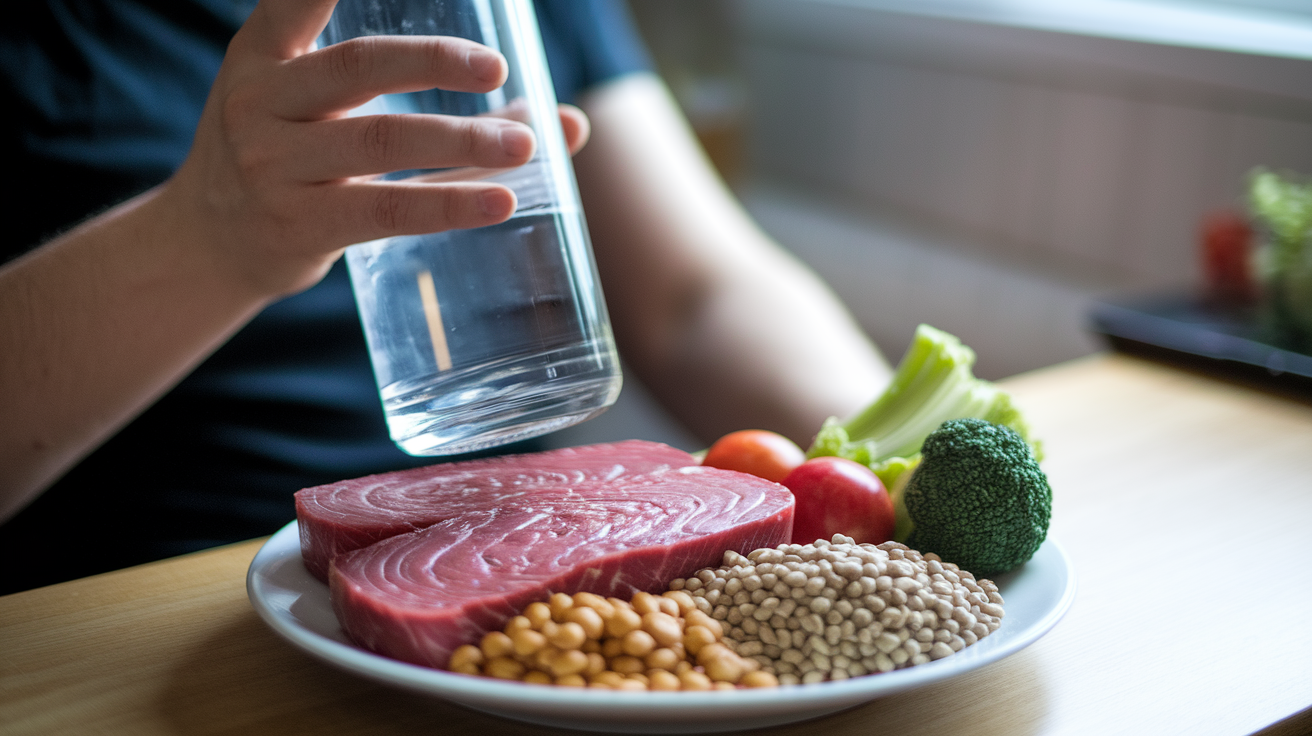
What if feeling hungry all the time isn’t just willpower?
You’re not imagining it. Small habits like skipping water, low protein, eating too fast, poor sleep, and refined carbs make your brain ask for food all the time.
This post shows simple, natural fixes you can try today: drink a glass before meals, add a palm-sized serving of protein, pick fiber-rich options, slow your bites, and check sleep and caffeine timing.
You’ll notice less urgent hunger and steadier energy in a few days.
No strict rules, just small swaps that actually work.
Immediate Strategies to Reduce Constant Hunger (Core Practical Solutions)

Constant hunger usually comes down to a few things: you’re dehydrated, you’re eating foods that don’t actually fill you up, you’re skipping meals, or you’re eating too fast. The quickest fix? Drink a full glass of water before you grab food, add a palm-sized serving of protein to what you’re eating, and slow down. Like, actually pause between bites.
Your brain takes around 20 minutes to catch up with your stomach. If you eat quickly, you can pack in way more food than you need before that fullness signal even shows up. Slowing down gives your body a chance to say “okay, I’m good.” Try this: put your fork down between bites. Or use your non-dominant hand. Sounds weird, but it works.
Here’s what you can start doing right now:
Drink water first. When hunger hits, drink a full glass and wait five minutes. You might not be hungry at all.
Add protein to every meal. A handful of nuts, some Greek yogurt, two eggs. Anything. It steadies hunger for hours.
Go for fiber-rich foods. Oats instead of white toast. An apple instead of juice. Roasted vegetables instead of chips.
Slow your eating down. Chew each bite. Put your utensils down. Try to make meals last at least 15 minutes.
Don’t eat in front of screens. Sit at a table, turn off the TV, and actually pay attention to what you’re eating. Your brain needs to register the meal.
Check in halfway through. Ask yourself if you’re still hungry or just eating because it’s there.
These work because they fix the most common reasons you feel constantly hungry: not enough water, foods that don’t fill you up, and eating faster than your body can keep up. Start with one or two. You’ll notice a difference in a day or two.
Understanding Why You Feel Hungry All the Time (Core Causes & Physiology)

Your hunger is controlled by two hormones: ghrelin, which tells your brain it’s time to eat, and leptin, which says you’re full. When you don’t sleep enough, ghrelin goes up and leptin drops. So you feel hungrier even if you ate plenty the day before. About 35 percent of American adults aren’t getting enough sleep, and just one bad night can leave you noticeably hungrier the next day.
Blood sugar swings are another big factor. If you eat foods made mostly of refined carbs (white bread, pastries, sugary snacks), your blood sugar spikes fast, then crashes hard an hour or two later. That crash triggers new hunger because your body’s trying to fix the drop. Meals low in fiber and protein leave your stomach faster, so the stretch receptors stop signaling fullness sooner. Ghrelin ramps back up before your next meal is even due.
Dehydration’s sneakier. The hypothalamus (the part of your brain that handles hunger and thirst) can send similar signals for both. If you’re mildly dehydrated, your brain might read that as hunger, especially if you’re used to ignoring thirst. Nutrient deficiencies can do it too. Low iron, magnesium, or B vitamins can leave you feeling unsatisfied after meals because your body’s still searching for what it needs, even if you’ve eaten enough calories.
Final Words
Start with the actions: drink a glass of water, add protein and fiber to meals, slow down while you eat, and skip distracted snacking—these move the needle fast.
We also explained common reasons behind constant hunger like poor sleep, quick-carb swings, and thirst, and why noticing hunger cues matters.
If you want to learn how to stop feeling hungry all the time, try these steps for a week—water first, protein at meals, slower bites, quick hunger checks. Small changes often bring steady results and a calmer appetite.
FAQ
Q: How do I get rid of constant hunger and train myself to eat less?
A: To get rid of constant hunger and train yourself to eat less, eat regular meals with protein and fiber, drink water, slow your bites, pause before seconds, and note true hunger cues.
Q: How can I get rid of hunger without eating and what is the best appetite suppressant?
A: To get rid of hunger without eating and find safe appetite suppressants, try drinking water or herbal tea, chewing gum, taking a short walk, or practicing deep breathing until real hunger settles.