

What if most wellness plans fail because they skip the real starting point?
Start with a quick, honest check-in instead of another one-size-fits-all promise.
Rate your energy, sleep, food, stress, movement, and sense of purpose on a 1–10 scale to find the three weakest spots.
Then set small SMART goals, shore up the four pillars (nutrition, movement, sleep, stress), tweak your environment, and track a few simple metrics.
This post walks you through that easy, realistic plan you can actually stick with.
Building a Clear Starting Point for Your Personal Wellness Strategy

A wellness strategy without assessment is like driving somewhere new with no GPS. You’re moving, but you don’t actually know if you’re headed in the right direction. The first step is figuring out where you are right now across the main areas of health and life. This kind of honest check-in gives you clarity to pick what actually matters and set goals that fit your real situation instead of chasing generic advice that doesn’t land.
A simple 1 to 10 rating works for most people. It’s fast, you can repeat it, and it shows you what’s struggling versus what’s solid. Rate yourself in each area. 1 means you’re really struggling, 10 means you’re doing great. Once you’ve scored everything, you’ll see which spots need the most attention. Pick your three lowest categories. Those become your starting focus and tell you which goals to build first.
This isn’t a one-and-done thing. It’s your baseline so you can track whether things are improving and adjust when life shifts. The completed assessment sets up your next move by showing you exactly where to put your energy.
-
Physical wellness: Rate your daily energy, sleep quality, any chronic pain or tension, and how regular your digestion feels. Notice stuff like afternoon crashes or waking up stiff.
-
Mental wellness: How well do you handle everyday stress? What’s your mood like most of the week? Do you feel engaged in what you’re doing or just going through the motions?
-
Nutritional wellness: Think about cravings, variety in what you eat, and whether you’re drinking enough water. Do meals leave you satisfied or tired?
-
Lifestyle and environment: Look at work-life balance, how often you connect with people you care about, and whether your space helps you relax or adds to the chaos.
-
Emotional wellness: Rate how well you manage emotions when they show up, your bounce-back after setbacks, and how often you feel steady versus reactive.
-
Spiritual or purpose-driven wellness: Do you have regular practices that connect you to meaning? Time for reflection? Activities that line up with what you actually value?
Applying Goal-Setting Frameworks to Shape a Personal Wellness Strategy

Once you know your priority areas, you’ve got to turn those insights into goals you can actually hit. SMART goals work because they stop overwhelm and give you a clear finish line. Instead of “I want to eat better,” try “I’ll cook three dinners at home each week for the next four weeks.” One’s a vague wish. The other’s a plan you can track.
Your strategy needs short-term wins and a longer view. Short-term goals build momentum. You might see results in two weeks with a consistent journal habit or lock in a new routine in about a month. Fitness stuff like training for a 5K usually takes around three months. Long-term goals keep you pointed at the bigger picture, but they’re built on these smaller repeatable wins. Phase your goals so you’re always working on something immediate while keeping sight of where you want to be later.
| Sample Goal | Measurable Component | Target Timeline |
|---|---|---|
| Meditate daily for stress management | 10 minutes every morning | 1 month |
| Build consistent exercise routine | 30 minutes, 3 times per week | 30 days, then reassess |
| Improve emotional awareness | Journal for 10 minutes each evening | 2 weeks to form habit |
| Increase vegetable intake | Add two servings of vegetables daily | 4 weeks |
Structuring Core Pillars Within Your Personal Wellness Strategy
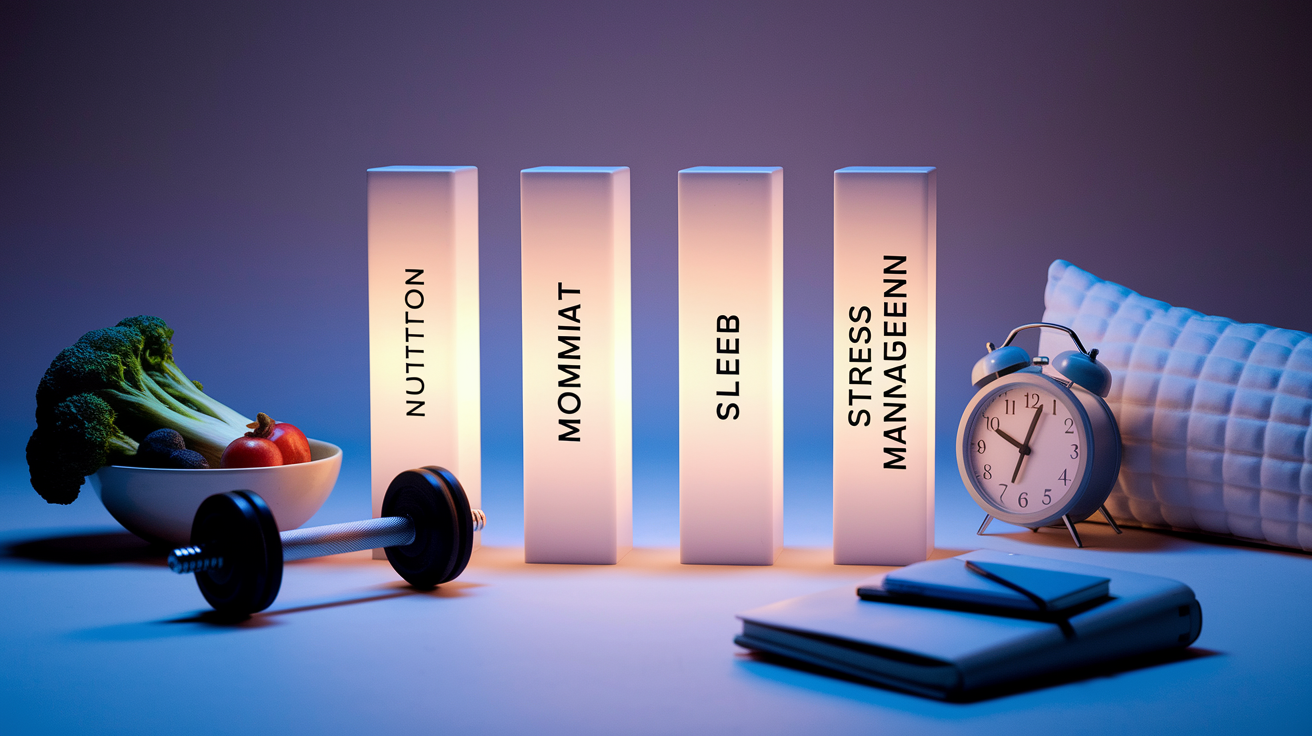
The four big pillars (nutrition, movement, sleep, and stress management) are your organizing framework. Think of them as broad buckets that hold your specific habits and goals. They’re not about listing every tiny tactic. They give you a mental map so you can see gaps and avoid overloading one area while ignoring another.
Nutrition fuels everything else. It’s not just what you eat. It’s meal planning, your relationship with food, hydration, and the systems that keep you fed consistently. A strong nutrition pillar doesn’t demand perfection. It’s about a sustainable pattern of balanced, varied eating that supports your energy over time.
Movement includes all physical activity. Structured workouts, daily walking, stretching. This is about finding types of movement you can stick with, progressively challenging your body safely, and balancing activity with rest. It’s not just burning calories. It’s strength, mobility, heart health, and the mental clarity that comes from regular physical engagement.
Sleep and stress management get ignored until they break down, but they’re just as foundational. Sleep is where your body repairs, processes what you learned, and regulates hormones. Stress management includes daily practices that help you stay steady. Breathwork, boundaries, intentional downtime. Both directly affect how well the other two pillars function, so building routines here creates ripple effects everywhere.
Designing an Environment That Supports Your Wellness Strategy

Your environment shapes almost every health decision you make. When your surroundings support your goals, you remove friction and make the healthy choice easier. This is called choice architecture, and most people don’t use it. Small tweaks to your space eliminate decision fatigue and keep you consistent when motivation dips.
The idea is to put cues for good habits in your line of sight and remove obstacles from your wellness routines. Want to drink more water? Put a full bottle on your desk every morning. Want to exercise before work? Lay out your workout clothes the night before. Want to eat more vegetables? Pre-cut them on Sunday and store them at eye level. These aren’t big dramatic changes, but they add up because they work with how you naturally move instead of fighting it.
-
Nutrition setup: Fruit in a bowl on the counter, less helpful snacks on higher shelves or in opaque containers, pitcher of water in the fridge so refilling is easy.
-
Movement cues: Yoga mat next to your bed, resistance bands near the TV, movement sessions scheduled in your calendar like appointments.
-
Sleep environment: Dim lights an hour before bed, charge your phone outside the bedroom, keep the room cool and dark, blackout curtains if needed.
-
Stress reduction: One chair or corner as your calm space for breathing or journaling, notebook and pen on the nightstand for a quick evening brain dump.
-
Workspace wellness: Standing desk or laptop riser for better posture, timer to remind you to stretch every hour, healthy snacks and water within reach.
Tracking Metrics to Strengthen Your Personal Wellness Strategy

Tracking turns intentions into data. Data tells you whether your plan’s actually working or just feels like it should be. You don’t need to measure everything, but you need to measure the things tied to your goals. Without tracking, it’s easy to think you’re doing better than you are or miss small wins that build confidence. The right metrics give you honest feedback and help you course-correct before a small drift becomes a full breakdown.
The most useful wellness metrics go beyond the scale. Energy patterns, sleep hours, mood on a 1 to 10 scale, minutes spent on meditation or movement, balanced meals eaten, hydration check-ins, weekly social contacts. All of these give you a fuller picture than weight alone. Pick three to five metrics that connect directly to your current goals and track them consistently. Weekly summaries and monthly reviews let you spot trends without getting lost in daily noise.
You can track with a paper journal, spreadsheet, habit app, or wearable device. The tool matters less than the consistency. Some people prefer writing by hand because it creates a moment of reflection. Others like apps because they send reminders and generate charts. Try one method for two weeks. If it feels like a chore instead of helpful, switch to something simpler.
| Metric | Tracking Frequency | Sample Tool | Typical Target |
|---|---|---|---|
| Exercise minutes per week | Daily log, weekly summary | Fitness app or journal | 90–150 minutes/week |
| Sleep hours per night | Daily | Wearable tracker or journal | 7–9 hours |
| Mood rating (1–10) | Daily or every other day | Journal or mood-tracking app | Trend upward over weeks |
| Balanced meals per day | Daily | Meal-tracking app or checklist | 2–3 meals with protein, fiber, color |
| Weekly social check-ins | Weekly count | Calendar or journal note | 2–3 meaningful contacts/week |
Reviewing and Adjusting Your Personal Wellness Strategy Over Time
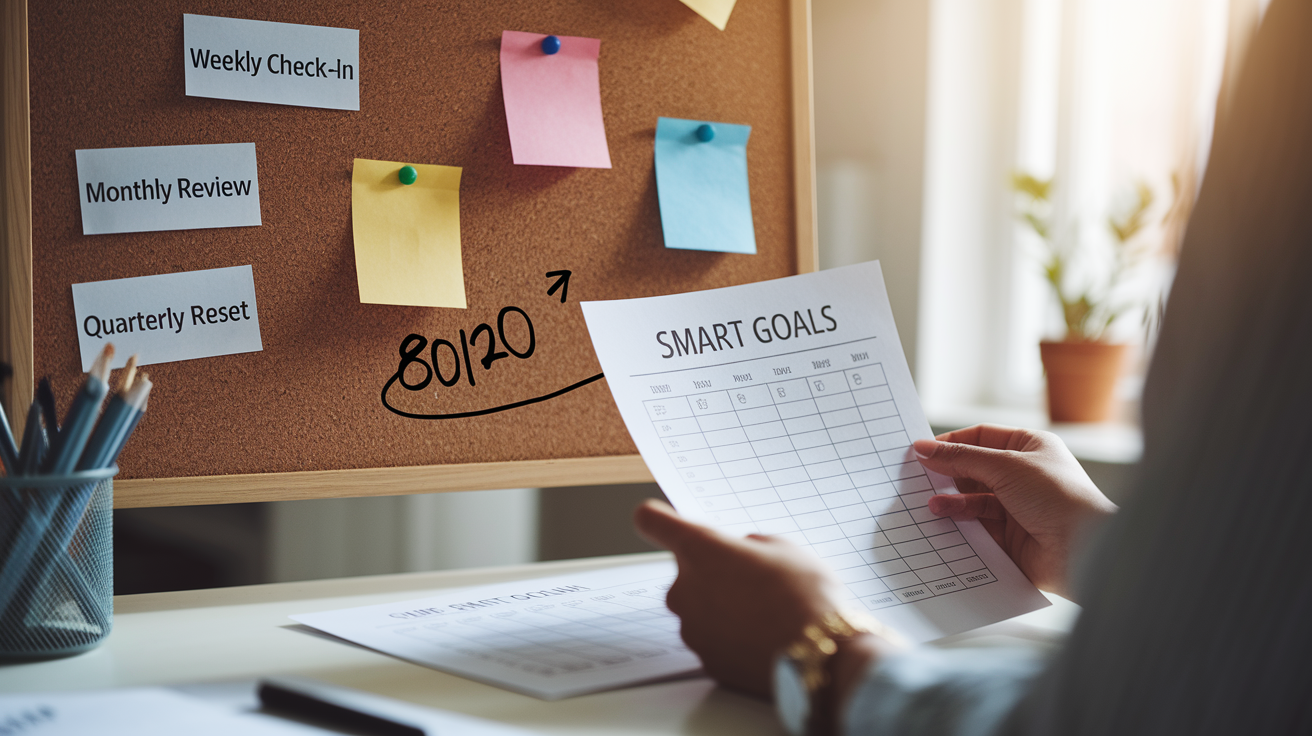
A wellness strategy that never changes stops working. Life shifts, you make progress, new challenges show up. Your plan has to adapt or it becomes a source of guilt instead of support. Regular review checkpoints let you celebrate what’s working, troubleshoot what’s not, and make intentional adjustments before frustration builds. Weekly check-ins are for small tweaks. Monthly reviews are for reassessing your SMART goals and deciding whether to scale up, scale back, or pivot.
Use the 80/20 rule. If you’re hitting your goals about 80% of the time, you’re doing well. Perfectionism kills momentum. If you’re consistently missing a goal, it’s not a sign you’re failing. It’s a sign the goal needs adjustment. Maybe the timeline was too tight, the task was too big, or your schedule changed and the original plan doesn’t fit anymore. Reduce the duration, lower the frequency, or swap in something that feels more sustainable.
-
Weekly check-in prompt: What went well this week? What felt forced or got skipped? Is there one small tweak that would make next week easier?
-
Monthly review prompt: Did I meet my SMART goals this month? If yes, am I ready to increase intensity or add a new goal? If no, what barrier showed up most often and how can I redesign around it?
-
Quarterly reset prompt: Are my priority wellness areas still the same or has something shifted? Do my current goals still align with my bigger vision or is it time to reassess?
-
Adaptation rule: If a goal goes unmet for two weeks in a row, break it into a smaller step or replace it with something more accessible. Progress beats perfection every time.
Integrating Mental and Emotional Wellness Into Your Personal Wellness Strategy

Mental and emotional wellness hold everything else together. When your stress is unmanaged or your mood’s all over the place, even the best nutrition and exercise routines feel impossible to maintain. This part of your strategy is about building practices that help you stay steady, process emotions as they come up, and create balance that carries you through hard days. You don’t need hours of therapy or a meditation retreat. Small, consistent actions add up.
Mental wellness actions include daily mindfulness, cutting evening screen time to protect your wind-down, and reading or listening to personal-development material that helps you reframe challenges. A common starting goal is meditating for 10 minutes every morning for one month or spending five minutes on breathwork before bed. These practices train your nervous system to downregulate, which improves focus, decision-making, and emotional resilience.
Emotional wellness is about creating space to notice and name what you’re feeling instead of reacting automatically or stuffing it down. Mood tracking on a 1 to 10 scale each day gives you a baseline and helps you spot patterns. Maybe your mood dips every Wednesday or improves on days you get outside. Gratitude journaling, even just three things before bed, shifts your brain toward noticing what’s working instead of only what’s broken. Weekly social check-ins with a friend or therapist provide connection and accountability, which buffer against isolation and burnout.
-
Journal for 10 minutes each evening to track emotions and reflect. Example goal: commit to this daily for two weeks to get the habit going.
-
Practice one 5-minute stress-relief technique daily. Box breathing (inhale 4 counts, hold 4, exhale 4, hold 4) or a body-scan meditation work well.
-
Schedule at least two meaningful social contacts per week. Phone calls, coffee meetups, or video chats with people who leave you feeling supported.
-
Use a simple mood tracker (app or journal) to rate your emotional state daily and note any obvious triggers or patterns.
-
Add one gratitude prompt to your evening routine. Write down three specific things that went well today, no matter how small.
-
Limit screen time in the hour before bed to protect sleep quality and give your mind a chance to settle without the stimulation of news or social feeds.
Strengthening Physical Wellness Within Your Personal Wellness Strategy

Physical wellness is the pillar most people picture first, but it’s more than workouts and weight. It’s about building a body that feels strong, moves well, recovers efficiently, and supports you in doing what you want to do. A solid physical plan includes cardio, strength work, flexibility and mobility practice, and intentional recovery. The key is progressive training. Start where you are and gradually increase intensity or duration as your capacity grows.
If 30-minute workouts three times per week feel overwhelming, start with 20 minutes daily or even 15 if that’s what fits. The entry point matters less than the consistency. A 5K training timeline typically runs about three months if you’re starting from a low baseline, with a mix of walk-run intervals that build endurance week by week. Strength training doesn’t require a gym. Bodyweight exercises, resistance bands, or a single set of dumbbells can build meaningful muscle and bone density when done regularly.
Recovery is just as important as the work. Rest days let your muscles repair and your nervous system reset. Mobility work (gentle stretching, yoga, foam rolling) keeps joints healthy and reduces injury risk as you increase activity. Balanced meal planning supports all of this by giving your body the protein, carbs, and fats it needs to fuel workouts and rebuild tissue. A simple guideline: include a source of protein at each meal, add colorful vegetables, and stay hydrated with water throughout the day, especially around exercise sessions.
Nutrition Planning to Support Your Personal Wellness Strategy
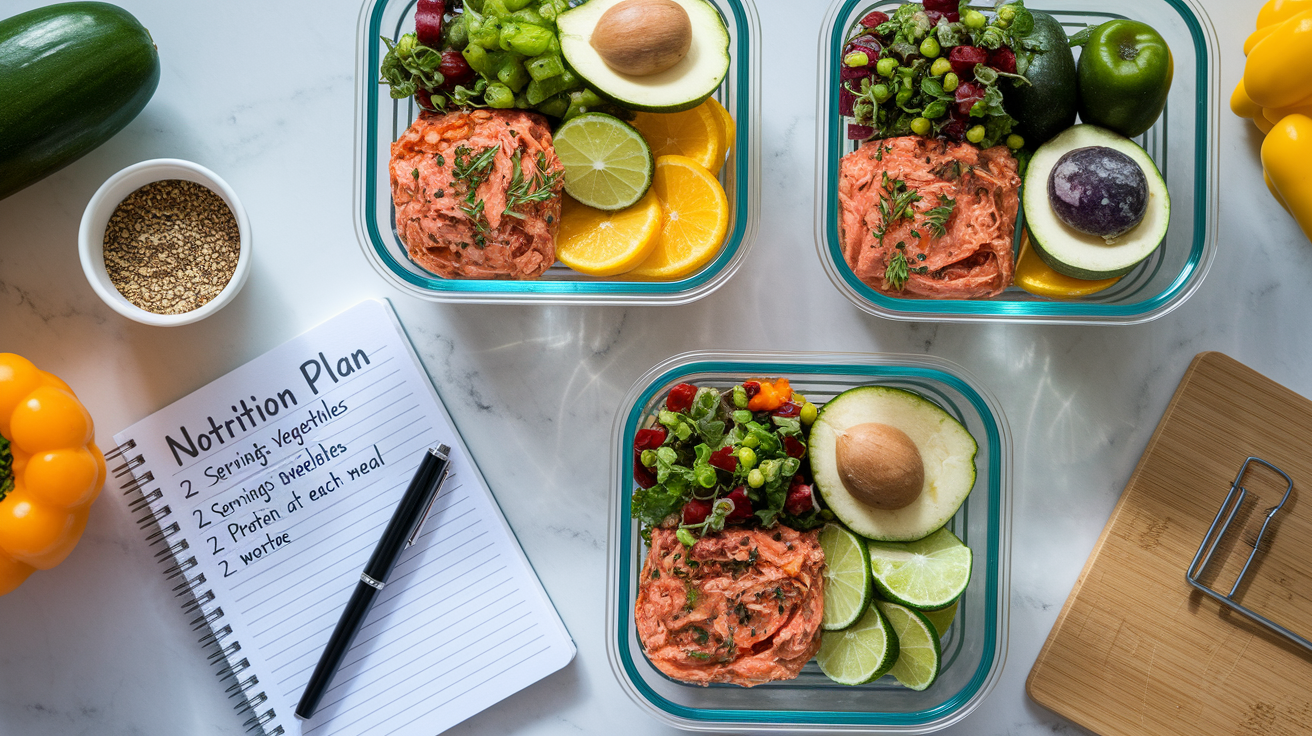
Nutrition is where a lot of wellness plans either come together or fall apart, because eating happens multiple times a day and the decisions add up fast. The goal isn’t to follow a rigid diet or count every calorie. It’s to build a sustainable pattern of balanced, varied eating that keeps your energy steady and supports your other wellness goals. Weekly planning boosts adherence more than any other single tactic. When you prepare three home-cooked meals per week, pack balanced lunches, and keep simple snacks on hand, you remove the moment-of-crisis decisions that usually lead to takeout or skipped meals.
Start with small, food-first changes instead of restriction. Add vegetables to meals you’re already eating, swap sugary drinks for water or herbal tea, include protein at breakfast to stabilize blood sugar. These tweaks feel easier than cutting out entire food groups, and they build positive momentum without triggering the all-or-nothing mindset that derails plans. Use a journal, app, or simple template to track what you eat, how you feel afterward, and whether meals leave you satisfied or still searching the pantry an hour later.
| Nutrition Strategy | Time Investment | Expected Outcome |
|---|---|---|
| Prepare 3 home-cooked dinners per week | ~2 hours meal prep on Sunday | Fewer impulse takeout orders, more balanced meals, lower grocery waste |
| Add 2 servings of vegetables daily | ~10 minutes prep (pre-cut on weekends) | Increased fiber, steadier energy, improved digestion |
| Include protein at every meal | Minimal (plan protein source when planning meal) | Better satiety, stable blood sugar, reduced cravings between meals |
| Track meals and mood for 2 weeks | ~5 minutes per day | Clear picture of patterns, easier to identify food-energy connections |
Creating Accountability and Support for Your Personal Wellness Strategy

Even a well-designed plan struggles without accountability. When you’re the only person who knows your goals, it’s easy to quietly let them slide when life gets busy or motivation dips. Building a support system (one trusted friend, a weekly check-in partner, or professional guidance) dramatically increases your odds of staying consistent. Accountability isn’t about shame or pressure. It’s about creating structure that helps you show up for yourself even on the days you don’t feel like it.
Start by sharing your goals with one person who’ll check in with you regularly. This could be a weekly text exchange where you both report on wins and struggles, a standing coffee date where you review your tracking data together, or a shared app where you log progress and cheer each other on. The simple act of knowing someone will ask “How did it go this week?” makes you more likely to follow through. For complex or persistent issues (chronic fatigue, suspected hormonal imbalances, unresolved digestive problems, or mental health challenges that don’t improve with self-care), seeking help from a coach, therapist, or healthcare provider is the most important form of support you can add to your strategy.
-
Share your top three wellness goals with a friend or family member and ask them to check in with you once a week via text or call.
-
Schedule a standing weekly review session with an accountability partner where you both discuss what worked, what didn’t, and what you’ll adjust for the coming week.
-
Join an online community or local group focused on one of your wellness pillars (running club, meal-prep group, meditation class) to add social support and shared learning.
-
Consider working with a professional (nutritionist, personal trainer, therapist, or wellness coach) when you hit a plateau, need personalized guidance, or are managing a health issue that requires expert input beyond general self-care strategies.
Final Words
You now have a clear starting point: scored your wellness across physical, mental, nutrition, and lifestyle areas, chose top priorities, and learned to turn them into SMART goals. You also set up pillars, designed your environment, picked tracking metrics, and planned regular reviews.
Use the 1–10 ratings to map one small goal this week, then make it measurable and time‑bound.
If you want to know how to design a personal wellness strategy, start with one tiny change and build from there. You’ve got this.
FAQ
Q: How do I start designing a personal wellness strategy?
A: The best way to start designing a personal wellness strategy is to run a brief self-assessment across core areas, rate each 1–10, then pick the three lowest scores as priority areas to target first.
Q: What should be on a wellness self-assessment checklist?
A: A wellness self-assessment should cover physical (energy, sleep, digestion, pain), mental/emotional (stress, mood, fulfillment), nutrition (cravings, variety, hydration), and lifestyle (work-life balance, social connections).
Q: How do I use a 1–10 rating system to find priorities?
A: A 1–10 rating system works by scoring each area, spotting your lowest three scores, and making those the focus for short-term goals to gain quick, manageable wins and clear direction.
Q: How do I turn assessment results into SMART wellness goals?
A: Turning assessment results into SMART wellness goals means choosing one clear, measurable habit tied to a priority area, setting a realistic timeline, and ensuring it’s relevant to your daily life.
Q: When will I notice improvements after starting a wellness plan?
A: You’ll often notice small wins in two weeks, new routines in about a month, and meaningful fitness or habit changes around three months, depending on consistency and realistic goal setting.
Q: What are the core pillars of a personal wellness strategy?
A: The core pillars are nutrition, movement, sleep, and stress management; they offer a simple framework to organize goals and routines without forcing specific tactics right away.
Q: How can I arrange my home and workspace to support wellness habits?
A: Designing your environment to support wellness means reducing friction: place water and healthy foods where you see them, prep workout clothes, and use visual cues that make habits easier to start.
Q: What should I track to measure progress and how often?
A: Track energy patterns, sleep hours, mood ratings, meditation minutes, exercise minutes per week, hydration, and social check-ins; summarize weekly and review progress monthly for clearer accountability.
Q: How often should I review and adjust my wellness strategy?
A: You should do brief weekly check-ins for small tweaks and full monthly reviews to reassess SMART goals, using the 80/20 rule to avoid perfection and keep changes sustainable.
Q: How can I include mental and emotional wellness in my plan?
A: Include mental and emotional wellness by adding daily mindfulness, mood tracking, gratitude journaling, reduced evening screens, and weekly social check-ins to build resilience and steady mood improvements.
Q: When should I seek professional help for my wellness plan?
A: You should seek professional help when issues are complex, persistent, or severe—like chronic fatigue or suspected hormonal imbalance—or if goals repeatedly fail despite sensible adjustments.