

Think breakfast timing doesn’t matter? For most people, the best time to eat breakfast for energy is the 7–9 AM window.
This matches your body’s natural rhythm when insulin sensitivity and digestion are primed, so carbs and protein turn into steady fuel instead of a quick crash.
Eating within one to two hours of waking and choosing a mix of protein, fiber, and healthy fat helps prevent the mid-morning slump and steadies appetite.
Stick to a consistent morning schedule and you’ll notice clearer focus and more reliable energy.
Optimal Morning Meal Timing for Maximizing Energy

The best time to eat breakfast for steady energy? Between 7:00 and 9:00 a.m. for most people. This lines up with your body’s natural rhythm, when insulin sensitivity is highest and your metabolism is ready to handle carbs efficiently. Research shows that eating before 8:30 a.m. brings the strongest metabolic benefits, while regularly eating after 9:00 a.m. links to higher heart disease risk markers and shakier blood sugar control later in the day.
Your wake time determines your ideal breakfast window. A simple rule is eating within one to two hours of waking. If you’re up at 6:00, shoot for eating by 7:00 or 8:00. This refills the glycogen your body used overnight and stops the mid-morning energy crash that usually triggers cravings for something sweet. Morning is when your body naturally handles glucose best, so eating earlier takes advantage of this instead of working against it later.
Waiting too long or skipping breakfast can backfire. Your blood sugar stays unstable, focus wanders, and by mid-morning you’re grabbing whatever’s nearby rather than what actually fuels you. Consistency matters almost as much as timing. Eating around the same time each morning trains your internal clock and keeps your appetite signals stable all day.
Five Key Benefits of Eating Breakfast in the 7–9 AM Window:
-
Better blood sugar control – Morning insulin sensitivity means your body processes carbs more efficiently, cutting down on glucose spikes and crashes that leave you tired or jittery.
-
Reduced mid-morning slump – Eating earlier prevents that energy dip around 10:00 or 11:00 a.m., keeping focus and productivity steady until lunch.
-
Improved cognition and mental clarity – Studies link regular early breakfast to higher cognitive test scores and better short-term memory, especially for tasks needing sustained attention.
-
More stable appetite throughout the day – An earlier first meal helps regulate hunger hormones like ghrelin and leptin, reducing the chance of overeating at lunch or impulse snacking.
-
Better metabolic alignment – Eating in sync with your circadian rhythm supports hormone timing, digestion efficiency, and long-term markers like triglycerides and fasting glucose.
How Circadian Rhythm Influences Morning Meal Timing and Energy

Your circadian rhythm is more than sleep and wake cycles. It’s a 24-hour internal clock controlling digestion speed, hormone release, glucose tolerance, and how efficiently your cells use energy. When you eat sends signals to this clock, training it to expect fuel at certain times. Morning is when your body naturally produces the hormones and enzymes needed to break down food and turn it into usable energy. That’s why eating earlier tends to feel easier metabolically than eating the same meal late at night.
Insulin sensitivity peaks in early morning and steadily drops as the day goes on. A bowl of oatmeal at 8:00 a.m. will cause a smaller, more controlled blood sugar rise than the same bowl at 8:00 p.m. Eating earlier aligns your intake with this natural rhythm, reducing strain on your pancreas and helping you avoid the blood sugar roller coaster that drains energy and focus. Late or erratic meal timing can throw these rhythms off, leaving you sluggish even after eating.
Key Morning Hormones That Influence Energy
Cortisol naturally peaks within 30 to 60 minutes of waking. This spike helps you feel alert and primes your body to handle incoming glucose. Insulin works alongside cortisol to move that glucose into cells for immediate energy or storage. Ghrelin, your hunger hormone, typically rises after waking and signals it’s time to eat. Leptin, which signals fullness, is lower in the morning and gradually increases after you eat a balanced meal. When these hormones sync with consistent breakfast timing, you get steady energy, clearer hunger cues, and better appetite control for the rest of the day.
Personalized Breakfast Timing Based on Wake Time and Lifestyle

Not everyone wakes up at the same time. The key is eating within two to three hours of waking, no matter when that happens. Wake at 6:00 a.m.? Aim to eat by 7:00 or 8:00 a.m. Sleep until 9:00 a.m.? Eating by 10:30 or 11:00 a.m. still gives you the circadian benefits relative to your personal wake time. The goal is consistency with your own schedule, not forcing yourself into someone else’s morning routine.
Shift workers and late sleepers face extra challenges, but the same principle applies. Your body’s internal clock resets based on when you wake and see light, so eating within that two to three hour window after waking maintains metabolic alignment even if your day starts at noon. The bigger problem is large day to day variability. Eating at 7:00 a.m. on weekdays and 11:00 a.m. on weekends disrupts your body’s ability to predict and prepare for incoming food, leading to less stable energy and weaker appetite regulation.
If you’re not naturally hungry right after waking, that’s often a sign of late night eating. Finishing dinner at least two hours before bed gives your body time to digest and helps morning hunger return. You don’t need a full meal immediately. Starting with something small like a cup of Greek yogurt or a piece of fruit with nut butter within an hour of waking can be enough to kickstart your metabolism and build the habit.
Personalized Breakfast Timing Recommendations:
- Early risers (wake 5:30–6:30 a.m.): Eat by 7:00–8:00 a.m. to align with peak insulin sensitivity and prevent fatigue during your first few hours awake.
- Standard schedules (wake 7:00–8:00 a.m.): Aim for breakfast between 7:30 and 9:30 a.m., ideally on the earlier side of that range for metabolic advantages.
- Late sleepers (wake 9:00–11:00 a.m.): Eat within two hours of waking (by 11:00 a.m.–1:00 p.m.) to maintain circadian alignment relative to your personal wake time.
- Shift workers or rotating schedules: Eat within two to three hours of waking regardless of the clock time, and keep that timing as consistent as possible across work days to reduce metabolic confusion.
Ideal Breakfast Composition to Support Morning Energy
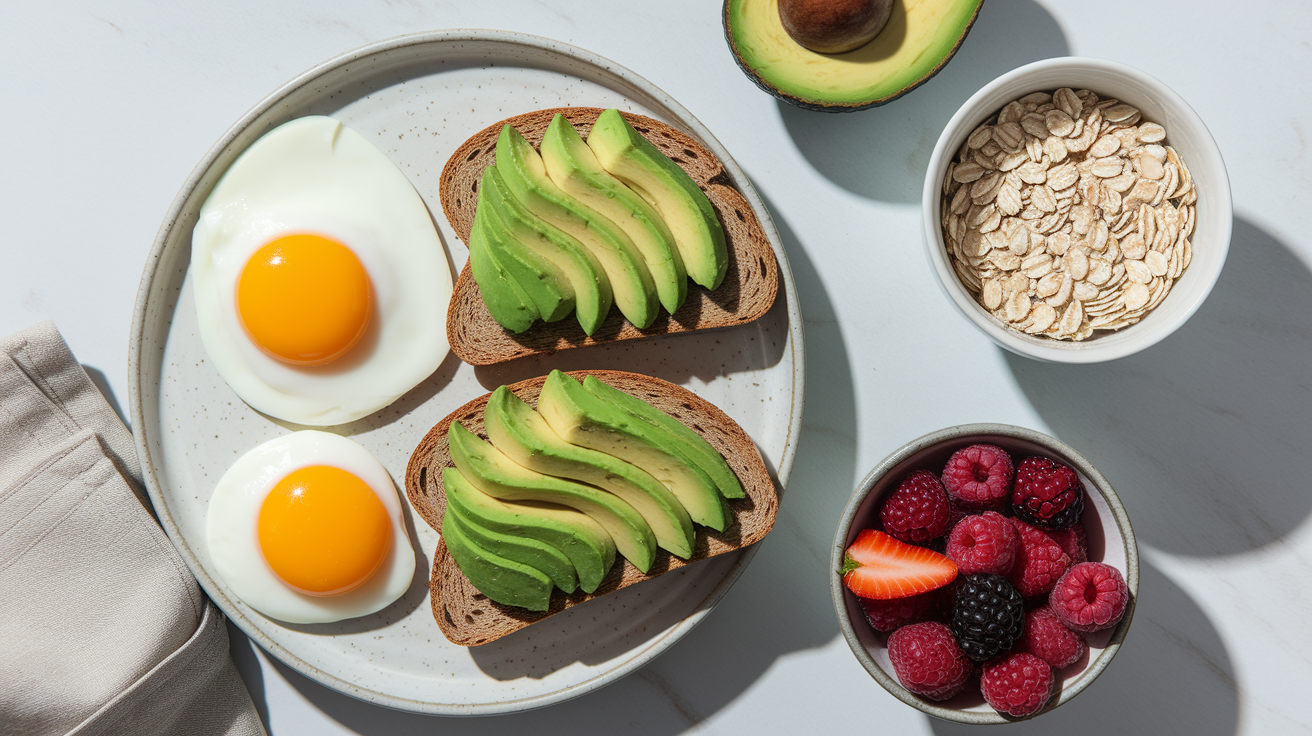
The best breakfast for sustained energy includes three macronutrients working together: protein, complex carbohydrates, and healthy fats. Protein (aim for 20 to 30 grams) supports muscle repair, keeps you full longer, and prevents the blood sugar spike and crash cycle. Complex carbohydrates (30 to 60 grams from whole grains, oats, or fruit) provide immediate fuel without overwhelming your system. Healthy fats (5 to 15 grams from sources like nuts, seeds, or avocado) slow digestion and help you feel satisfied for hours.
Fiber plays a supporting role but shouldn’t be overlooked. Aiming for 5 to 10 grams at breakfast helps regulate digestion, stabilizes glucose absorption, and keeps hunger at bay until your next meal. Think of fiber like a gentle broom for your digestion. When you combine these elements in one meal, you’re building a plate that works with your body’s morning metabolic state rather than against it.
Skipping any one of these can leave you feeling off. A breakfast of only carbs (like a plain bagel or sugary cereal) will spike your blood sugar quickly, then drop it just as fast, leaving you foggy and craving more food within an hour. A breakfast of only protein and fat (like just eggs) might keep you full but can leave some people feeling low on quick energy, especially if they’re active in the morning. Balance is the practical answer.
| Macronutrient | Recommended Range | Energy Benefit |
|---|---|---|
| Protein | 20–30 grams | Supports satiety, stabilizes blood sugar, aids muscle repair and prevents mid-morning hunger |
| Complex Carbohydrates | 30–60 grams | Provides immediate fuel for brain and muscles; whole grains slow glucose release for steady energy |
| Healthy Fats | 5–15 grams | Slows digestion, increases fullness, and delivers long-lasting energy without spiking blood sugar |
Food Choices That Boost Morning Energy and Support Stable Blood Sugar
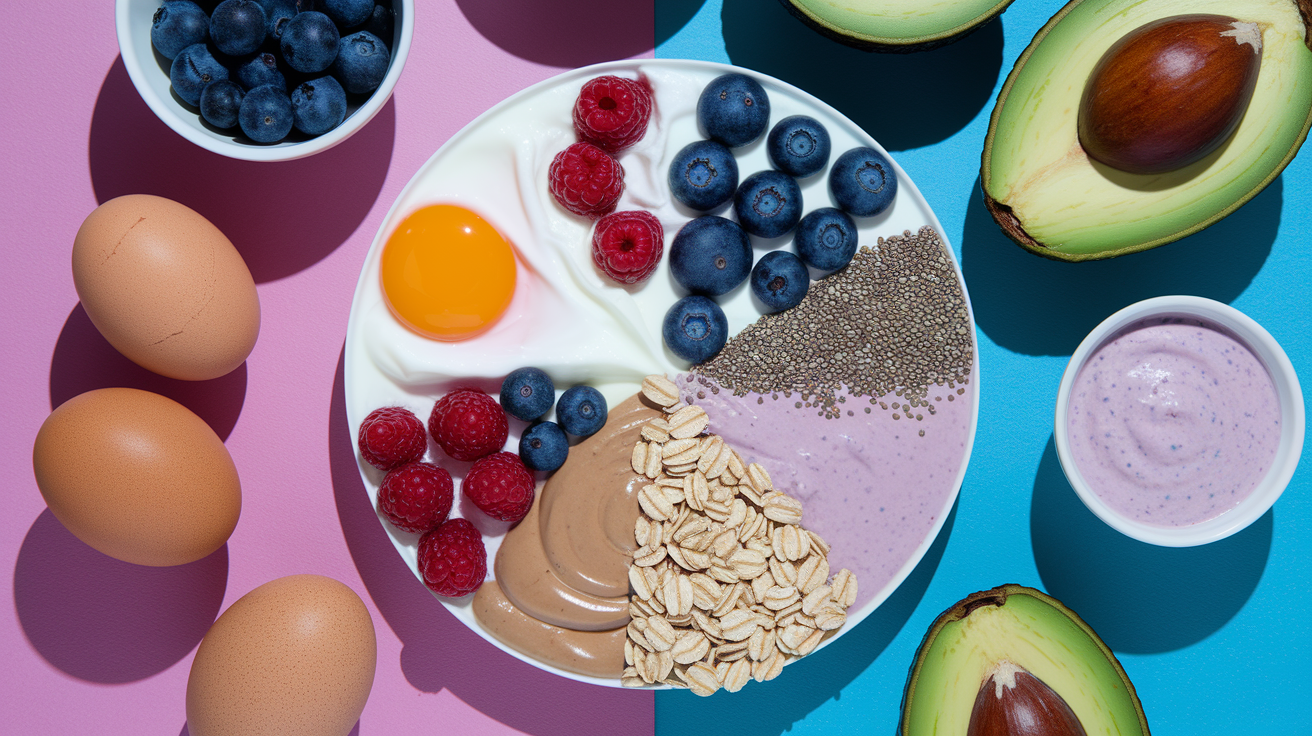
The foods you choose matter just as much as when you eat them. Whole food options combining protein, fiber, and healthy fats will always outperform refined, sugary choices when it comes to sustained energy. Eggs are a go-to for many people. Two large eggs give you about 12 grams of protein and pair well with whole grain toast and avocado for a balanced plate. Greek yogurt (aim for unsweetened or low sugar versions) delivers around 20 grams of protein per cup and works perfectly with a handful of nuts and berries.
Oatmeal is another solid choice, especially when you add a spoonful of nut butter and some fruit. One cup of cooked oats gives you roughly 30 to 40 grams of complex carbs and 3 to 4 grams of fiber, while the nut butter adds protein and fat to slow digestion. Smoothies can work well if you include protein powder or Greek yogurt, a serving of fruit, and a source of fat like flaxseeds or chia seeds. The key is avoiding smoothies that are just fruit and juice, which can spike your blood sugar as fast as a pastry.
Six Recommended Breakfast Combinations for Steady Energy:
- Eggs + whole grain toast + avocado – Balanced protein, healthy fat, and complex carbs to keep you full and focused.
- Greek yogurt (unsweetened) + mixed berries + handful of almonds or walnuts – High protein, antioxidants, and satisfying crunch.
- Oatmeal + peanut or almond butter + sliced banana – Fiber-rich carbs with added protein and potassium for muscle function.
- Tofu scramble + sautéed mushrooms and spinach + baked sweet potato wedges – Plant-based protein with vitamins and slow digesting carbs.
- Protein smoothie (Greek yogurt or protein powder) + mixed berries + flaxseeds + handful of spinach – Quick, portable, and nutrient-dense.
- Whole grain cereal (low sugar) + milk or unsweetened plant milk + sliced fruit – Simple, fast option that still delivers fiber and protein.
Common Breakfast Timing Mistakes That Lead to Energy Crashes
Delaying breakfast beyond 10:00 a.m. is one of the most common timing mistakes. Waiting too long after waking misses the window when your insulin sensitivity is highest, which means your body has to work harder to manage blood sugar later in the day. This often shows up as mid-morning fatigue, difficulty concentrating, and stronger cravings for quick energy foods like candy or chips.
Choosing high sugar, low protein breakfasts is another fast track to an energy crash. Pastries, sugary cereals, white bread with jam. These options cause a rapid glucose spike followed by a sharp drop, leaving you tired and hungry again within an hour or two. Your body releases a surge of insulin to handle the sugar, and when that glucose gets cleared from your bloodstream too quickly, you’re left running on empty.
Late night eating also sabotages your morning routine. If you’re snacking heavily after 9:00 or 10:00 p.m., you reduce the fasting window that helps your body reset overnight. This can leave you without natural morning hunger and disrupt the hormonal cues that would otherwise signal it’s time to eat. Finishing dinner at least two hours before bed is a simple fix that often brings morning appetite back within a few days.
Four Common Timing and Food Mistakes to Avoid:
-
Waiting more than three hours after waking to eat – Extends the fasting period into the biologically active part of your day, reducing metabolic efficiency and increasing fatigue.
-
Eating refined carbs without protein or fat – Causes rapid blood sugar spikes and crashes, triggering mid-morning slumps and cravings.
-
Inconsistent breakfast timing day to day – Large variability (eating at 7:00 a.m. on weekdays, 11:00 a.m. on weekends) confuses your circadian rhythm and weakens appetite regulation.
-
Late night eating that shortens your overnight fast – Reduces morning hunger signals and limits the metabolic reset that occurs during a proper fasting window.
Breakfast Timing for Workouts, Productivity, and Mental Focus

Eating within one to two hours of waking supports cognitive performance, especially for tasks requiring sustained attention and memory. Longitudinal studies have linked regular breakfast eating to higher cognitive test scores and less cognitive decline over time, while skipping breakfast regularly is associated with lower mental clarity and slower reaction times. If your morning involves focused work, meetings, or problem solving, an earlier breakfast gives your brain the glucose and nutrients it needs to perform at its best.
For early morning workouts, timing gets a bit more specific. If you’re exercising immediately after waking, a small pre-workout snack about 30 to 60 minutes before can provide quick energy without feeling heavy. Think a piece of toast with a thin layer of nut butter or half a banana. After your workout, aim for a more balanced meal with protein and complex carbs within an hour to support muscle recovery and replenish glycogen stores. This approach prevents the mid-morning crash that can happen when you exercise fasted and then delay eating.
If your workout is later in the morning or you prefer training fasted, eating a full breakfast within two hours of waking still makes sense for cognitive and metabolic benefits. You can time a smaller snack closer to your workout if needed, but the priority remains fueling your body early enough to align with circadian rhythms and support stable energy for the rest of the day.
Timing Strategies for Different Morning Activities
For early cardio sessions, a light snack 30 to 60 minutes before (like a small muffin made with almond flour or a handful of nut granola mix) provides quick fuel without digestive discomfort. For strength training, a slightly larger pre-workout option with both carbs and protein, such as oatmeal with peanut butter, can improve performance and muscle endurance. If your morning is focused on desk work or meetings rather than exercise, prioritize eating a balanced breakfast within two hours of waking to support mental clarity, focus, and steady productivity until lunch.
Breakfast Timing for Weight Management and Blood Sugar Regulation

Eating breakfast earlier in the morning has been consistently linked to better weight management outcomes and improved metabolic markers. Large scale studies show that people who eat their first meal around 9:00 a.m. or earlier have a 60 percent lower risk of developing type 2 diabetes compared to those who delay breakfast past 10:00 a.m. The earlier timing appears to enhance glucose regulation, reduce fasting insulin levels, and improve the body’s ability to clear triglycerides from the bloodstream after meals.
Front loading calories earlier in the day, rather than eating most of your food in the evening, has also been associated with greater weight loss in intervention studies. When you eat more at breakfast and lunch and less at dinner, your body processes those calories more efficiently thanks to higher daytime insulin sensitivity. This pattern reduces fat storage, stabilizes blood sugar across the day, and often decreases overall calorie intake because you’re less likely to overeat at night when metabolic efficiency is lower.
For people practicing intermittent fasting, choosing an earlier eating window (such as 8:00 a.m. to 4:00 p.m. instead of noon to 8:00 p.m.) appears to amplify metabolic benefits. The earlier window takes advantage of your body’s natural circadian rhythms, leading to better glucose control, lower evening blood sugar levels, and improved cardiovascular markers like blood pressure and cholesterol. It’s not just about restricting hours. It’s about aligning those hours with when your body is metabolically primed to handle food.
Four Metabolic Improvements Linked to Earlier Breakfasts:
- Lower fasting blood glucose levels – Eating earlier helps regulate morning blood sugar and reduces glucose variability throughout the day.
- Improved triglyceride clearance – Earlier meal timing is associated with lower triglyceride levels after meals, reducing cardiovascular risk.
- Better insulin sensitivity – Consistently eating breakfast in the 7–9 a.m. window trains your body to use insulin more efficiently, lowering diabetes risk.
- Reduced evening hunger and cravings – Front loading calories earlier stabilizes appetite hormones, making it easier to eat lighter at night without feeling deprived.
Troubleshooting Low Morning Appetite and Inconsistent Breakfast Habits

Not feeling hungry in the morning is common, but it’s often a sign that your eating window is running too late into the evening. If you’re snacking or eating a large dinner close to bedtime, your body is still digesting when you wake up, which suppresses morning hunger signals. Finishing dinner at least two hours before bed (and ideally three if you’re trying to reset your appetite) gives your digestive system time to complete its work and allows natural morning hunger to return.
If the idea of a full breakfast feels overwhelming, start smaller. A container of unsweetened Greek yogurt, a piece of fruit with a tablespoon of peanut butter, or a small smoothie can be enough to activate your metabolism and train your body to expect food in the morning. Over time, most people find that their appetite increases and they’re ready for a more substantial meal. Consistency is what builds the habit. Eating at roughly the same time each morning, even if it’s just a small amount, signals your circadian clock and stabilizes hunger cues.
Five Starter Options and Habit Fixes for Low Morning Appetite:
- Small Greek yogurt cup (unsweetened or low sugar) with a handful of berries – Light, easy to eat, delivers protein and quick energy.
- Apple slices with one tablespoon of natural peanut or almond butter – Portable, satisfying, combines fiber and healthy fat.
- Half a protein smoothie (make ahead and sip slowly) – Gentle on the stomach, customizable, and nutrient-dense.
- One hard boiled egg with a small piece of whole grain toast – Minimal prep, balanced protein and carbs, easy to adjust portion size.
- Finish dinner earlier (at least two hours before bed) – Restores morning hunger signals by allowing complete digestion overnight, making breakfast feel more natural.
Final Words
in the action, we covered the ideal breakfast window, roughly 7–9 a.m., why your circadian rhythm and morning hormones make earlier meals easier to use, and how wake time shapes your personal window.
Practical steps: aim to eat within 1 to 2 hours of waking, include protein and fiber, and pick a simple starter like yogurt and fruit. Small tweaks beat perfection.
If you try shifting your first meal earlier for a few days, you’ll likely notice steadier energy and fewer mid-morning crashes. That’s the core of the best time to eat breakfast for energy. You’ve got this.
FAQ
Q: What is the 3 3 3 rule for eating?
A: The 3 3 3 rule for eating is a simple timing guide: eat within 3 hours of waking, aim to eat every 3 hours during the day, and finish eating about 3 hours before bedtime to steady energy.
Q: How soon should you eat breakfast after waking up?
A: You should eat breakfast within 1–2 hours of waking, ideally around 7–9 a.m. when possible, to refill overnight energy, stabilize blood sugar, and help avoid a mid-morning slump.
Q: Does eating breakfast help lower cholesterol?
A: Eating breakfast can help lower cholesterol when it’s a regular, fiber-rich, protein-forward meal; whole grains, fruit, and healthy plant fats support healthier lipid levels over time.
Q: What is the 5 4 3 2 1 eating rule?
A: The 5 4 3 2 1 eating rule is a simple balance guide often used to plan meals: think 5 portions veg, 4 fruit, 3 whole-grain servings, 2 protein portions, and 1 healthy fat.