
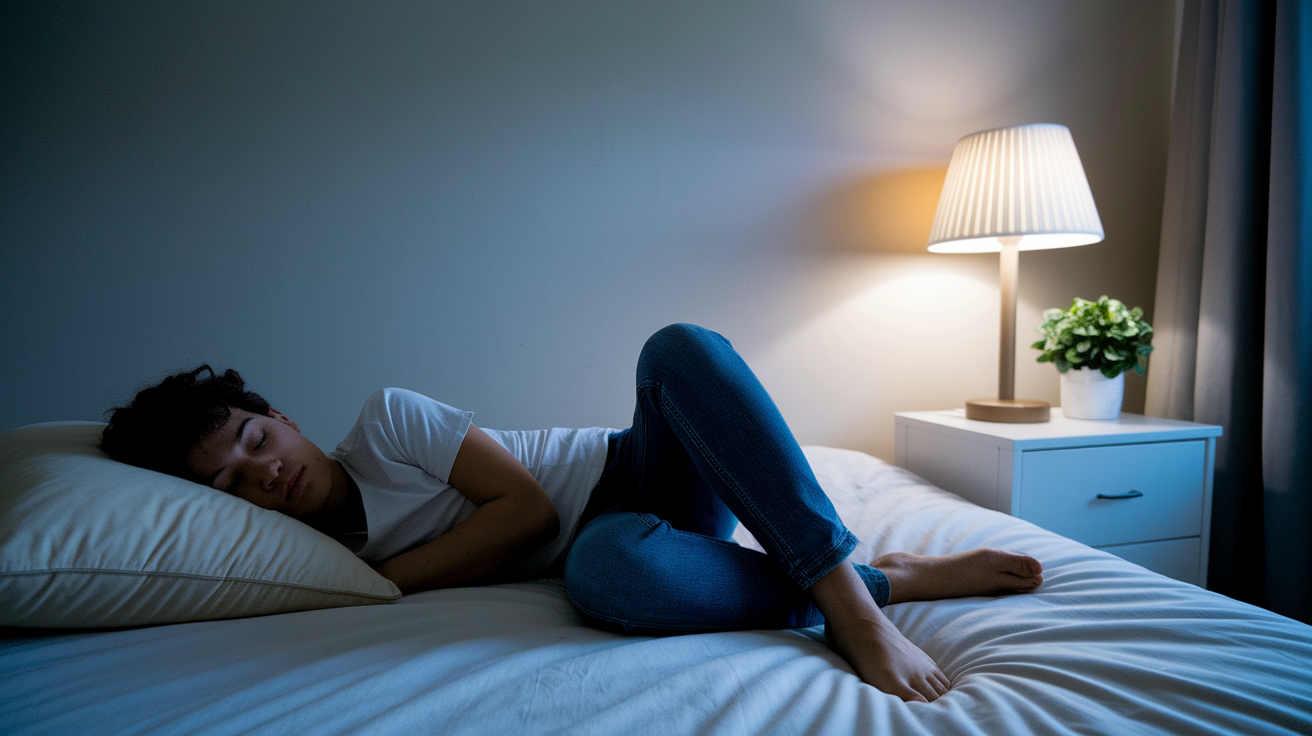
Controversial: sleeping on your right side might be part of why you wake up with a puffy, uncomfortable belly.
Left-side sleeping uses gravity to guide gas and stool the right way, so you often feel less pressure by morning.
If you have reflux or chest pressure, a slight torso elevation (stacked pillows or a wedge) keeps acid down and still eases bloating.
This post shows simple, night-of tweaks—how to position your pillows, when to switch, and a quick 3-night plan—so you can try the best position and actually sleep through the night.
Immediate Sleep Positions That Relieve Bloating Fast

Lie on your left side with a pillow tucked between your knees. This position helps your body move gas through your digestive tract more easily. Keep your legs slightly bent and let your top arm rest in front of you or on a second pillow to prevent rolling forward.
If you also feel heartburn or pressure in your chest, prop your upper body up at an angle instead. Stack two firm pillows under your head and shoulders, or use a wedge cushion to lift your torso about six to nine inches. This setup reduces the backward flow of stomach acid and takes pressure off your bloated belly.
The fetal position works when you feel a tight knot of trapped gas in your middle. Curl onto your side with your knees drawn gently toward your chest. Place a pillow between your knees to protect your hips and lower back. This curled shape can help squeeze out pockets of air that are stuck in the loops of your intestines.
Quick adjustments you can make right now:
• Loosen your waistband or pajama drawstring so nothing presses into your stomach.
• Slide a rolled towel or small cushion under your lower ribs if lying on your side feels uneven.
• Shift your hips back a few inches if you feel your belly sagging forward in any side position.
• Elevate your knees slightly with a folded blanket when lying on your back to flatten your lower spine.
• Switch sides every 20 to 30 minutes if you start to feel stiff or sore in one shoulder.
Understanding How Sleeping Positions Affect a Bloated Stomach
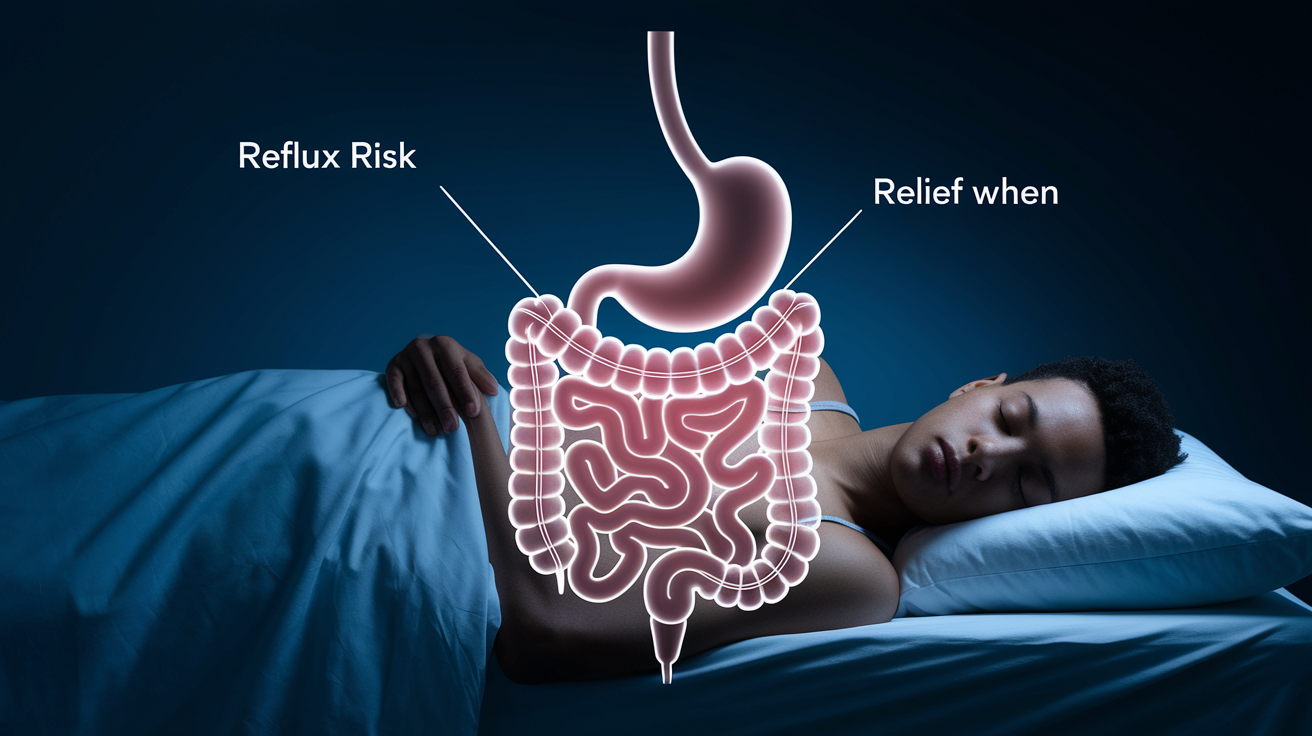
Your digestive system runs from your stomach on the left side of your upper abdomen, through loops of small intestine in the center, and into your colon, which frames the outer edge of your belly. When you lie down, gravity stops pulling downward and starts pulling sideways. That shift changes how gas bubbles move and how much pressure builds against the walls of your intestines.
Lying on your right side can let stomach acid slide back up into your esophagus more easily because of the angle where your esophagus meets your stomach. A study published in the Journal of Clinical Gastroenterology found that people experienced more reflux episodes when they slept on their right side compared to their left. The same principle applies to gas. When you lie in certain positions, pockets of air can get trapped in bends of your colon instead of moving toward the exit.
Back sleeping spreads your weight evenly, which can reduce localized pressure on any one part of your abdomen. But if your torso’s completely flat, it may slow down the emptying of your stomach and let acid or gas sit longer in places that feel uncomfortable. Elevating your head and chest uses gravity to keep digestive contents moving in the right direction and away from the top of your stomach.
Left Side Sleeping Benefits for Bloating Relief
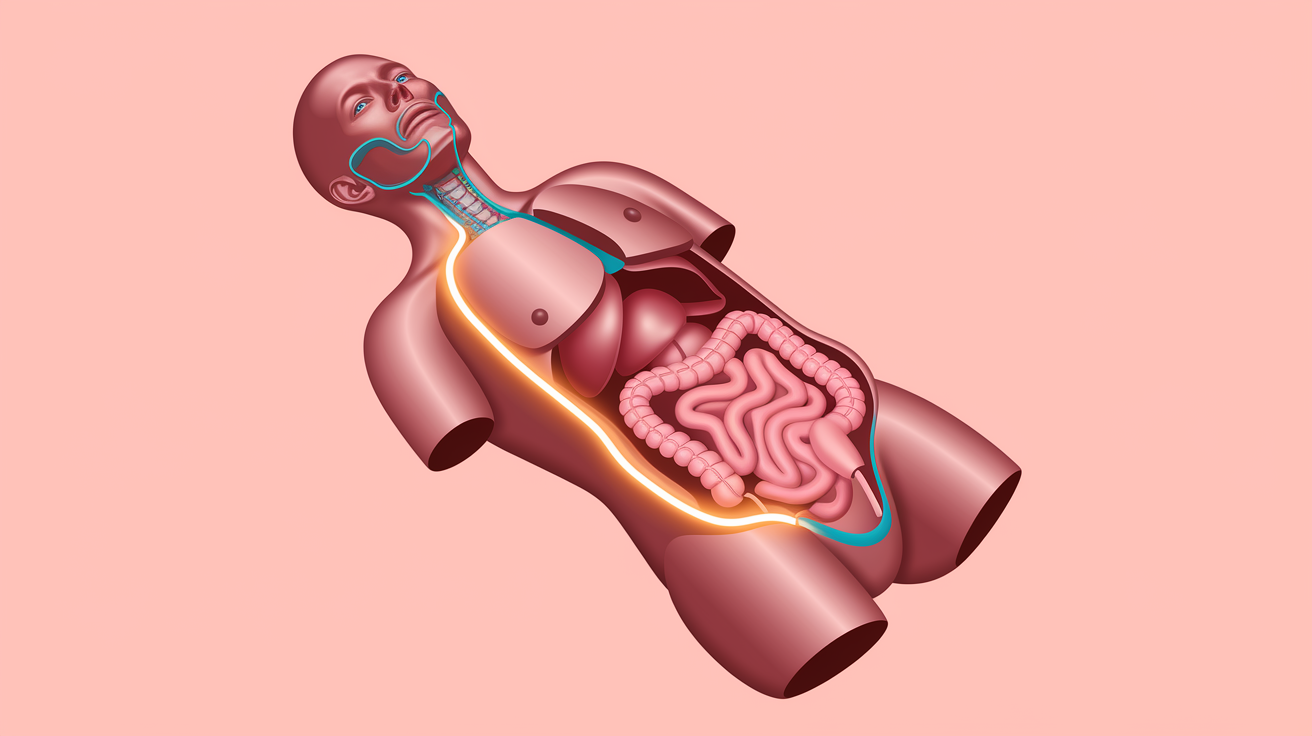
Your colon makes a square shaped path around your abdomen. It travels up the right side, across the top under your ribs, down the left side, and then across the bottom to the exit. When you lie on your left, the natural layout of this pathway works with gravity to guide gas and stool downward and around that final left side curve. The junction where your small intestine empties into your large intestine sits in your lower right abdomen, so lying on your left encourages that flow to keep moving rather than pooling.
About 96% of people with irritable bowel syndrome report bloating or visible swelling, and roughly 20 to 30% of the general population deal with bloating regularly. For many of those people, left side sleeping offers the most consistent overnight relief because it supports the mechanics your gut’s already trying to complete. It also reduces the chance of acid washing back into your esophagus, which can add burning discomfort on top of the tight, stretched feeling in your belly.
Advanced pillow strategies for left side sleeping:
- Use a medium thickness pillow for your head so your neck stays level with your spine, not tilted up or down.
- Place a firm pillow or folded blanket between your knees to keep your top hip from rolling forward and twisting your lower back.
- Hug a body pillow or second standard pillow against your chest to stop your top shoulder from collapsing inward.
- Slide a small rolled towel under your waist if you feel a gap between your side and the mattress.
- Keep your bottom arm slightly in front of you instead of trapped under your body to avoid numbness.
- Switch to your right side for 10 to 15 minutes if your left shoulder starts to ache, then return to the left.
This position’s most effective because it aligns with the directional flow your intestines are designed to follow. When 75% of menstruating women report bloating at some point in their cycle, and a significant portion of the general population deals with it routinely, a sleep posture that works with your anatomy rather than against it makes a measurable difference in how you feel when you wake up.
Back Sleeping Variations to Reduce Bloating and Abdominal Pressure
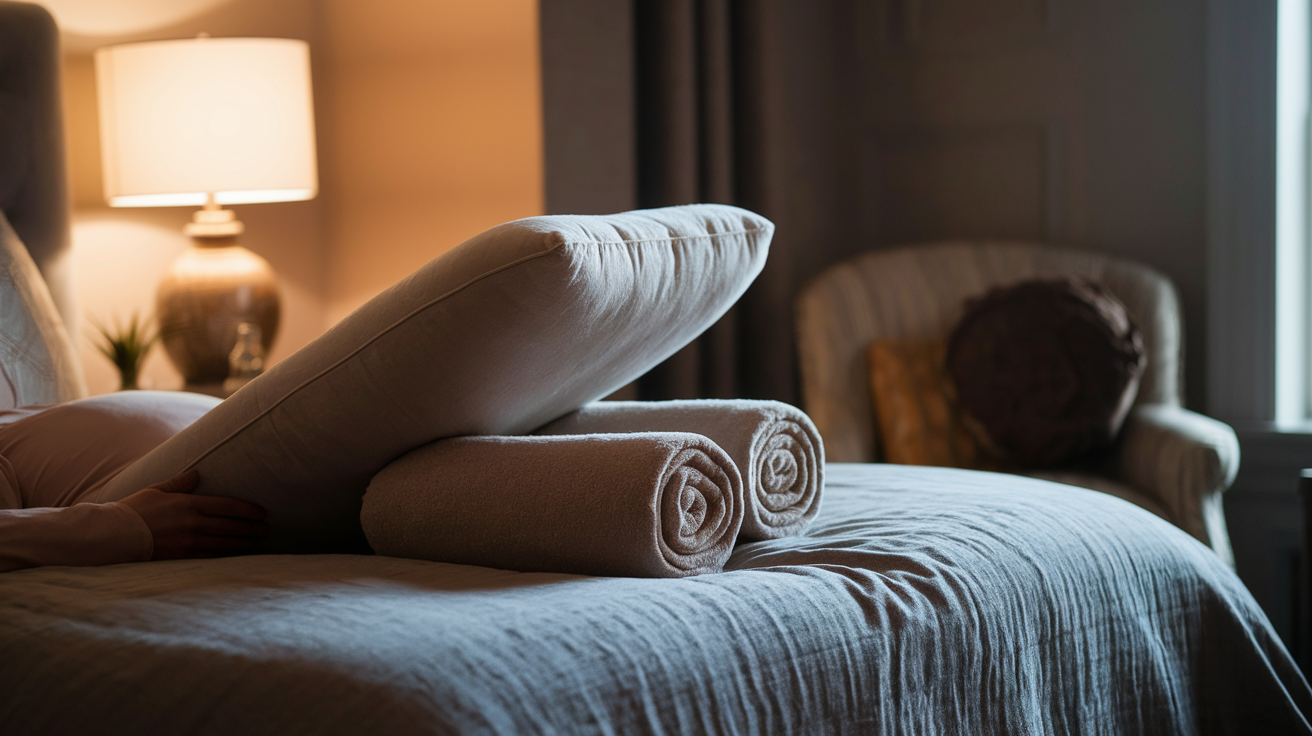
Lying flat on your back spreads your body weight across the largest surface area, which can ease localized pressure points and let your abdominal muscles relax fully. That even distribution often feels soothing when your belly’s tight and swollen. But if you also deal with acid reflux or GERD, a completely flat position can let stomach acid creep up into your esophagus and make bloating feel worse because the burning sensation layers on top of the gas pressure.
Raising your head and torso six to nine inches tilts your entire upper body so gravity keeps stomach contents where they belong. A wedge style pillow or an adjustable bed frame works better than stacking regular pillows, which tend to bend you at the waist and create a new pressure point. When your chest and head are elevated smoothly, your diaphragm has more room to move, your airway stays open, and stomach acid stays down. This setup also reduces snoring, which is common in people who carry extra weight or have mild airway narrowing that gets worse when lying flat.
Adding a pillow under your knees when you’re on your back softens the curve in your lower spine and lets your pelvis tilt slightly. That small shift takes strain off your lower back and allows your belly to settle into a more neutral position instead of pulling taut. People with chronic constipation or slow gut motility often find this combined setup, elevated torso and supported knees, gives them the best chance of waking up less bloated. Back sleeping isn’t ideal for anyone who’s pregnant, significantly overweight, or prone to sleep apnea without positional support, because lying flat can press on major blood vessels or narrow the airway further.
| Position | Benefit | Who It Helps |
|---|---|---|
| Flat on back with pillow under knees | Reduces lower back strain and allows abdominal muscles to relax evenly | People with lower back pain or general bloating without reflux |
| Elevated head and torso (6–9 inches) | Prevents acid backflow and opens the airway; reduces snoring | People with GERD, acid reflux, or nighttime heartburn alongside bloating |
| Elevated torso plus pillow under knees | Combines reflux prevention, spinal support, and even abdominal pressure relief | People with both reflux and chronic constipation or slow motility |
Positions to Avoid When Trying to Relieve Bloating at Night

Stomach sleeping presses your abdomen directly into the mattress, which increases pressure on a belly that’s already tight and swollen. That compression can trap gas in place instead of letting it move through your intestines. It also forces your neck to rotate to one side for the entire night, straining the muscles and joints in your cervical spine, and exaggerates the arch in your lower back, which adds stress to those joints as well.
If you have any degree of acid reflux or GERD, lying face down makes it easier for stomach contents to push back up into your esophagus. The combination of abdominal pressure and spinal strain can turn a manageable bloating problem into a night of waking up stiff, sore, and still uncomfortable. Most sleep and digestive specialists recommend avoiding this position entirely when bloating’s an issue.
Small workarounds if you absolutely can’t sleep any other way:
• Use the thinnest, flattest pillow you can tolerate, or no pillow at all, to reduce the degree of neck rotation.
• Place a small pillow under your hips to reduce the arch in your lower back.
• Commit to shifting onto your side for at least part of the night, even if you start on your stomach.
Pre Bed Habits That Support Sleep Positions for Bloating Relief

Stop eating at least three hours before you lie down. Your stomach needs time to empty its contents into your small intestine, and digestion slows significantly when you’re horizontal. If you go to bed with a full stomach, gravity can’t help move food along, and gas production ramps up as bacteria ferment whatever’s sitting in your gut. People with GERD should be especially strict about this window, because a full stomach increases the chance of acid washing back into the esophagus.
If you’re genuinely hungry late in the evening, choose a small portion of protein paired with a slow digesting carbohydrate instead of skipping food entirely. A handful of mixed nuts with a few dried tart cherries, or a couple of tablespoons of plain Greek yogurt with a drizzle of honey, can prevent the blood sugar drop that wakes you up at 2 a.m. without overloading your digestive system. Avoid anything high in sugar right before bed. Sugar spikes insulin and cortisol, which can interfere with deep sleep and leave you feeling wired and bloated at the same time.
Drink water steadily throughout the day, but taper off in the last hour or two before bed so you’re not waking up to use the bathroom repeatedly. Dehydration slows digestion and makes constipation worse, which feeds into bloating. A few sips of warm water or herbal tea in the evening’s fine, but chugging a large glass right before lying down can add fluid pressure to an already uncomfortable belly.
Simple pre bed steps that pair with better sleep positions:
• Do five minutes of gentle stretching or slow walking after your last meal to help your body start breaking down food.
• Skip carbonated drinks, which add extra gas to your digestive tract.
• Avoid high fat fried foods and heavy cream based dishes in the evening, because fat slows stomach emptying.
• Choose cooked vegetables over raw if you’re sensitive to fiber. Cooking breaks down some of the tough cell walls that produce gas.
• Loosen tight clothing and remove belts or waistbands that dig into your abdomen.
Quick Remedies That Complement Sleeping Positions for Bloating

Peppermint tea works as a natural antispasmodic, meaning it helps relax the smooth muscles in your intestines and can reduce cramping and trapped gas. Brew a cup about 30 to 60 minutes before bed and sip it slowly. Peppermint oil capsules are another option and have been studied for bloating relief, but check with a healthcare provider before starting any supplement, especially if you have GERD, because peppermint can sometimes relax the valve between your stomach and esophagus and make reflux worse.
Ginger’s been used for digestive discomfort for centuries, and a 2020 systematic review that included 109 randomized controlled trials found support for its role in reducing bloating and nausea. You can grate fresh ginger into hot water for tea, chew a small piece of candied ginger, or add powdered ginger to warm milk. Ginger supplements exist, but whole food forms tend to be gentler and just as effective for mild symptoms.
Five remedies to try tonight:
- Magnesium oxide tablets or capsules can help relieve occasional constipation by drawing water into your intestines and softening stool. Start with the lowest dose and use it short term only.
- A probiotic supplement or a serving of fermented food such as kefir, sauerkraut, or miso may help balance your gut bacteria, but effects usually take several days to a few weeks to show up.
- Herbal teas such as fennel, chamomile, or dandelion offer mild diuretic or soothing effects that can reduce water retention and calm your digestive tract.
- Simethicone, an over the counter anti foaming agent found in products like certain Alka Seltzer formulas, helps break up gas bubbles so they’re easier to pass.
- Gentle abdominal massage in a clockwise circle, following the path of your colon, can manually encourage trapped gas to move along. Use light pressure and slow strokes for two to three minutes before bed.
Common Causes of Bloating That Influence the Best Sleeping Position

Bloating happens when gas builds up in your intestines, your stomach doesn’t empty efficiently, or your body holds onto extra water. About 20 to 30% of people in the general population experience bloating regularly, and that number jumps to 75% among menstruating women due to hormonal shifts that affect fluid balance and gut motility. For people with irritable bowel syndrome, the rate’s even higher, with 96% reporting bloating or visible abdominal distention as a core symptom.
Food intolerances are one of the most common triggers. Lactose intolerance means your body can’t break down the sugar in milk, so it ferments in your gut and produces gas. Fructose intolerance works the same way with certain fruits and sweeteners. Gluten sensitivity or celiac disease can cause inflammation and bloating after eating wheat, barley, or rye. High fiber foods are generally healthy, but if you suddenly increase your intake without gradually adjusting, your gut bacteria go into overdrive and produce excess gas during fermentation. Cruciferous vegetables like broccoli, Brussels sprouts, and cauliflower, along with beans, lentils, onions, and garlic, are frequent offenders.
Constipation slows everything down. When stool sits in your colon for too long, bacteria continue fermenting it and producing gas that has nowhere to go. Hormonal changes during your menstrual cycle can cause your body to retain water and slow gut motility, leading to cyclical bloating that peaks in the days before your period. Recent weight gain of ten pounds or more can increase bloating by reducing the space available for your digestive organs and shifting how your body manages water and sodium. In rare cases, a partial or complete bowel obstruction can cause severe, persistent bloating along with pain, vomiting, and an inability to pass stool or gas. That’s a medical emergency.
Causes that respond well to specific sleep positions:
• Gas from fermentation: left side or fetal position to move trapped air along the colon pathway.
• Acid reflux or GERD related bloating: elevated head and torso on the back to prevent backflow.
• Constipation: left side sleeping plus gentle knee elevation to support natural transit.
• Hormonal water retention: any position that avoids compressing the abdomen. Back with knee support works well.
• SIBO (small intestinal bacterial overgrowth): left side sleeping to encourage movement out of the small intestine.
• Food intolerances: addressing the trigger food matters more than position, but left side helps manage gas symptoms overnight.
When to Seek Medical Evaluation for Persistent Nighttime Bloating

Severe or worsening abdominal pain that doesn’t ease with position changes or over the counter remedies needs a healthcare provider’s attention. If you also have persistent vomiting, a high fever, blood in your stool, or you can’t pass stool or gas at all, those are signs of a possible bowel obstruction or another acute problem that requires immediate medical evaluation. Don’t wait to see if it resolves on its own.
Chronic bloating that interferes with your daily life, even without severe pain, should prompt a workup for underlying conditions such as IBS, SIBO, motility disorders, or structural issues like a hiatal hernia. A gastroenterologist can run tests to rule out food allergies and intolerances, measure how well your digestive system moves contents along, and check for bacterial overgrowth or inflammation. Recurrent unexplained bloating, especially if it’s getting worse over time or paired with unintended weight loss, fatigue, or changes in bowel habits, is worth investigating.
Red flag symptoms that mean get help now:
• Inability to pass stool or gas for more than a day, with increasing pain and a visibly swollen abdomen.
• Vomiting that won’t stop, especially if the vomit looks dark or contains blood.
• Severe, sharp, or localized pain that feels different from your usual bloating discomfort.
• Fever above 101°F (38.3°C) combined with abdominal pain and bloating.
Final Words
Try the left-side first: it’s the easiest starting point. If reflux or pressure bothers you, lift your head or curl into a fetal position—each one eases discomfort fast.
Small tweaks matter: loosen tight waistbands, add a pillow under your knees, or sip ginger tea before bed.
Pick one position and one habit tonight—test what helps, then repeat the simple combo for a few nights.
If you’re deciding, the best sleeping position to relieve bloating is often the left-side, paired with small pre-sleep changes; you’ll likely feel less pressure and sleep better.
FAQ
Q: What is the best sleeping position to relieve bloating?
A: The best sleeping position to relieve bloating is lying on your left side, which often eases pressure, reduces reflux, and helps trapped gas move for quicker relief.
Q: How do I get into the left-side sleeping position?
A: To get into the left-side sleeping position, lie on your left, bend your knees slightly, put a pillow between them, and use a medium pillow for head support; this reduces pressure and eases discomfort.
Q: How do I sleep with an elevated-back position for bloating?
A: To sleep with an elevated-back position, prop your head and upper torso on a wedge or stacked pillows about 6–9 inches and place a pillow under your knees; this reduces reflux and abdominal pressure.
Q: What is the fetal position and how does it help bloating?
A: The fetal position is lying on your side with knees pulled toward your chest and arms hugging legs; add a pillow between knees for alignment—this can ease trapped gas and reduce discomfort.
Q: What quick adjustments can I make in bed to relieve bloating?
A: Quick adjustments include placing a pillow between knees, elevating the torso slightly, loosening tight waistbands, shifting to your left side, and bending knees a bit to ease pressure and gas movement.
Q: Why does sleeping on the left side reduce reflux compared with the right?
A: Sleeping on the left side reduces reflux compared with the right because left-side sleep often lowers reflux episodes and heartburn, making nighttime bloating and discomfort less likely for many people.
Q: Who benefits most from back-sleeping variations for bloating?
A: Back-sleeping variations benefit people with reflux, GERD, or snoring; elevating the head and using a pillow under the knees improves comfort and spinal support, while flat back may worsen reflux without elevation.
Q: Which sleeping positions should I avoid if I’m bloated?
A: Stomach sleeping should be avoided if you’re bloated because it increases abdominal pressure and can worsen gas and reflux; if unavoidable, use a low-loft pillow and loosen clothing.
Q: What pre-bed habits support sleeping positions for bloating relief?
A: Pre-bed habits that support positions include finishing meals three hours before bed, avoiding carbonated or sugary drinks, choosing smaller portions, doing light stretches, and staying hydrated.
Q: What quick remedies complement sleeping positions for immediate relief?
A: Quick remedies that complement positions include peppermint tea, ginger, a gentle abdominal massage, a short walk before bed, and magnesium oxide for constipation when appropriate.
Q: When should I seek medical evaluation for persistent nighttime bloating?
A: Seek medical evaluation for persistent nighttime bloating if you have severe pain, persistent vomiting, fever, bloody stool, inability to pass gas or stool, or symptoms that interfere with daily life.
Q: How do I choose the best sleeping position based on the cause of bloating?
A: Choose the best sleeping position based on cause: left side for general bloating or IBS, elevated back for reflux or GERD, and avoid stomach sleeping when pressure or pain is present.