

What if your idea of a “balanced life” was actually a lopsided wheel?
A wellness wheel assessment is a quick self-check that maps seven life areas—emotional, environmental, intellectual, occupational, physical, social, and spiritual—so you can see which spokes dip inward.
This post explains how the wheel works, how to score it honestly, and how to pick one or two small changes that actually move the needle.
You’ll walk away with a simple way to spot imbalance and a clear next step you can try this week.
Clear Definition of a Wellness Wheel Assessment and How It Works
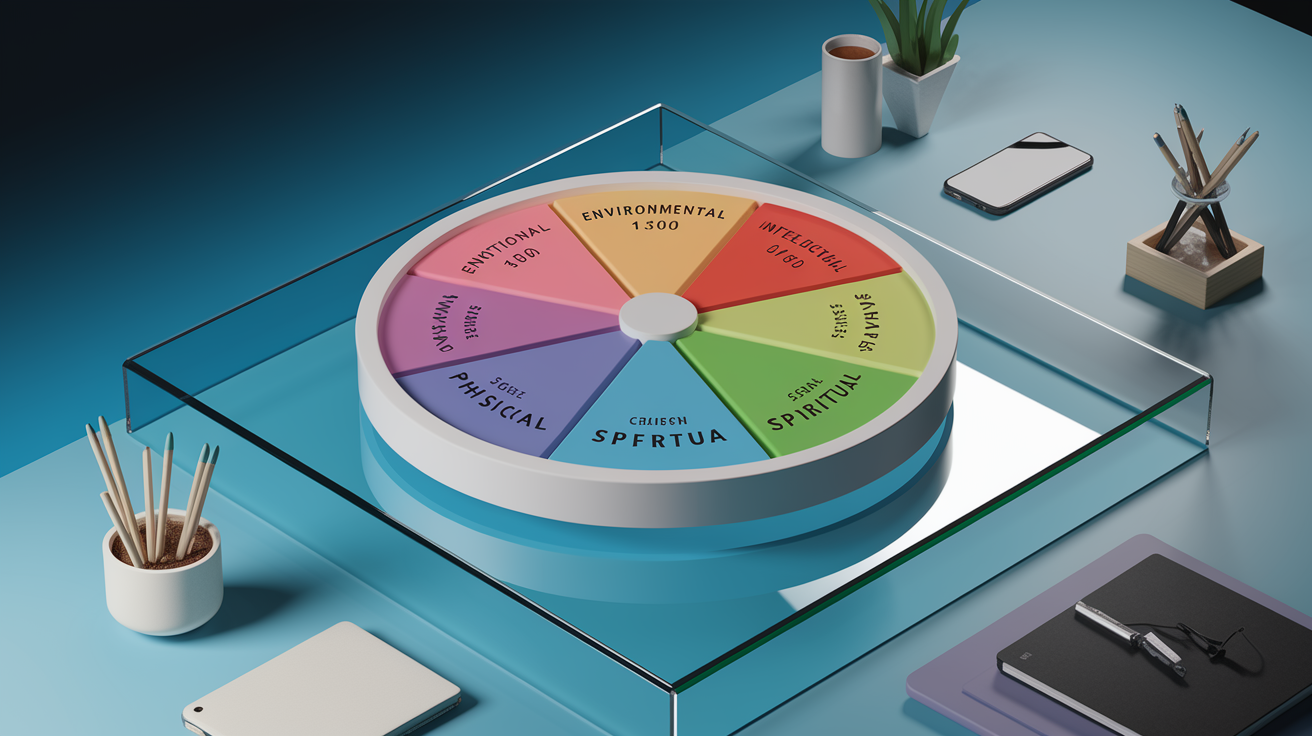
A wellness wheel assessment is a self-reflection tool that shows you how balanced your life feels across seven areas: emotional, environmental, intellectual, occupational, physical, social, and spiritual. You rate each one on a 1 to 10 scale, then plot those numbers on a radial chart that looks like a wheel with spokes. The shape that emerges shows which parts of your life feel steady and which feel shaky.
This tool brings clarity to daily habits and patterns you might miss otherwise. It helps you spot where you’re doing well and where you’re running low without adding judgment. Developed as a six-part model in the late 1970s, the wellness wheel grew to seven dimensions over time to reflect a fuller picture of well-being.
When you finish plotting your scores, the shape tells the story. A smooth, round wheel means your attention is spread fairly evenly. If one or two spokes dip inward, those are the areas asking for your focus. This visual snapshot makes it easier to decide where to put your energy next, whether that’s sleep, relationships, purpose, or stress.
Key Wellness Wheel Dimensions and What Each Domain Represents

Each of the seven dimensions covers a different part of your day-to-day experience. Understanding what each includes helps you rate yourself honestly and choose the right adjustments when you see a low score.
Emotional Wellness
This one measures your ability to recognize, express, and cope with feelings. It includes how you handle stress, regulate emotions during tough weeks, and process difficult experiences without getting stuck. Strong emotional wellness often looks like acknowledging when you’re overwhelmed and knowing which grounding practices help you reset. “I feel anxious right now, and I’m going to step outside for five minutes.”
Environmental Wellness
Environmental wellness looks at how your surroundings affect your mood and energy. It covers your home setup, your workspace, your neighborhood, and even your relationship with the natural world. Spending time outdoors, using natural light to reduce seasonal depression symptoms, and creating a calm, organized space at home all support this dimension.
Intellectual Wellness
Intellectual wellness tracks curiosity, lifelong learning, and creative engagement. It includes staying informed about topics that matter to you, solving puzzles for fun, and teaching or mentoring others. If you find yourself bored or mentally restless, this is often the dimension that needs attention. “I used to love learning new things, and I miss that spark.”
Occupational Wellness
This domain evaluates job satisfaction, career alignment, work-life boundaries, and financial stability. It looks at whether your work feels meaningful, whether you take breaks to prevent burnout, and whether you communicate needs to supervisors. Occupational wellness also includes managing money in a way that reduces daily stress and supports long-term goals.
Physical Wellness
Physical wellness covers exercise, nutrition, sleep quality, preventive care, and yearly checkups. It tracks how your body feels during the day and whether you’re addressing small issues before they grow. A strong physical domain doesn’t require perfection. It looks like moving regularly, eating meals that keep your energy steady, and getting enough rest most nights.
Social Wellness
Social wellness measures the quality of your relationships and the strength of your support network. It’s about feeling connected, not isolated, and having people you can reach out to when life gets hard. This dimension also includes setting boundaries and limiting interactions that drain you. “I’m saying no to extra commitments this month so I can show up for the people who matter most.”
Spiritual Wellness
Spiritual wellness reflects your sense of purpose, your core values, and your connection to something larger than yourself. It doesn’t require religious practice. It can look like meditation, time in nature, creative expression, or moments of reflection that help you feel grounded. This dimension often answers the question “What gives my life meaning?”
How to Complete a Wellness Wheel Assessment Step-by-Step

Completing a wellness wheel takes about ten to fifteen minutes. You can use a printable PDF template, an online webform, or draw your own radial chart on paper. Both digital and paper versions work the same way and give you the same snapshot of your current balance.
Start by finding a quiet space where you can think honestly about each domain. You’re not trying for perfect scores or trying to impress anyone. The goal is to capture how things actually feel right now, not how you wish they felt or how they used to be.
-
Rate each of the seven dimensions on a scale from 1 to 10, where 1 means “I’m really struggling here” and 10 means “This area feels strong and stable.”
-
Write your score next to each dimension name on your template or form so you can refer back to it later.
-
Plot each score on the radial chart by marking a point along the spoke that corresponds to that dimension. Each spoke runs from the center (1) to the outer edge (10).
-
Connect the dots by drawing lines between each plotted point to create a shape. This shape is your wellness wheel.
-
Look at the overall shape and notice where the wheel dips inward or bulges outward. The dips show areas that need attention.
-
Calculate an average score across all seven dimensions if you want a quick baseline number to track over time.
-
Take a photo or save a copy of your completed wheel so you can compare it to future assessments and see how things shift.
-
Identify one or two low-scoring areas to focus on first, rather than trying to fix everything at once.
Interpreting Your Wellness Wheel Scores and Identifying Imbalances

The shape of your wheel tells you more than the individual numbers. A perfectly round wheel means your energy and attention are distributed evenly. A wheel with deep dips and high peaks signals imbalance. You’re putting a lot into some areas while neglecting others. Neither shape is permanent, and both give you useful information about where to start.
Scores of 5 or below typically indicate a priority area. These are the dimensions where you’re running low on capacity, where small stressors feel harder to manage, and where a few targeted changes can make a noticeable difference. Scores between 6 and 8 suggest you’re managing but could use some support or consistency. Scores of 9 or 10 mean that area feels solid right now.
Comparing your wheel to past assessments helps you spot patterns. If your physical wellness score drops every winter, that’s a seasonal trend worth addressing. If your social wellness dipped after a move or a breakup, that’s a life-change signal. Context matters as much as the number itself.
Look for these indicators of imbalance:
- One or two dimensions consistently score 3 points lower than the rest
- Your wheel shape is narrow on one side and wide on the other
- A dimension that used to score high now feels neglected
- Multiple low scores cluster in related areas (physical, emotional, and occupational all dipping at the same time, for example)
- You rated a dimension high but still feel drained in that part of your life, which may mean your rating needs a second look
Creating a Wellness Improvement Plan Using Your Assessment Results

Once you know which dimensions need attention, the next step is choosing small, realistic actions you can start this week. Most people make the mistake of setting ambitious goals across all seven areas at once. That leads to burnout. Instead, pick one or two low-scoring domains and focus there for the next few weeks.
A good wellness plan uses the SMART framework: Specific, Measurable, Achievable, Relevant, and Time-bound. Instead of saying “I want to exercise more,” you’d say “I’ll take a 20-minute walk on Tuesday and Thursday mornings before work.” That kind of clarity makes follow-through easier. You also want to list any resources or support you’ll need. A gym buddy, a calendar reminder, a new water bottle, or a conversation with your boss about flexible hours.
Here are five SMART goal examples based on common low-scoring dimensions:
-
Physical wellness: Walk for 20 minutes twice a week, on Tuesday and Thursday mornings, and prep workout clothes the night before to remove friction.
-
Emotional wellness: Practice a 5-minute grounding exercise (deep breathing or body scan meditation) every evening before bed, using a free app or a printed guide.
-
Social wellness: Schedule one phone call or coffee meetup with a friend each week, and put it on the calendar like any other appointment.
-
Intellectual wellness: Read one chapter of a nonfiction book every Sunday afternoon, choosing topics that spark curiosity rather than obligation.
-
Occupational wellness: Set a boundary around work hours by logging off at 6 pm on weekdays, and communicate that boundary to coworkers in advance.
Sample Wellness Wheel Worksheet and Template Options
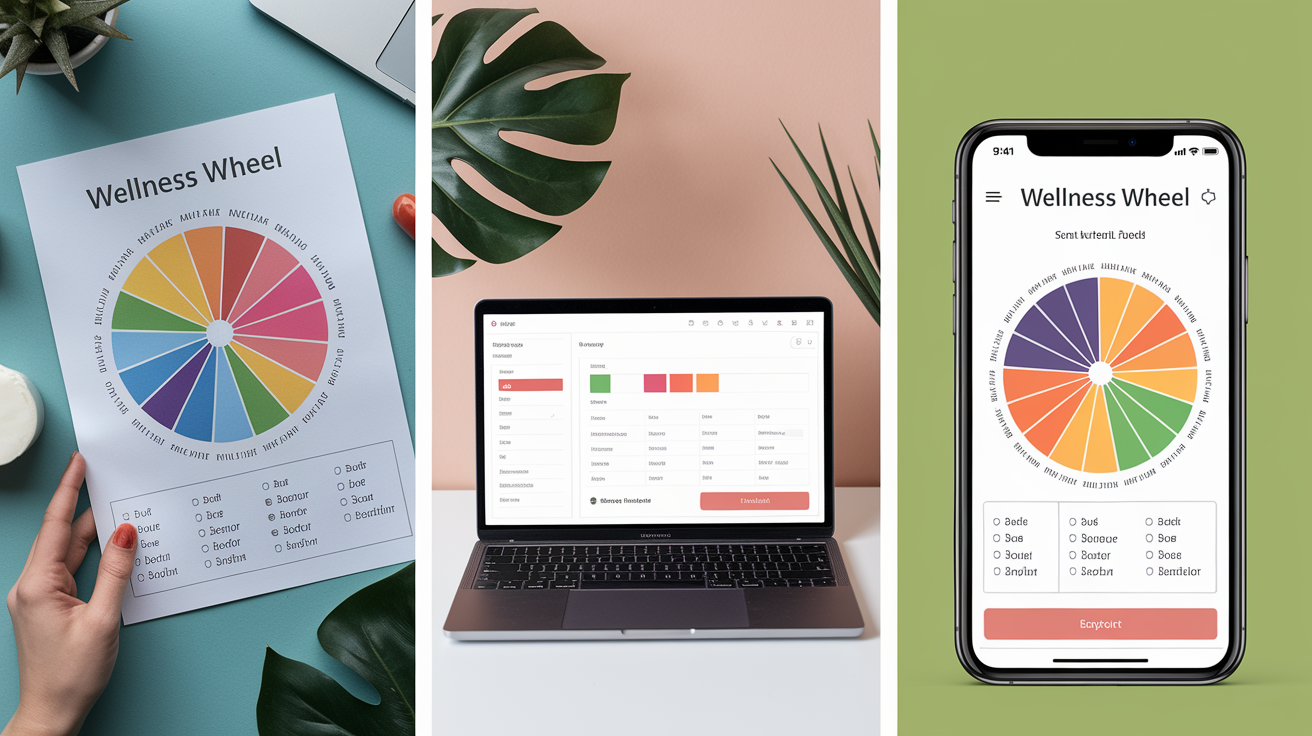
You have three main template formats to choose from depending on how you prefer to work. Printable PDF versions are popular because you can fill them out by hand, store them in a folder, and compare multiple wheels side by side over time. Webform versions are convenient if you want automatic scoring, email delivery of results, or integration with a digital tracking app.
Radial chart templates are the most common. They include seven spokes extending from a central point, labeled with each wellness dimension. You mark your score along each spoke and then connect the dots to form your wheel shape. Checklist templates are simpler and work well if you want to rate dimensions in a list format first, then plot them later. Some digital apps include built-in visualization tools that generate the chart automatically once you enter your scores.
| Template Type | Format | Best Use Case |
|---|---|---|
| Printable PDF Radial Chart | Paper, pen-and-paper scoring | Offline reflection, tangible records, group workshops |
| Online Webform | Digital input with automated chart generation | Quick completion, emailed results, progress tracking over time |
| Digital App with Export | Mobile or desktop app with save and share features | Frequent reassessment, integration with other wellness tools, long-term data storage |
Using the Wellness Wheel in Coaching, Therapy, and Group Settings

Wellness wheels are widely used by therapists, coaches, and facilitators because they create a neutral starting point for conversations about life balance. In one-on-one coaching or therapy, the wheel helps clients name what’s not working without feeling defensive. It shifts the focus from “What’s wrong with me?” to “Where do I want to put my energy next?”
In group settings (workplaces, schools, community organizations), the wellness wheel can map collective stress points and guide program design. For example, if most participants in a workplace workshop rate their occupational and emotional wellness low, leadership can respond with mental health days, flexible scheduling, or access to counseling. The tool is not validated for diagnostic or research use, so it should always be framed as a reflective exercise, not a clinical assessment.
Student wellness programs often use facilitated wellness wheel workshops to help undergraduates and graduate students identify stressors, set goals, and connect with campus resources. Participants complete their wheels individually, then discuss patterns in small groups. The facilitator guides the conversation toward actionable next steps rather than simply naming problems.
Here are five practical facilitation tips for group settings:
- Set the tone by emphasizing that low scores are normal and not a sign of failure
- Give participants five to seven minutes of quiet time to complete their wheels before group discussion
- Use paired sharing (two people discuss their wheels with each other) before opening up to the full group
- Offer a list of campus or organizational resources tied to each dimension so people leave with concrete support options
- Schedule a follow-up session four to six weeks later to revisit wheels and discuss what changed
Tracking Progress Over Time and Reassessing Your Wellness Wheel
Reassessing your wellness wheel every few months helps you see whether the changes you’ve made are actually working. Life balance shifts as your circumstances change, so a wheel that looked one way in January might look completely different by June. That’s normal. The goal isn’t to maintain a perfect circle forever. It’s to stay aware of where your energy is going and adjust as needed.
Save a copy of each completed wheel so you can compare them side by side. Look for trends rather than fixating on single scores. If your physical wellness has improved by two points over three months, that’s meaningful progress even if the number still feels low. If your social wellness dipped after a stressful work period, that’s useful information about how stress ripples into other areas of your life.
Reassess your wheel when:
- You’ve been working on wellness goals for six to eight weeks and want to check if they’re making a difference
- You experience a major life change (new job, move, relationship shift, health diagnosis, or loss)
- You notice persistent fatigue, mood changes, or a sense that something feels off but you’re not sure what
- You’re meeting with a coach, therapist, or support group and want a structured way to discuss your current state
Final Words
Jump in: you learned what a wellness wheel measures, the seven domains, and how to rate and plot your scores so the shape shows balance at a glance.
You also saw practical steps to spot dips, set small SMART goals, pick a template, and use the wheel with a coach or in a group.
Try the simple plan for a few weeks and reassess after life changes or a couple of months.
You now have wellness wheel assessment explained, plus a realistic next step: small, repeatable changes that add up to better balance.
FAQ
Q: What is a wellness wheel assessment and how does it work?
A: A wellness wheel assessment is a self-reflection tool that measures balance across seven life domains, rated 1–10 and plotted on a radial chart so you can see strengths, dips, and priorities.
Q: What are the seven wellness wheel domains?
A: The seven wellness wheel domains are emotional, environmental, intellectual, occupational, physical, social, and spiritual, each showing how that area supports daily functioning and where simple habits can help.
Q: How do I complete and score a wellness wheel assessment?
A: To complete and score a wellness wheel assessment, rate each domain 1–10, plot points on the radial chart, connect them, note dips under five, record averages, and save or export your chart.
Q: How do I interpret my wellness wheel scores and identify imbalances?
A: To interpret your wellness wheel scores, look for symmetry (balance), dips or areas ≤5 as priorities, compare averages over time, and link low areas to recent life changes for focused action.
Q: How do I create a wellness improvement plan based on my assessment?
A: To create a wellness improvement plan from your assessment, pick one low domain, set a small SMART goal (like a 20-minute walk twice weekly), schedule it, track progress, and review every week.
Q: What template and format options exist for the wellness wheel?
A: The wellness wheel comes as printable PDFs, online webforms, and app-based visualizers; templates include radial charts and checklists, and some tools let you email or export results for tracking.
Q: Can I use the wellness wheel in coaching, therapy, or group settings?
A: The wellness wheel can be used in coaching, therapy, and group workshops for reflection, intake, and goal planning; it supports discussion but is not a diagnostic or validated medical tool.
Q: How often should I reassess my wellness wheel and why?
A: You should reassess your wellness wheel every few months or after major life changes to track trends, spot improvements, and adjust goals based on shifting needs and priorities.
Q: When should I seek professional help based on my wellness wheel results?
A: You should seek professional help if low scores persist, you have sudden or severe symptoms, or daily functioning is impaired; a clinician or counselor can help translate scores into care.