
Most wellness plans are too complicated to stick to.
If you’re tired of tips that feel like extra chores, you’re not alone.
This post gives a simple, step-by-step checklist to get you started without overhauling your life.
You’ll learn four daily habits: drink a glass of water when you wake, 5 to 10 minutes of meditation, about 30 minutes of movement, and 7 to 9 hours of sleep, plus a 7-day micro-challenge and simple tracking tools.
Think of it as a printable roadmap that helps small wins become steady habits.
Quick-Start Wellness Checklist Framework for Beginners
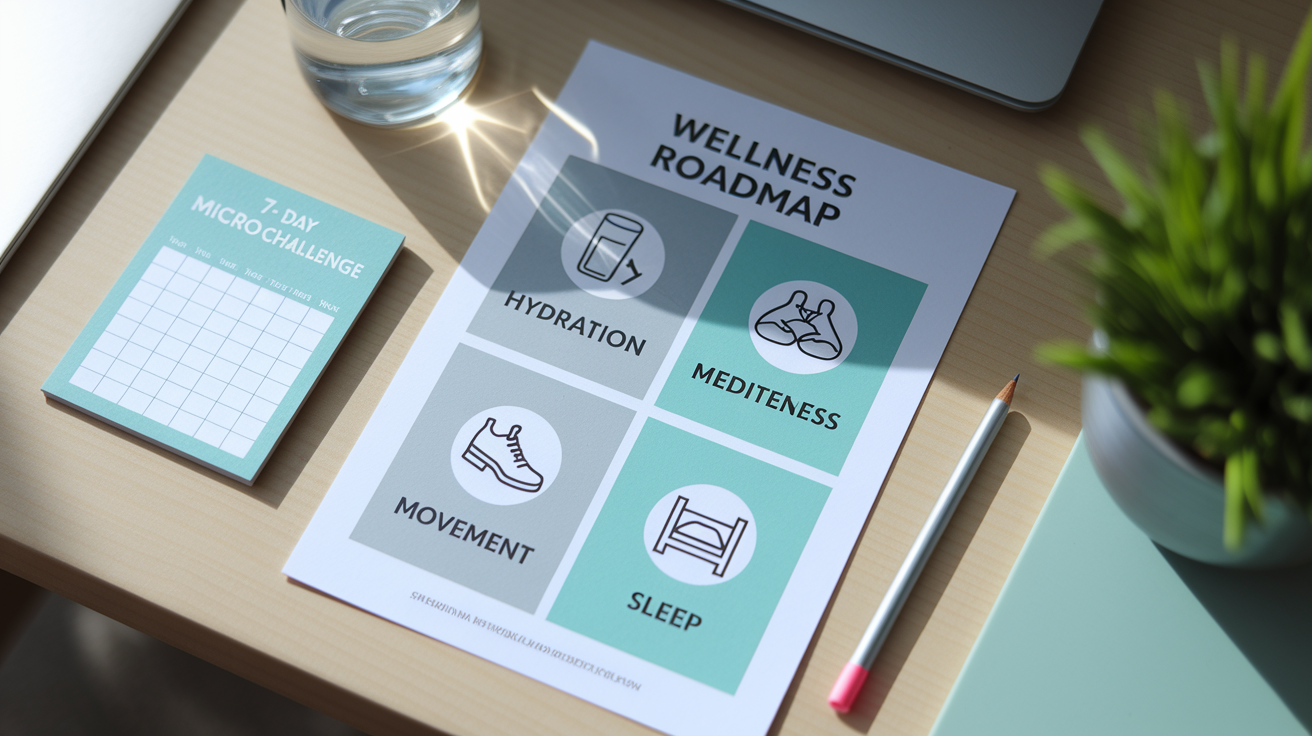
Your beginner wellness journey needs a simple framework that covers the essentials without taking over your life. The best checklists focus on a few daily habits that actually support your body and mind, with tracking built in so you can watch yourself improve. Picture a printable roadmap: water when you wake up, 5–10 minutes of meditation, 30 minutes of movement, and 7–9 hours of sleep each night. These four actions show up in almost every beginner wellness plan because they tackle the physical and mental basics that keep your energy steady and stress under control.
Test your baseline with a 7-day micro-challenge. Track how many ounces of water you’re drinking each day, how many minutes you move, and how many hours you sleep. Rate your mood on a 1–10 scale every evening. After seven days, you’ll have real data guiding your 30-day habit build. During those 30 days, go for consistency over perfection. Hit your hydration goal most days, keep movement sessions short but regular, protect your sleep schedule even when motivation tanks. By week 12, these habits stop being extra tasks you have to remember and start being part of your routine.
Measurable markers make the difference between guessing and knowing. Log daily water in ounces, nightly sleep in hours, exercise minutes per session, and a daily mood score. A printable checklist with checkboxes and small number fields keeps it visual and satisfying. You’re not chasing perfection. You’re building capability one check mark at a time.
Priority First Steps for Your Wellness Checklist:
- Drink one full glass of water within 30 minutes of waking
- Move your body for 30 minutes most days (walking counts)
- Sleep 7–9 hours per night with a consistent bedtime
- Practice 5–10 minutes of meditation or deep breathing daily
- Track daily water ounces, sleep hours, and mood (1–10)
- Review your week every Sunday and adjust one habit if needed
Building Foundational Wellness Goals for a Beginner Wellness Journey

Start by defining 1–3 personal wellness goals that matter to your day-to-day life. Common beginner goals include increasing energy, managing stress better, or moving your body more consistently. Write each goal with a target date. Something like “sleep 7 hours per night by the end of month one” or “walk 30 minutes four days per week by week six.” Clear timelines keep your wellness journey realistic and give you a finish line worth celebrating. Once your goals are written, record your baseline measurements: current sleep hours per night, weekly activity minutes, daily water intake in ounces, and a mood rating on a 1–10 scale. Baseline data shows you where you actually are, not where you think you should be. And it makes progress visible when you review your numbers a month later.
Track these measurements weekly during the first 30 days. Shift to monthly check-ins once your habits stabilize. Progress tracking turns abstract goals into concrete wins. If your mood score climbs from a 4 to a 6 after two weeks of consistent sleep, that’s feedback you can trust. If your weekly activity minutes jump from 60 to 120, you know the habit’s sticking. Adjust your goals as you go. Wellness isn’t a fixed target. Life changes, schedules shift, your body’s needs evolve. The goal is momentum, not perfection.
Baseline Metrics to Measure Before You Start:
- Hours of sleep per night (average over 7 days)
- Weekly minutes of physical activity
- Daily water intake in ounces
- Daily mood and energy level (1–10 scale)
- Number of self-care or stress-relief activities per week
Daily Habits to Support Your Beginner Wellness Journey
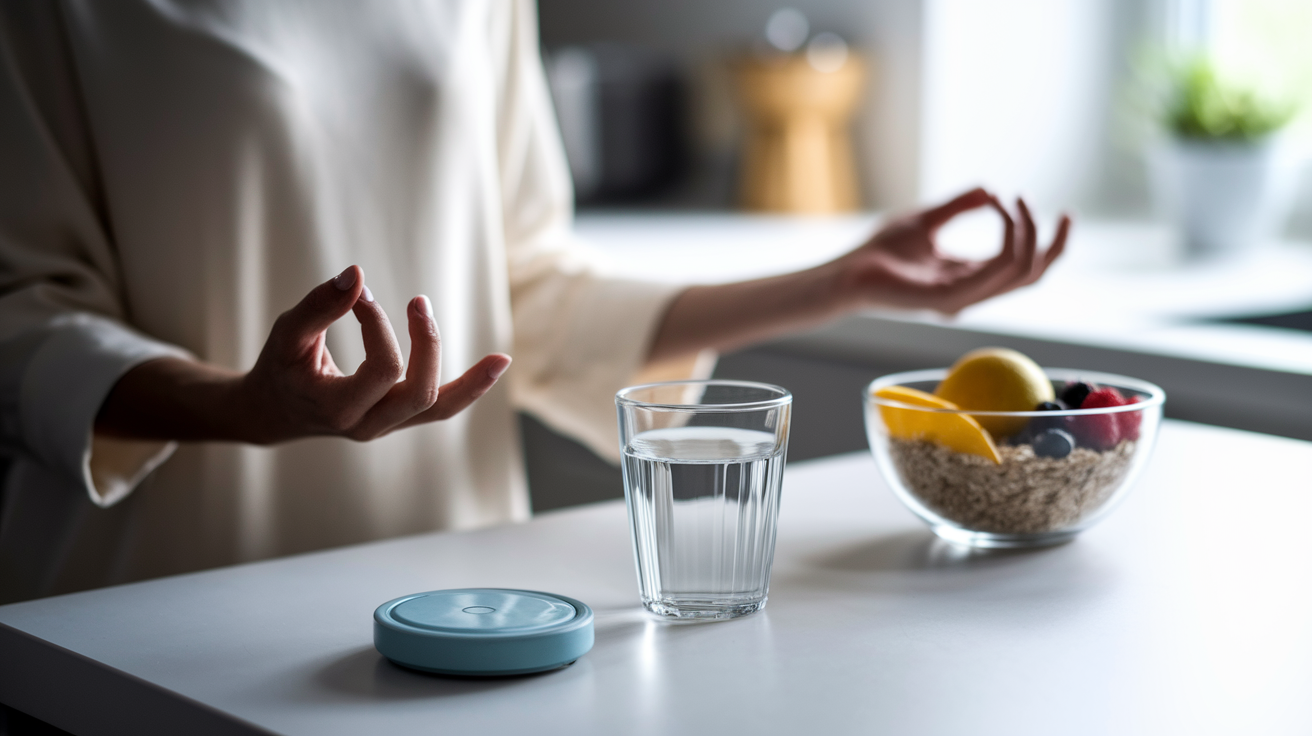
Your morning routine sets the tone for everything that follows, so keep it simple and repeatable. Drink one full glass of water as soon as you wake up. Your body loses fluid overnight and rehydration helps with energy and focus. Follow that with 5–10 minutes of meditation or mindfulness. You don’t need an app or a special cushion. Sit somewhere quiet, close your eyes, focus on your breathing. A balanced breakfast comes next: pair a protein source (eggs, Greek yogurt, or a protein smoothie) with healthy fats (avocado, nuts, or nut butter) and complex carbs (oats, whole grain toast, or fruit). Finish with a 3–5 minute stretch to wake up your muscles and joints. This entire sequence takes 20–30 minutes and builds a foundation of hydration, mental calm, nutrition, and movement before your day gets busy.
Your evening routine matters just as much because it signals to your body that it’s time to slow down. Power down screens at least 30 minutes before bed. Blue light disrupts melatonin production and makes it harder to fall asleep. Spend 5–10 minutes doing gentle stretching or foam rolling to release physical tension. Write down three things you’re grateful for. This small gratitude practice shifts your mind away from stress and toward what’s working. Keep your bedroom temperature between 65–68°F, use blackout curtains if light’s an issue, add earplugs if noise disrupts your sleep. Aim for 7–9 hours of sleep per night and go to bed at roughly the same time each evening. Consistency trains your circadian rhythm, and a trained rhythm makes falling asleep and waking up easier.
Daily habits work best when they’re anchored to something you already do. Stack your new habit onto an existing routine. Drink water right after you turn off your alarm, meditate right after you drink your water, stretch right after you brush your teeth at night. These links make the new behavior automatic, which is how daily habits turn into long-term lifestyle changes.
Sample Morning Habit List:
- Drink 1 glass of water (8–12 oz) within 30 minutes of waking
- 5–10 minutes of meditation or deep breathing
- Balanced breakfast: protein + healthy fat + complex carb
- 3–5 minute full body stretch
- Set one daily intention or priority
Sample Evening Habit List:
- Power down all screens 30 minutes before bed
- 5–10 minutes of gentle stretching or foam rolling
- Write 3 things you’re grateful for
- Keep bedroom temperature at 65–68°F
- Go to bed at the same time (within 30 minutes) every night
Nutrition Basics for a Beginner’s Wellness Journey
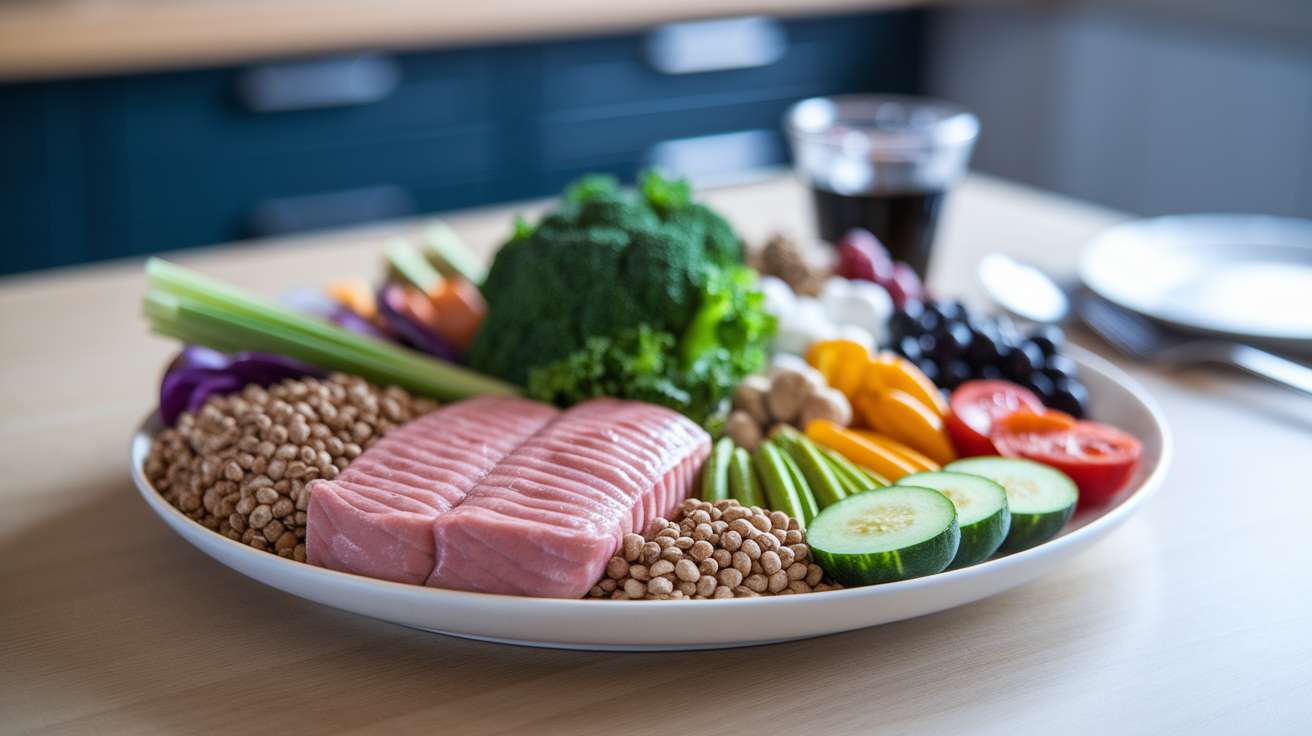
Nutrition for beginners comes down to building a plate that includes protein, fiber, color, and fat at most meals. You don’t need to count macros or follow a strict plan. Focus on whole foods (fruits, vegetables, whole grains, lean proteins, and healthy fats) and aim to eat this way more often than not. Weekly meal planning makes it easier. Set aside 20 minutes on Sunday to map out your dinners for the week, then build a grocery list around those meals. Shop the list, and you’ll have what you need without the daily “what’s for dinner?” scramble. Prep a few basics in advance if you can. Wash and chop vegetables, cook a batch of grains, or portion out snacks. The easier it is to grab something nourishing, the more likely you are to choose it.
Hydration’s just as important as food. The standard target is 64 ounces per day (eight 8-ounce glasses), but your needs may be higher if you’re active, live in a hot climate, or sweat a lot. Track your daily water intake with a simple tally or a water bottle with volume markers. Mindful eating helps you tune into hunger and fullness cues. Eat without screens. No phone, no TV, no laptop. Pay attention to the taste, texture, and how your body feels as you eat. You’ll notice when you’re satisfied, and you’ll enjoy your food more.
Start with small, sustainable swaps rather than overhauling your entire diet at once. Replace white bread with whole grain, swap sugary cereal for oats with fruit and nuts, choose water or herbal tea instead of soda, and add one extra serving of vegetables to lunch or dinner. These changes add up without feeling like deprivation.
| Nutrition Task | Beginner Goal | Tracking Field |
|---|---|---|
| Weekly meal planning | Plan 5–7 dinners each Sunday | Checkbox + date completed |
| Daily hydration | Drink 64 oz (eight 8-oz glasses) | Daily ounce tally |
| Mindful eating | Eat one meal per day without screens | Meal-by-meal checkbox |
| Whole food swaps | Replace 1–2 processed items per week | Weekly swap log |
Quick Grocery Swaps for Beginners:
- White bread → whole grain or sprouted grain bread
- Sugary cereal → plain oats with fresh fruit and a handful of nuts
- Soda or juice → water with lemon or unsweetened herbal tea
- Chips or crackers → raw veggies with hummus or guacamole
- Ice cream → Greek yogurt with berries and a drizzle of honey
Movement & Exercise Routine Essentials in a Beginner Wellness Journey
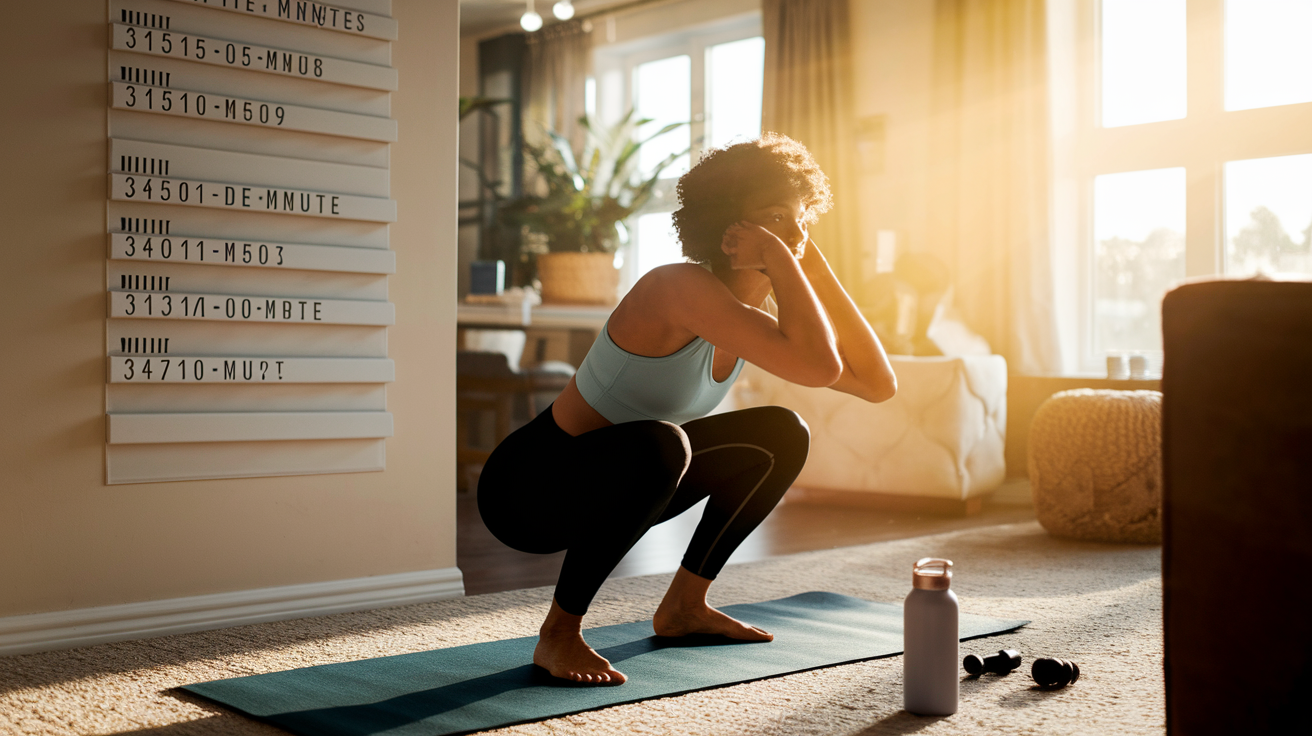
Physical activity for beginners means 30 minutes of moderate exercise most days of the week. Moderate means you can talk but not sing. A brisk walk, a bike ride, or a swim all count. Your weekly target is 75–150 minutes total, which breaks down to about 2.5 hours spread across the week. You don’t need a gym membership or fancy equipment to get started. Walking is free, effective, and easy to fit into your day. Add one strength session per week to build muscle and protect your joints. Bodyweight exercises like squats, push-ups, and lunges work well at home. Include one mobility or yoga session each week to maintain flexibility and reduce stiffness. Short movement breaks throughout the day also matter. Set a timer for every 60–90 minutes and take a 5-minute break to stand, stretch, or walk around your space.
Three beginner-friendly training styles can guide your routine depending on your goals and preferences. Functional training focuses on movement patterns you use every day: lifting, bending, squatting, pushing, and pulling. It improves your ability to carry groceries, pick things up off the floor, and move through life with less strain. CrossFit for beginners offers scalable workouts with coach-led progression, so intensity adjusts to your current fitness level. Pilates emphasizes core strength, stability, and control with low impact exercises that are especially helpful if you’re returning from injury or prefer gentler movement.
Start with 2–3 sessions per week during your first month. Week one, aim for two sessions. Week two, bump to 2–3 sessions. Week three, try three sessions with slightly more intensity or duration. By week four, your goal is to consolidate the routine so it feels doable and repeatable. Session length can range from 30–60 minutes. Your focus should be on form and how the movement feels, not on speed or competition.
6 Beginner Exercise Ideas:
- 30-minute brisk walk around your neighborhood or a local park
- 20-minute beginner yoga video (online or app-based)
- Bodyweight strength circuit: 3 rounds of 10 squats, 10 push-ups, 10 lunges per leg
- 15-minute stretching or foam rolling session
- 30-minute bike ride at a conversational pace
- 5-minute desk breaks every 60–90 minutes (stand, stretch, walk in place)
Stress Relief & Mental Health Tools for a Beginner Wellness Journey
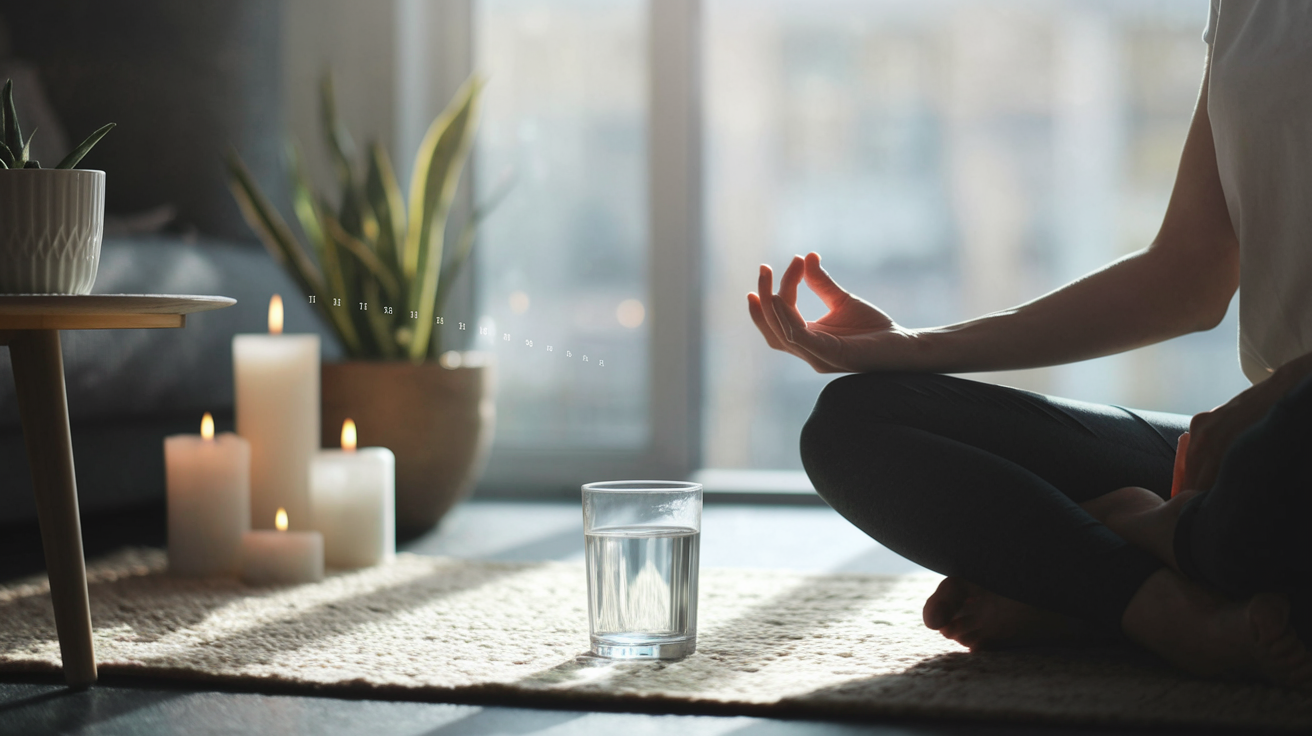
Mental health habits are just as essential as physical ones, and they don’t have to be complicated. Set aside 5–15 minutes each day for a self-care activity that calms your mind: journaling, a hobby you enjoy, or guided meditation. Deep breathing is one of the simplest and most effective stress tools. Try this: take five slow, deep breaths (in through your nose for a count of four, hold for four, out through your mouth for four), then rest for a minute. Repeat three times. This technique activates your parasympathetic nervous system, which signals your body to relax. Track your mood and energy daily on a 1–10 scale so you can spot patterns. If your mood dips after a poor night’s sleep or a skipped meal, that’s useful data.
A nightly gratitude practice takes less than two minutes and shifts your focus away from what went wrong and toward what’s working. Write down three things you’re grateful for before bed. Small things count, like a good cup of coffee or a kind text from a friend. Over time, this habit rewires your brain to notice positive moments more often. If you’re new to meditation, start with just 5 minutes. Sit in a quiet spot, close your eyes, and focus on your breathing. When your mind wanders, gently bring your attention back to your breath. You’re not trying to empty your mind. You’re practicing the skill of noticing when you’re distracted and refocusing.
5 Mental Health Practices for Beginners:
- 5–10 minutes of daily meditation or mindfulness
- Deep breathing exercise: 5 breaths x 3 sets whenever stress spikes
- Daily mood and energy rating (1–10 scale)
- Nightly gratitude writing (3 things)
- One weekly self-care activity: hobby, journaling, or time in nature
Sleep Hygiene Checklist for Strengthening Your Beginner Wellness Journey
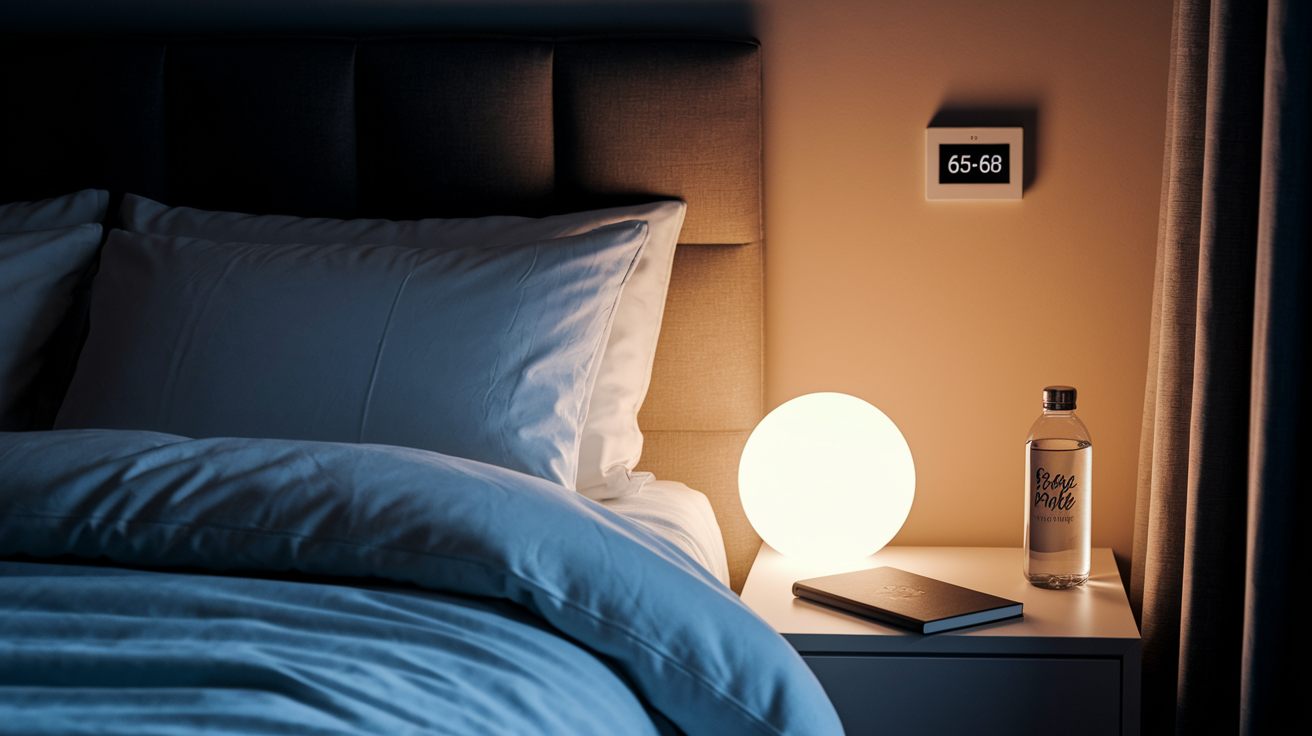
Sleep is the foundation of every other wellness habit. When you’re well rested, you have more energy to move, better focus for work, and more patience for stress. Your target is 7–9 hours per night, and consistency matters more than perfection. Go to bed and wake up at roughly the same time every day, even on weekends. This trains your circadian rhythm. A trained rhythm makes falling asleep easier. Power down all screens at least 30 minutes before bed. Phones, tablets, TVs, and laptops all emit blue light that suppresses melatonin, the hormone that signals sleep.
Create an environment that supports rest. Keep your bedroom temperature between 65–68°F. A cooler room helps your body temperature drop, which is a natural sleep cue. Use blackout curtains if outside light’s an issue. Add earplugs or a white noise machine if noise disrupts your sleep. Spend 5–10 minutes doing gentle stretching or foam rolling to release physical tension before you get into bed. Pair that with your gratitude writing practice, then settle in. Avoid heavy meals, caffeine, and alcohol close to bedtime. All three can interfere with sleep quality even if they don’t keep you awake.
6 Sleep Hygiene Checklist Items:
- Go to bed and wake up at the same time every day (within 30 minutes)
- Power down screens at least 30 minutes before bed
- Keep bedroom temperature at 65–68°F
- Use blackout curtains and earplugs if needed
- 5–10 minutes of gentle stretching or foam rolling before bed
- Write down 3 things you’re grateful for each night
Social Support & Environment Setup in a Beginner Wellness Journey

Wellness is easier when you’re surrounded by people who support your goals and an environment that removes friction. Schedule at least one social activity per week. Meet a friend for a walk, join a group fitness class, or volunteer for a cause you care about. Social connection reduces stress, improves mood, and increases your sense of belonging. Identify 2–3 people you can talk to openly when you’re struggling, and check in with them regularly. Rate your social satisfaction weekly on a 1–10 scale. If it’s consistently low, that’s a signal to reach out more often or seek new connections. Group training or community-based wellness programs offer built-in accountability and motivation, which is especially helpful for beginners who find it hard to stay consistent alone.
Your physical environment also shapes your habits. Set up your space to make healthy choices easier. Keep a water bottle at your desk so hydration’s always within reach. Prep your workout clothes the night before so you don’t have to think about it in the morning. Adjust your work setup for ergonomics (chair height, screen position, keyboard placement) so you’re not fighting discomfort all day. Set a daily work end-time and protect it. Open-ended work hours drain energy and crowd out time for movement, meals, and rest. Small environmental tweaks reduce decision fatigue and make your wellness routine feel automatic.
4 Environmental Setup Tips:
- Keep a reusable water bottle at your desk and refill it twice per day
- Lay out workout clothes and shoes the night before
- Adjust desk chair, screen height, and keyboard for neutral posture
- Set a daily work end-time and schedule wellness breaks around it
Tracking Progress & Adjusting Your Wellness Journey Checklist

Tracking turns intentions into data you can learn from. Use a wellness journal (paper or digital) to record your daily habits, mood, sleep hours, water intake, and exercise minutes. Review your week every Sunday and note what worked, what didn’t, and what got in the way. Monthly reviews give you the bigger picture: compare your sleep, exercise totals, hydration, and mood scores from week one to week four. If your sleep improved but your movement dropped, you know where to focus next. Measurable markers keep you honest and show progress that might not be visible in the mirror or on a scale.
Start with a 7-day micro-challenge to build momentum. Pick one habit (like drinking 64 ounces of water every day) and track it for a week. When you hit day seven, celebrate that small win, then layer in a second habit for the next 30 days. A 30-day habit build is long enough to make the behavior feel automatic but short enough to stay motivated. By week 12, you’ll have a full routine in place, and adjustments become easier because you have baseline data to work from. Habit stacking helps too. Attach a new habit to something you already do without thinking. Meditate right after you pour your morning coffee. Stretch right after you brush your teeth at night. The anchor habit reminds you to do the new one.
Consistency beats intensity every time. You don’t need to be perfect. You need to show up most days. If life interrupts your routine, don’t spiral. Just get back on track with your next meal, your next workout, or your next bedtime. Long-term wellness is built on small, repeated actions, not dramatic overhauls. Track what matters, review your progress regularly, and adjust your checklist as your life and goals evolve.
5 Practical Tracking Ideas:
- Daily water intake in ounces (use a tally or marked bottle)
- Nightly sleep hours (log in a journal or habit app)
- Weekly exercise minutes total (add up all sessions)
- Daily mood and energy score (1–10 scale)
- Weekly review: list 1–2 wins and 1–2 roadblocks
- Monthly habit review: compare week one baseline to week four totals
Final Words
Start by picking one small habit to try today: drink a glass of water on waking, move for thirty minutes, or do five to ten minutes of quiet breathing. The post lays out a printable checklist covering hydration, movement, sleep, nutrition, stress tools, and simple tracking fields.
Set one to three clear goals, note baseline sleep, water, and mood, and use the daily routines and grocery swaps to make it stick.
Print the wellness journey checklist for beginners and try a seven day micro challenge. Small steps add up — you’ve got this.
FAQ
Q: What is a quick-start wellness checklist for beginners?
A: A quick-start wellness checklist for beginners is a short, printable list of priority actions—hydrate on waking, 5–10 minutes meditation, 30 minutes movement, and 7–9 hours sleep—to start building habits fast.
Q: How do I set realistic wellness goals as a beginner?
A: Setting realistic wellness goals means picking 1–3 clear targets with dates, recording current sleep, activity, water, and mood baselines, and aiming small steps you can repeat each week.
Q: What simple daily habits should I start first?
A: Simple daily habits to start include one glass of water on waking, 5–10 minutes meditation, a balanced breakfast with protein, 3–5 minute stretch, and a short walk or movement break.
Q: How much water and movement should I aim for each day?
A: Aim for about 64 oz (eight 8‑oz glasses) of water daily and roughly 30 minutes of moderate movement most days, totaling 75–150 minutes across the week for steady progress.
Q: What bedtime routine helps beginners sleep better?
A: A helpful bedtime routine includes turning off screens 30 minutes before bed, gentle stretching, writing three gratitude items, keeping the room cool (65–68°F), and aiming for 7–9 hours of sleep.
Q: How can I add short stress-relief practices into a busy day?
A: You can add short stress-relief by doing 5–10 minutes of meditation, three sets of five deep breaths, a quick mood check (1–10), or a one‑minute grounding break between tasks.
Q: What should I track to measure progress on a beginner wellness journey?
A: Track sleep hours, daily water ounces, minutes of movement, and a daily mood/energy rating (1–10). Do weekly reviews and adjust goals every 7, 30, or 84 days.
Q: What are simple nutrition steps a beginner can use now?
A: Simple nutrition steps are planning one weekly meal, stocking fruits, vegetables, whole grains, lean protein, and healthy fats, aiming for mindful, screen‑free meals and drinking water throughout the day.
Q: What are the best first steps for a 7-day micro-challenge?
A: A good 7-day micro-challenge starts with drinking water on waking, five minutes of daily meditation, 10–30 minutes of movement, a nightly gratitude list, and tracking one simple metric.
Q: When should I get extra help or a professional opinion?
A: You should seek extra help if symptoms are severe, sudden, or persistent, or if you have medical conditions that affect sleep, mood, or physical activity—reach out to a healthcare or mental health professional.