
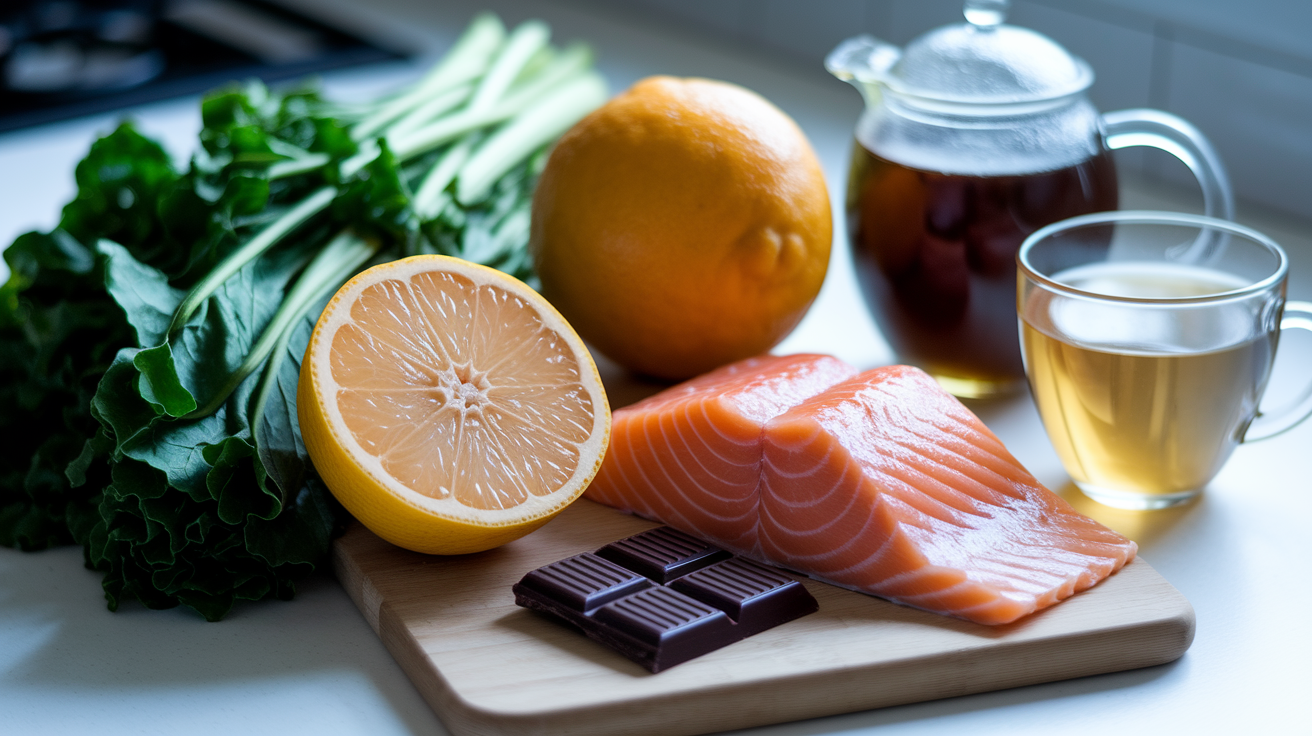
What if the foods on your plate are the reason you feel wired, tired, and run down?
If you get jittery in the afternoon, crash at 3 pm, or wake wired but tired, you’re not imagining it.
Small changes to meals and snacks can steady blood sugar, calm the stress response, and improve sleep.
This post walks you through easy swaps, a one-day meal plan, and the key nutrients and supplements that lower cortisol naturally—no perfection required.
Best Foods That Lower Cortisol Fast
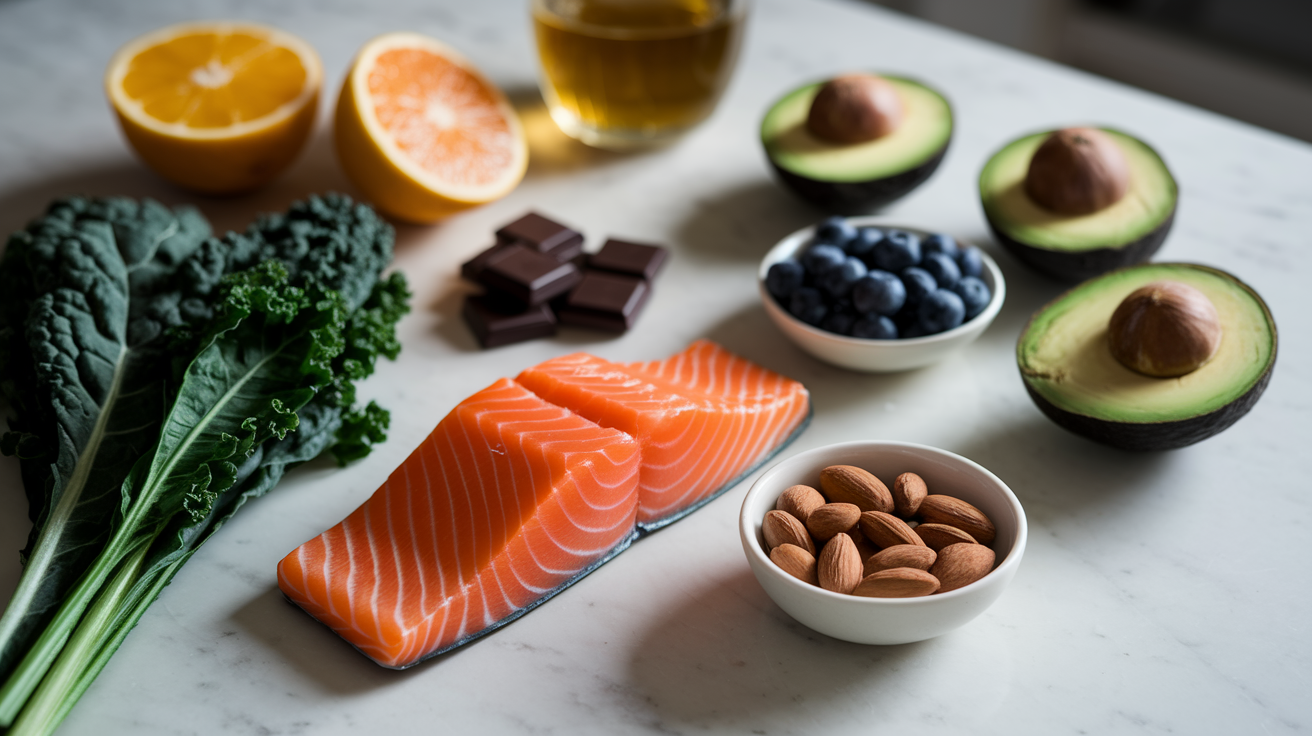
When you need quick support, certain foods deliver nutrients that calm your stress response directly. You don’t need a perfect diet overnight. Just consistent small swaps toward foods that help regulate cortisol day to day.
The most effective cortisol lowering foods include:
Fatty fish (salmon, mackerel, sardines). Aim for about 150 grams twice a week.
Dark leafy greens (spinach, kale, Swiss chard). At least 1 to 2 cups daily.
Dark chocolate (70% cocoa or higher). A small portion around 20 to 30 grams.
Citrus fruits and berries. 1 to 2 servings daily for vitamin C.
Green tea. 1 to 2 cups per day for L-theanine and gentle caffeine.
Avocados. One half to one whole avocado daily for magnesium.
These foods work because they deliver specific nutrients that interrupt the cortisol spike cycle. Omega-3 fatty acids in fish blunt stress triggered adrenal activation. Vitamin C from citrus and berries has been shown in studies to lower cortisol after stressful events. Magnesium in avocados and leafy greens helps regulate blood pressure and calm the nervous system. One 2020 study linked magnesium deficiency to increased stress reactivity. Dark chocolate’s polyphenols support brain cell protection and mood stabilization, while green tea’s L-theanine delivers a calming effect without the jittery crash. Together, these foods form a practical foundation you can build into meals you already eat.
Foods to Avoid That Spike Cortisol
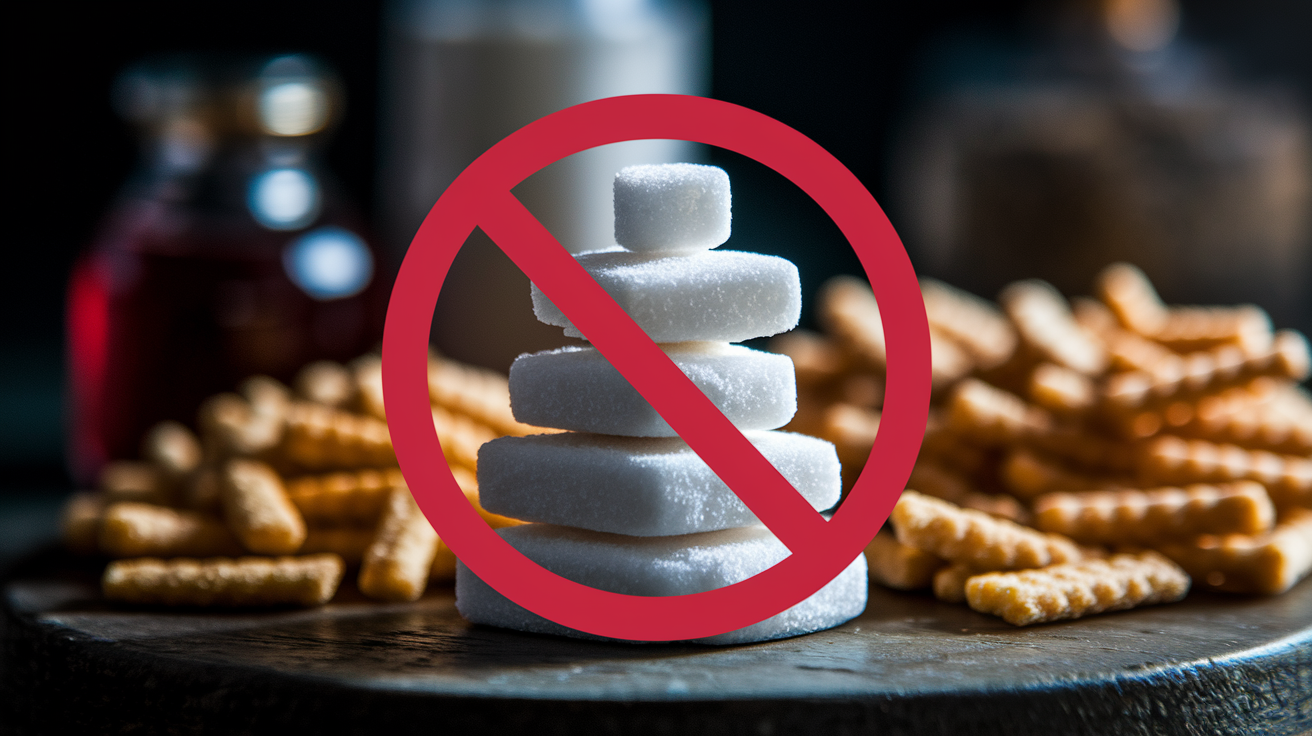
What you skip matters as much as what you add. Some foods trigger blood sugar swings and overstimulate your adrenal glands, which pushes cortisol higher and keeps it there longer than your body needs.
Foods and drinks that raise cortisol include refined sugar, highly processed snacks, excessive caffeine, alcohol in large or frequent amounts, and foods high in high fructose corn syrup. Here’s what to limit or swap out:
Refined sugar and sugary drinks. Keep added sugar below 25 grams per day for women, 36 grams for men. Look for hidden sources in flavored yogurt, energy drinks, and packaged sauces.
Processed snacks. Potato chips, candy, ice cream, cookies, packaged baked goods with long ingredient lists.
Excess caffeine. More than 1 to 2 cups of coffee per day can elevate cortisol, especially if you’re already stressed. Avoid caffeine after 2 pm.
Alcohol. Even moderate intake close to bedtime disrupts cortisol’s natural nighttime drop. Heavy use is defined as 5 or more drinks in a day or 15 per week for men, 4 or more in a day or 8 per week for women.
Ultra-processed meals. Hot dogs, instant noodles, frozen dinners with additives, foods made mostly from refined grains and industrial oils.
These foods spike your blood sugar fast, which signals your body to release more cortisol to manage the crash that follows. Caffeine directly stimulates the adrenal glands. Alcohol interferes with sleep quality and cortisol regulation overnight. Processed foods also promote low grade inflammation, which keeps baseline cortisol elevated over time. Swapping one or two of these categories is a solid starting point.
One Day Meal Plan for Lowering Cortisol
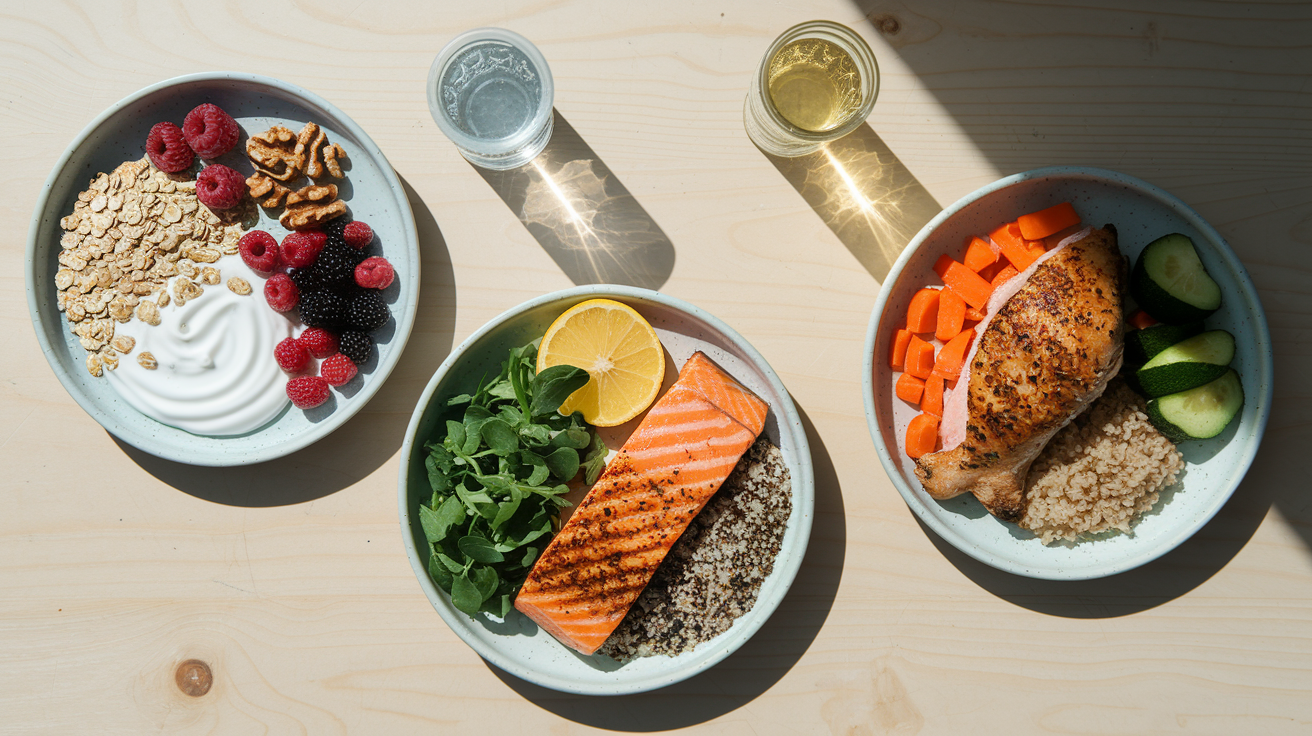
A realistic meal plan keeps your blood sugar steady, delivers calming nutrients at each meal, and doesn’t require specialty ingredients or complicated prep. The goal is to eat every 3 to 4 hours with a mix of protein, fiber, and healthy fat so your cortisol doesn’t spike from hunger or sugar crashes.
| Meal | Foods Included | Why It Helps |
|---|---|---|
| Breakfast | 40 to 50 g rolled oats + 150 g Greek yogurt + 1 cup berries + 20 g walnuts | Slow release carbs, protein, omega-3s, and vitamin C stabilize morning cortisol and blood sugar |
| Lunch | 150 g grilled salmon + 1 cup quinoa + 2 cups mixed greens with olive oil | Omega-3s lower stress response, magnesium and folate from greens support neurotransmitter balance |
| Dinner | 120 to 150 g roasted chicken + 1 cup roasted vegetables + ½ cup brown rice | Lean protein and B vitamins regulate adrenal function, fiber prevents evening blood sugar swings |
| Snacks | 1 medium apple + 30 g almonds, or 20 to 30 g dark chocolate (≥70% cocoa) | Magnesium, antioxidants, and polyphenols keep cortisol steady between meals |
Blood sugar stability is the bridge between your meals and your stress hormones. When your glucose drops too low or spikes too high, your body releases cortisol to compensate. Eating regular meals with balanced macronutrients (about 20 to 30 grams of protein, fiber from whole grains or vegetables, and a source of healthy fat) keeps that loop calm. This plan also front loads nutrients like omega-3s, magnesium, and vitamin C that directly support cortisol regulation without relying on rigid portion rules or fad diet language.
Nutrients and Supplements That Support Healthy Cortisol Levels
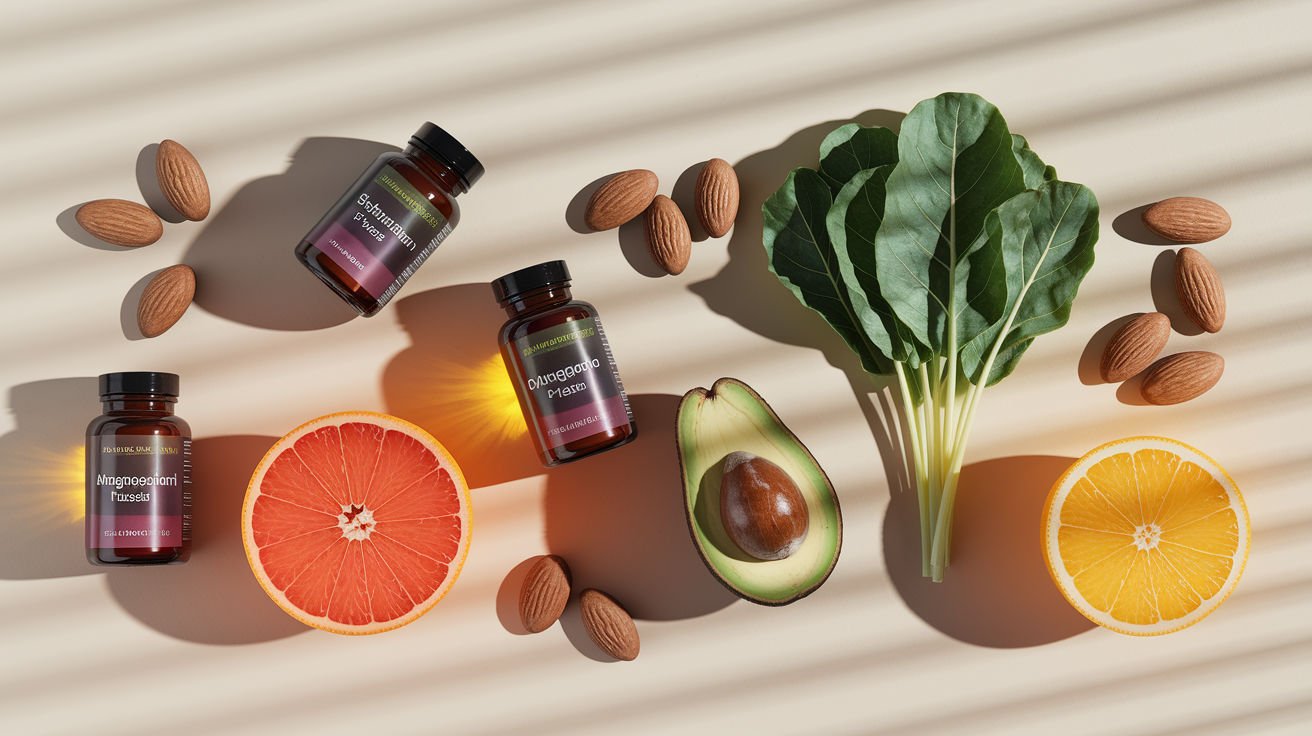
Whole foods deliver the foundation, but specific nutrients and supplements can offer extra support when stress is high or your diet has gaps. These are tools to use alongside meals, not replacements for sleep or realistic eating habits.
Ashwagandha
Ashwagandha is an adaptogenic herb that’s been studied extensively for stress reduction. Multiple trials show it can lower cortisol by up to 30 percent after several weeks of consistent use. The typical dose in research ranges from 300 to 600 milligrams per day of a standardized extract. It works by modulating the hypothalamic pituitary adrenal axis, the system that controls cortisol release. Use it under clinician guidance, especially if you take other medications or have thyroid conditions.
Magnesium
Magnesium helps regulate the nervous system and blunts the body’s stress response. A 2020 study linked magnesium deficiency to increased susceptibility to stress. Supplemental doses often range from 200 to 400 milligrams per day of elemental magnesium. Forms like magnesium glycinate or citrate are better absorbed than oxide. You can also get magnesium from leafy greens, nuts, seeds, and legumes. 30 grams of almonds provides about 80 milligrams.
Omega-3 Fatty Acids
Omega-3s from fish oil or algae oil reduce inflammation and inhibit stress triggered cortisol spikes. Studies typically use 1,000 to 2,000 milligrams per day of combined EPA and DHA. Fatty fish like salmon, mackerel, and sardines deliver these directly in food form, which is always the first choice. Supplements can fill the gap if you don’t eat fish regularly, but look for third party tested products to avoid contaminants.
B Vitamins
B vitamins (especially B12, folate or B9, and B6) support adrenal function and neurotransmitter production. They help your body manufacture serotonin, dopamine, and norepinephrine, which balance mood and stress resilience. Lean proteins like chicken, eggs, and turkey are rich in B vitamins, along with fortified cereals and nutritional yeast. Supplementation is useful if blood work shows a deficiency, but food sources are usually enough for most people eating a varied diet.
How Diet Affects Cortisol: The Science Explained

Cortisol doesn’t exist in a vacuum. It’s regulated by the hypothalamic pituitary adrenal axis, a feedback loop between your brain and adrenal glands that responds to both external stress and internal signals like blood sugar. When your glucose spikes after a high sugar meal or snack, your pancreas releases insulin to bring it back down. That drop can trigger a cortisol release to stabilize energy, especially if the swing is sharp. Over time, repeated blood sugar roller coasters keep cortisol chronically elevated, which wears down your stress resilience and can contribute to weight gain, sleep problems, and mood disturbances.
Inflammation also plays a direct role in cortisol regulation. Chronic low grade inflammation (often fueled by ultra-processed foods, excess sugar, and too little fiber) signals the adrenal glands to produce more cortisol as part of the body’s attempt to manage ongoing internal stress. This is why diets high in antioxidants, omega-3s, and fiber tend to lower baseline cortisol. They reduce systemic inflammation and give the HPA axis less reason to stay on high alert.
The foods you eat send chemical messages that either calm or activate this stress system. Whole foods with fiber slow glucose absorption, which keeps insulin and cortisol from spiking. Anti-inflammatory nutrients like polyphenols in dark chocolate and green tea, or omega-3s in fatty fish, directly dampen the signals that elevate cortisol. Understanding this loop helps you see why consistent, balanced eating isn’t just about calories or macros. It’s about managing the hormones that regulate how your body handles stress day to day.
Practical Eating Habits That Keep Cortisol Stable Long Term

Small, repeatable habits build cortisol stability better than short term meal plans or restrictive resets. The goal is to create a rhythm your body can predict and rely on, so your stress hormones don’t have to compensate for erratic eating or long gaps without food.
Here are five practical habits that support long term cortisol balance:
Eat regular meals every 3 to 4 hours to prevent blood sugar dips that trigger cortisol release.
Include protein at every meal. Aim for 20 to 30 grams to stabilize insulin and support neurotransmitter production.
Choose slow release carbohydrates like oats, quinoa, brown rice, and sweet potatoes instead of refined grains.
Limit caffeine to 1 to 2 cups before noon and consider swapping afternoon coffee for green tea or matcha, which delivers slower caffeine release plus calming L-theanine.
Drink water consistently throughout the day and add a pinch of sea salt or an electrolyte option if you’re active or sweat a lot. Dehydration can raise cortisol.
These habits work because they align with your body’s natural cortisol rhythm. Cortisol is highest in the morning and gradually declines through the day, reaching its lowest point at night. Eating breakfast within an hour of waking supports this morning peak without over spiking it. Regular meals prevent the stress response that comes from long fasting periods or skipped meals. Slow release carbs and consistent protein keep insulin steady, which in turn keeps cortisol from compensating for crashes. Over weeks and months, these patterns teach your adrenal system that fuel is reliable and stress signals can stay low.
Final Words
Start with the basics: add citrus, leafy greens, fatty fish, dark chocolate, and green tea, and cut back on refined sugar, excess caffeine, and processed snacks. These foods and swaps work fast to steady blood sugar and calm the stress response.
Pair a simple one-day meal plan with habits like regular meals, steady carbs, hydration, and a magnesium or omega-3 option if you need it.
If you’re wondering how to reduce cortisol levels through diet, try one small swap this week—tiny wins add up, and you’ll feel it.
FAQ
Q: What foods lower cortisol quickly?
A: The foods that lower cortisol quickly include citrus fruits, leafy greens, fatty fish, nuts, dark chocolate and green tea, all rich in vitamin C, omega-3s, magnesium or polyphenols to blunt stress response.
Q: What is the 19 day cortisol detox?
A: The 19 day cortisol detox is a commercial program that claims to reset stress hormones with specific meals, sleep and relaxation routines; scientific backing is limited, so prioritize steady habits and check with a clinician.
Q: How do you flush cortisol out of your body?
A: Flushing cortisol out of your body isn’t realistic; you lower levels by steady meals, consistent sleep, short breathing breaks, gentle movement, cutting late caffeine and using social support or therapy.
Q: What is the best cortisol reducer?
A: The best cortisol reducer is consistent lifestyle change — regular sleep, balanced meals with protein and fiber, daily movement and short relaxation practices; supplements like ashwagandha may help after trying habits.