

What if you could ease that puffy, tight belly in under an hour with foods from your fridge?
You’re not imagining the discomfort; bloating can feel heavy, tight, and noisy, and you want relief now.
A few everyday foods — ginger, peppermint, cucumber, watermelon, yogurt — can often calm gut muscles, move trapped gas, or reduce water retention fast.
This post shows why they work, how to use them in minutes to hours, and one simple swap to try today.
No strict rules, just small steps that can help you feel lighter sooner.
Rapid-Relief Foods That Ease Bloating Quickly

When your belly feels tight and uncomfortable, you want relief now. Not in three days. A handful of everyday foods can start working within minutes to hours because they either relax your gut muscles, help move trapped gas, or flush out excess water.
Ginger reduces inflammation and gets your digestive tract moving so food and gas shift along faster. Peppermint tea relaxes the smooth muscles in your intestines, which makes it easier for gas to pass. Cucumber delivers quick hydration with its 95% water content, helping your body release water it’s been holding onto. Yogurt with probiotics supplies friendly bacteria that can calm gas-producing fermentation in your gut. Watermelon flushes out excess sodium thanks to its 92% water makeup and natural potassium, easing water retention bloating.
These aren’t magic bullets. But they tackle bloating at the source. Ginger and peppermint work on the muscles and nerves that control gut movement. Cucumber and watermelon act like gentle internal rinses, nudging your body to release trapped fluid. Yogurt steps in to rebalance the bacteria doing the fermenting. You’re not masking symptoms. You’re giving your digestive system exactly what it needs to settle down. Most people notice lighter, less pressured bellies within 30 minutes to a couple of hours when they choose one or two of these and keep portions simple.
Simple Ways to Use These Foods for Faster Relief
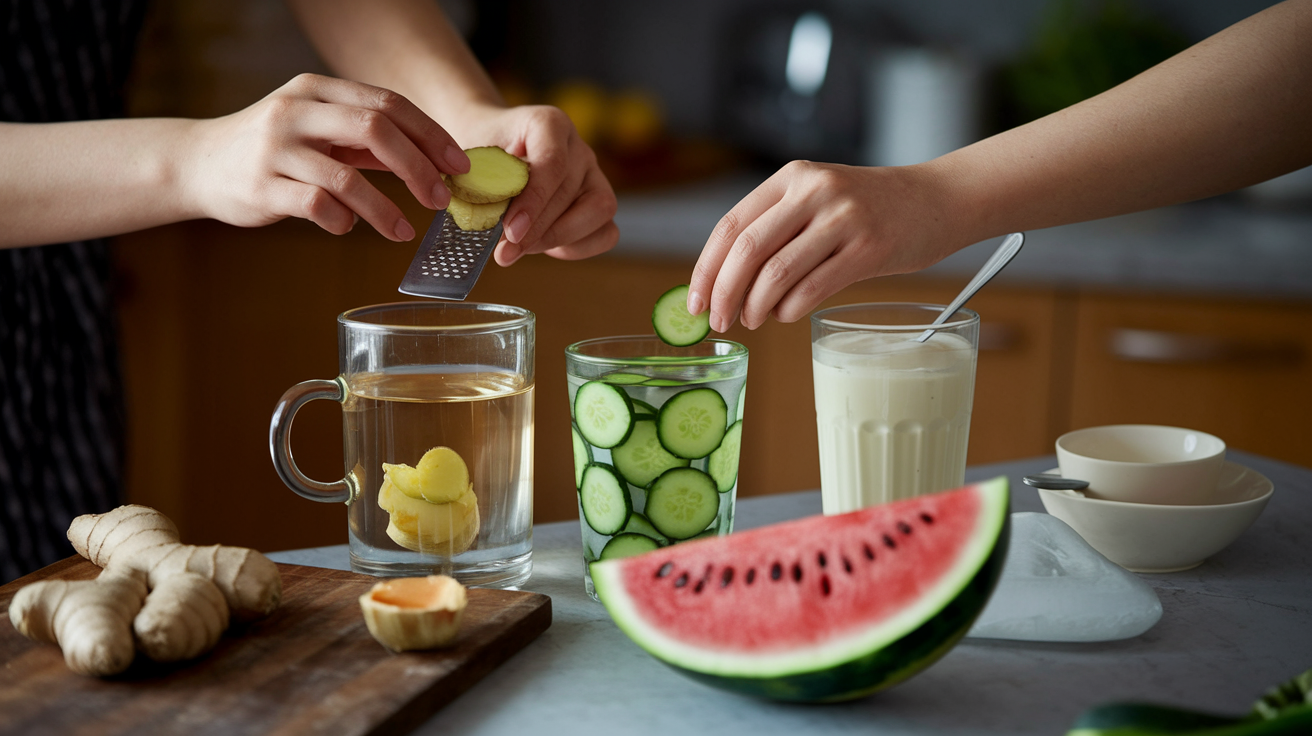
The way you prepare and time these foods makes a real difference in how quickly they help. For ginger, grate about an inch of fresh root into 8 ounces of hot water, let it steep for five to ten minutes, and sip it slowly. Especially right after a heavy meal or when you first notice that tight, gassy feeling. Peppermint works best as tea: steep one bag or a tablespoon of fresh leaves in hot water for five to seven minutes, then drink it warm. Cucumber is most effective eaten raw and chilled. Slice a cup’s worth and eat it as a quick snack, or toss the slices into plain water and sip throughout the morning.
Yogurt delivers the fastest probiotic benefit when you eat it plain, ideally first thing in the morning or about an hour after lunch. Look for labels that say “live and active cultures.” That’s where the gut calming bacteria live. A single serve cup, around six to eight ounces, is a good starting point. Watermelon hydrates fastest on an empty stomach, so try one to two cups of fresh cubes mid morning or an hour before dinner.
Portion size and timing matter more than you’d think. A small serving (half a cup of watermelon, one cup of yogurt, or eight ounces of warm tea) is enough to trigger relief without overwhelming your system. Eating these foods every few hours, rather than all at once, keeps the anti bloat effect steady. If you’re dealing with post meal bloating, reach for ginger or peppermint tea within 20 minutes of finishing your plate.
Foods That Commonly Trigger Bloating
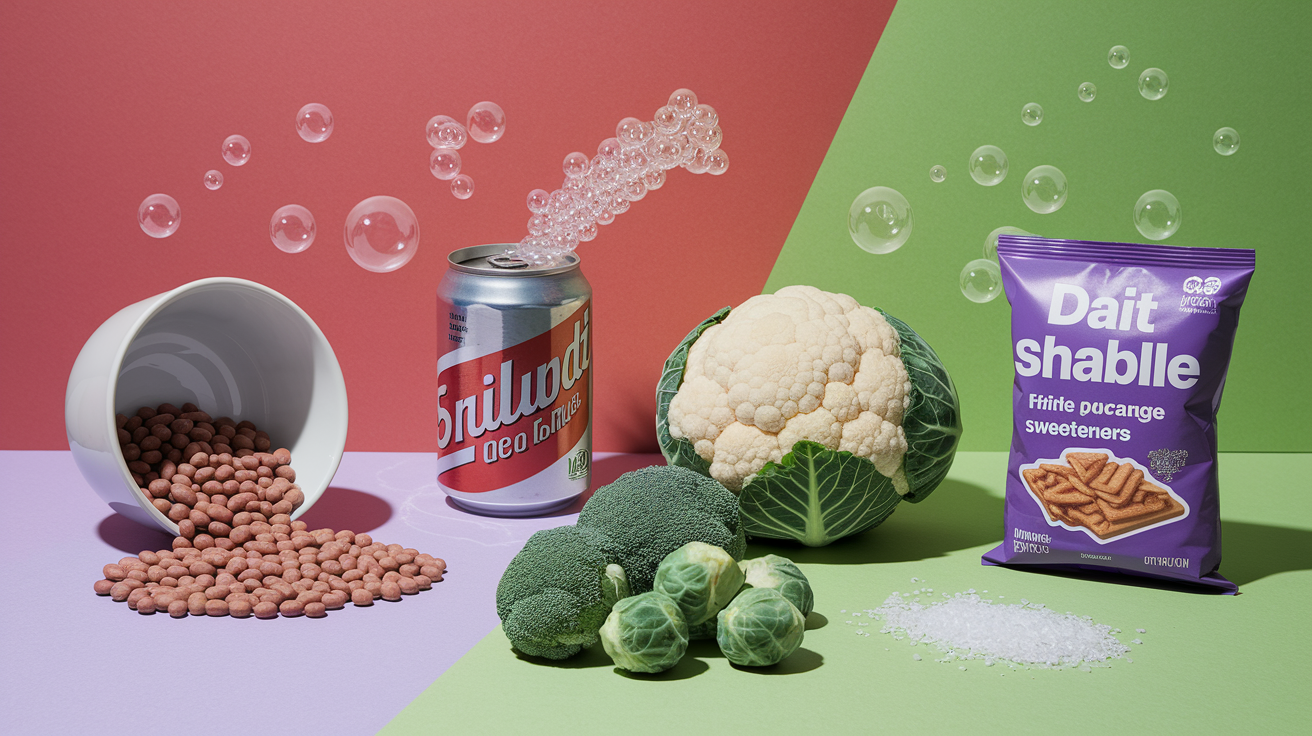
Certain everyday foods create bloating by producing gas during digestion, pulling water into your intestines, or simply sitting heavy in your stomach. Beans and lentils contain oligosaccharides (complex sugars your body can’t fully break down), so gut bacteria ferment them, creating gas and that stretched belly feeling. Carbonated drinks introduce bubbles directly into your digestive tract. And those bubbles have to go somewhere. Salty snacks and processed meals drive water retention because your body holds onto fluid to dilute the extra sodium. Cruciferous vegetables like broccoli, cauliflower, and Brussels sprouts contain raffinose, another hard to digest sugar that feeds gas production, especially when eaten raw or in large amounts.
Artificial sweeteners (sorbitol, xylitol, mannitol) are sugar alcohols that your gut absorbs poorly, so they sit in your intestines and ferment, triggering gas and loose stools. Even a single serving of sugar free gum or a diet soda can leave you feeling puffy within an hour. When you’re already bloated, skipping these foods for 24 to 48 hours gives your system a chance to calm down and reset.
Final Words
Reach for ginger tea, peppermint, cucumber, probiotic yogurt, or a few slices of watermelon when bloating hits — they work quickly to calm digestion.
You read a scannable list of fast-relief foods, simple prep tips like grated ginger or steeped peppermint, and the common triggers to skip so you don’t re-trigger discomfort.
Keep a tiny plan — try one option after a heavy meal and see what helps. These foods that help reduce bloating fast are easy swaps you can use today, and they often ease symptoms within hours. You got this.
FAQ
Q: What foods neutralize stomach bloating immediately and what reduces bloating asap?
A: The foods that neutralize stomach bloating immediately are ginger, peppermint tea, cucumber, yogurt with probiotics, and watermelon, which can ease gas, relax gut muscles, and rehydrate you quickly.
Q: What are 5 foods to avoid bloating?
A: The five foods to avoid to reduce bloating are beans, carbonated drinks, salty foods, cruciferous vegetables, and artificial sweeteners because they often cause gas, fermentation, or water retention.
Q: What to eat to reduce belly bloating?
A: To reduce belly bloating, eat ginger, drink peppermint tea, snack on raw cucumber, choose yogurt with live cultures, and have watermelon to calm digestion, cut gas, and restore hydration within hours.