
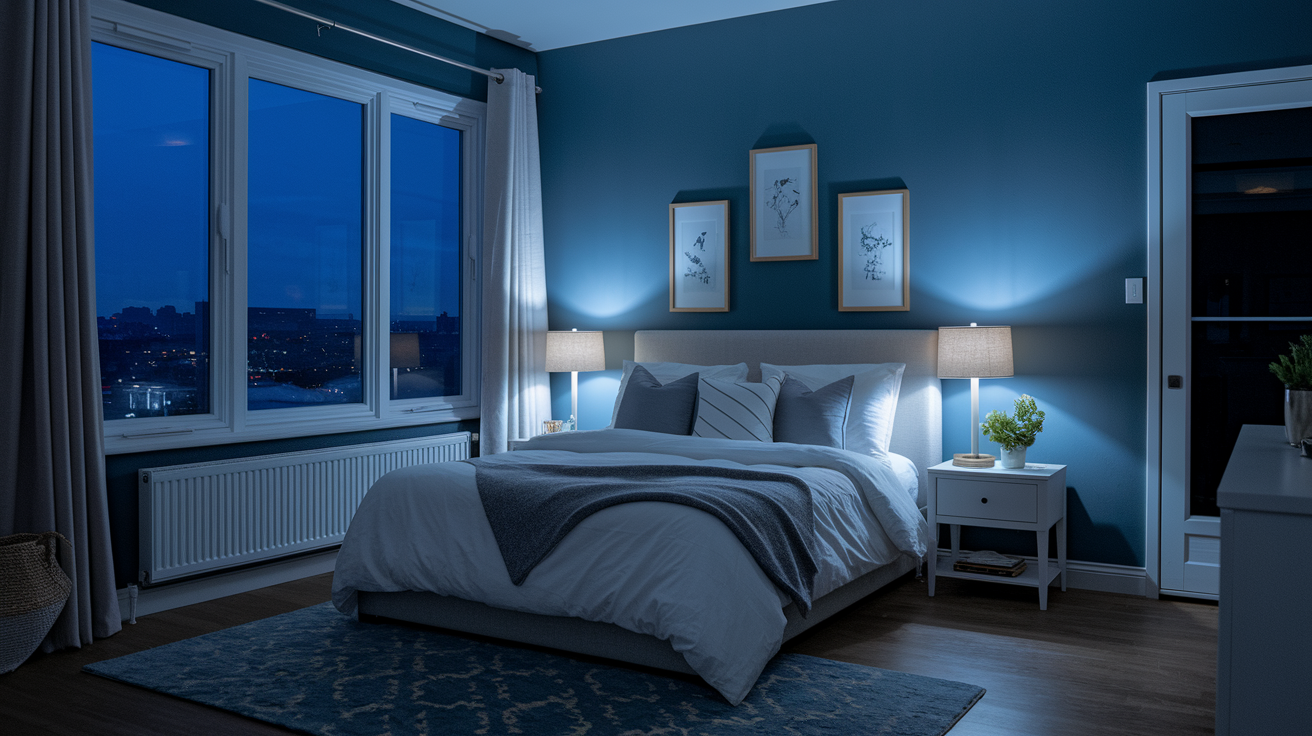
Your bedroom is more to blame for your tired mornings than late-night scrolling.
That’s because small things like room temperature, light, and sound tell your brain whether to sleep or stay awake.
If the room stays warm, bright, or noisy, you’ll fall asleep slower and wake more often.
You’re not imagining it. Small tweaks add up.
This post shows simple, low-effort changes you can try tonight to help you fall asleep faster, sleep deeper, and wake up less groggy.
Core Elements of an Effective Bedroom Environment
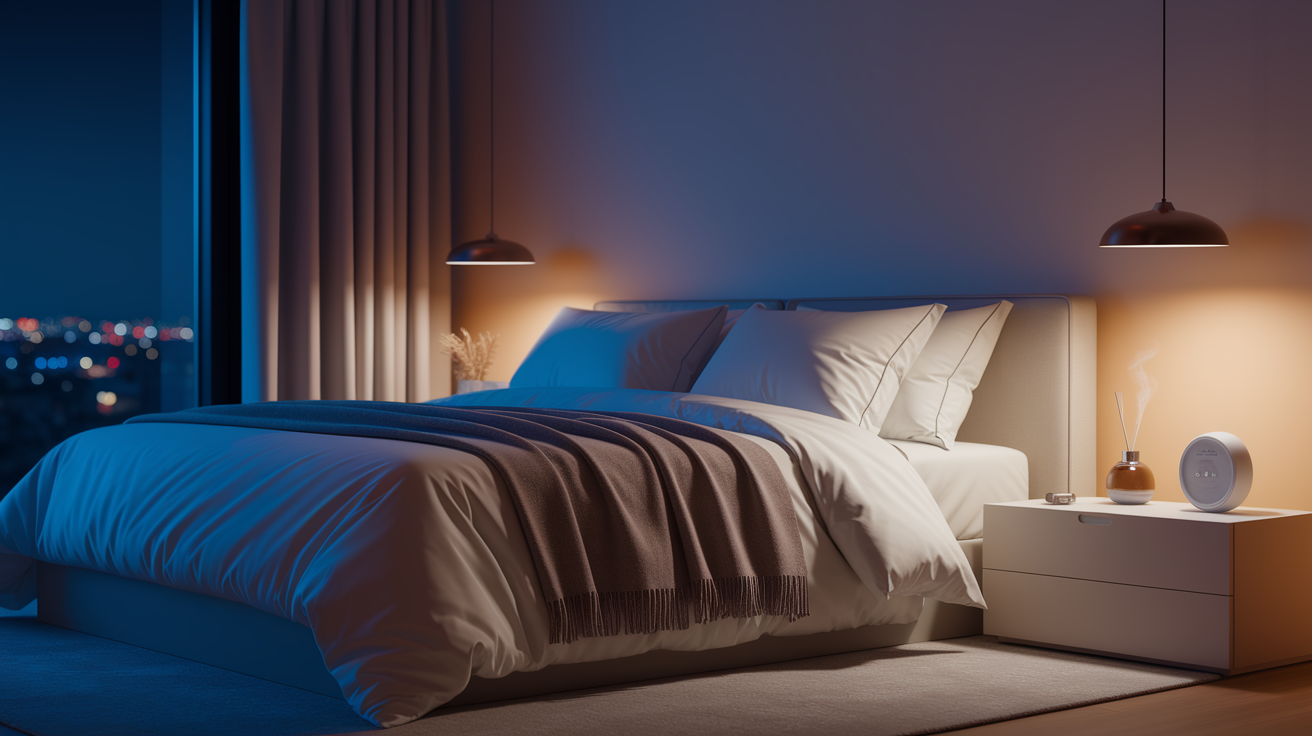
Your body drops its core temperature by about one to two degrees when you fall asleep. That’s not random. The drop signals your brain it’s time to rest. If your bedroom’s too warm or you’re wrapped in heavy blankets, that natural cooling gets interrupted, and you’ll spend the night searching for a comfortable spot. When the room supports your body’s need to shed heat, you fall asleep faster and stay down longer. Think of bedroom temperature as the foundation of sleep support, not just a nice-to-have.
Light exposure drives your circadian rhythm, the internal clock that decides when you feel alert and when you feel sleepy. Even low levels of light in the evening can delay melatonin release, the hormone that makes you drowsy. A bedroom filled with streetlamp glow or the blue light from a charging phone tells your brain it’s still daytime. Over time, that confusion makes it harder to fall asleep at a consistent hour and chips away at the restorative slow wave sleep you get in the first half of the night. Darkness isn’t just nice to have, it’s a biological requirement.
Noise, air quality, and other sensory inputs shape how stable your sleep is once you’re out. You might not wake up fully when a car alarm goes off outside, but your sleep can shift from deep to light stages without you realizing it. Poor air quality, dust, or dry air can trigger subtle breathing changes or throat irritation that fragment sleep in the same way. A bedroom that keeps sensory disruptions to a minimum (whether sound, smell, or stuffiness) protects the continuity and depth of your rest. Small tweaks add up to measurably better mornings.
Final Words
You saw how small shifts in temperature and body-heat help you fall asleep and stay asleep. Cooler core temperature and steady room conditions cut down on wake-ups.
You also saw how light shapes your circadian rhythm. Daylight cues and dim evenings tune melatonin timing, so when you get light matters more than exact rules.
And noise, air quality, and sensory load shape sleep depth. Treat the bedroom environment for sleep quality as the foundation. Try one small change this week — better nights are possible.
FAQ
Q: How does temperature and body-heat regulation influence sleep onset and continuity?
A: Temperature and body-heat regulation influence sleep onset and continuity by letting your core temperature drop to signal sleep; if your room or bedding keeps you too warm or cold, falling and staying asleep gets harder.
Q: How does light exposure affect circadian timing and melatonin cycles?
A: Light exposure affects circadian timing and melatonin cycles by signaling wake or sleep; bright evening light delays melatonin release, pushing your internal clock later and making it harder to fall asleep at your usual time.
Q: How do noise, air quality, and overall sensory input influence sleep stability and depth?
A: Noise, poor air quality, and high sensory input influence sleep stability and depth by causing brief awakenings and lighter sleep, which lowers deep restorative sleep and leaves you feeling less rested.
Q: Why does the bedroom environment affect sleep overall?
A: The bedroom environment affects sleep overall because temperature, light, sound, and air are cues your body uses for sleep timing; consistent, calm cues help your body expect and maintain sleep more easily.
Q: How quickly will changes to my bedroom environment impact my sleep?
A: Changes to your bedroom environment impact sleep quickly—often the same night—because your body reacts to light, temperature, and noise right away, while consistent improvements build stronger benefits over days to weeks.