

What if your puffy, tight belly could calm down in 30 minutes without a pharmacy trip?
You’re not imagining it—most bloating comes from trapped gas, extra fluid, or the way we eat.
This post walks you through simple, natural remedies that often work fast—peppermint tea, ginger, belly massage, heat, a short walk—and easy habit tweaks to stop it coming back.
You’ll get quick fixes for immediate relief and a short, realistic plan for the next few days so you can feel less stretched and more comfortable, starting today.
Quick Natural Remedies for Immediate Bloating Relief
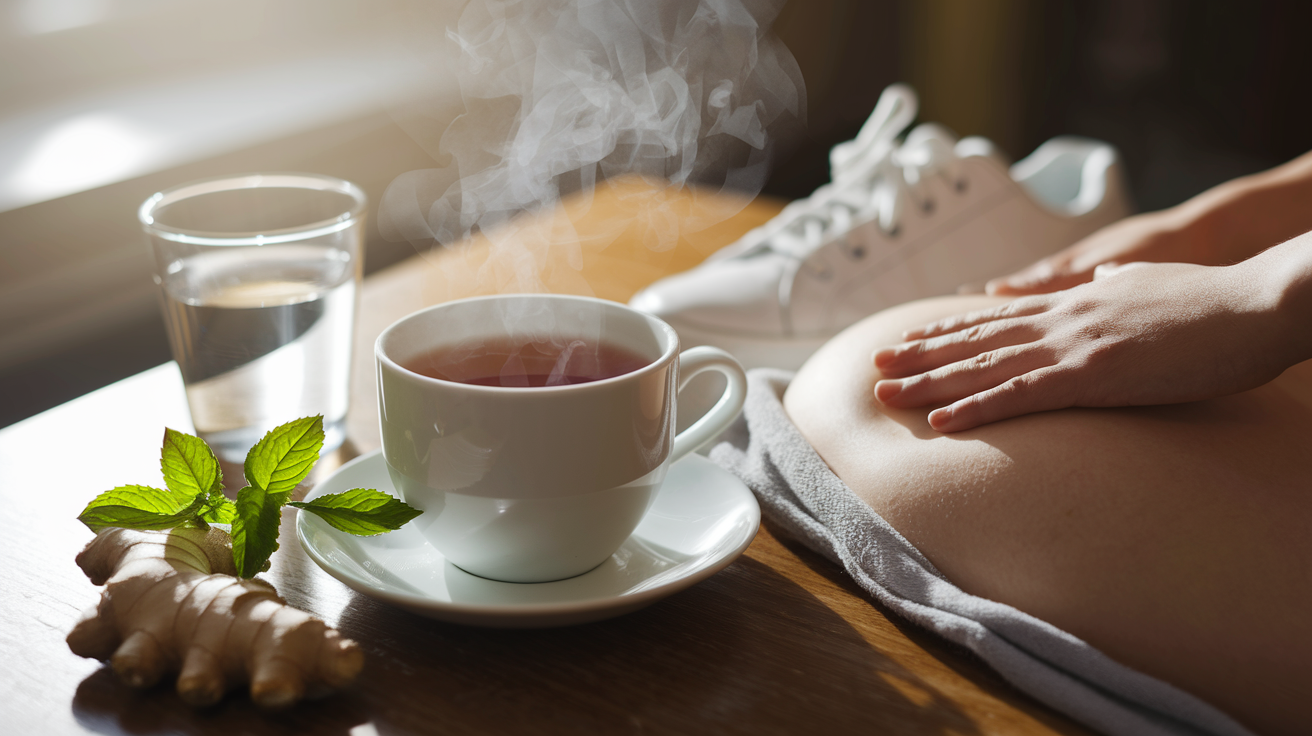
That tight, stretched feeling in your belly? It’s usually trapped gas or temporary fluid retention doing the work. When you eat too fast, swallow air, or down foods that ferment in your gut, gas builds up quicker than your body can get rid of it. Good news is, simple natural remedies can help move things along and bring relief in as little as 15 to 30 minutes.
Your digestive muscles respond to gentle stimulation, heat, and certain natural compounds that relax tension and get things moving. Peppermint relaxes the smooth muscle in your intestinal walls. Ginger speeds up stomach emptying. Physical movement literally helps push gas through your system. These aren’t complicated fixes. They’re body-friendly nudges that work with your digestion.
The fastest relief usually comes from combining a few approaches at once. Sipping warm peppermint tea while taking a slow walk gives you muscle relaxation, gentle pressure changes, and the mechanical benefit of upright movement. If you’re stuck at home, heat plus hydration does a similar job.
Here are six immediate remedies you can try right now:
Peppermint tea – Brew a cup and sip it warm. The menthol relaxes your digestive tract and can ease cramping within 20 minutes.
Fresh ginger – Chew a small piece of peeled ginger or steep it in hot water. Ginger stimulates digestive enzymes and reduces nausea.
Abdominal massage – Use gentle circular motions clockwise around your navel to encourage gas to move toward your colon.
Hydration boost – Drink a full glass of plain water. It helps flush excess sodium and keeps food moving smoothly.
Short walk – Even 5 to 10 minutes of walking changes abdominal pressure and helps trapped gas shift and release.
Skip the bubbles and salt – Avoid carbonated drinks, salty chips, and heavy meals for the next few hours to prevent more bloating from piling on.
Most people notice some improvement within 30 minutes if they use two or three of these together. If your bloating’s mild and recent (say, after a big lunch), one remedy might be enough. For stubborn discomfort that’s been building all day, stack them. Start with tea, add a walk, then finish with a few minutes of gentle belly massage while lying down. The key is giving your body multiple small assists instead of waiting for one thing to do all the work.
Common Causes of Bloating and How They Trigger Discomfort
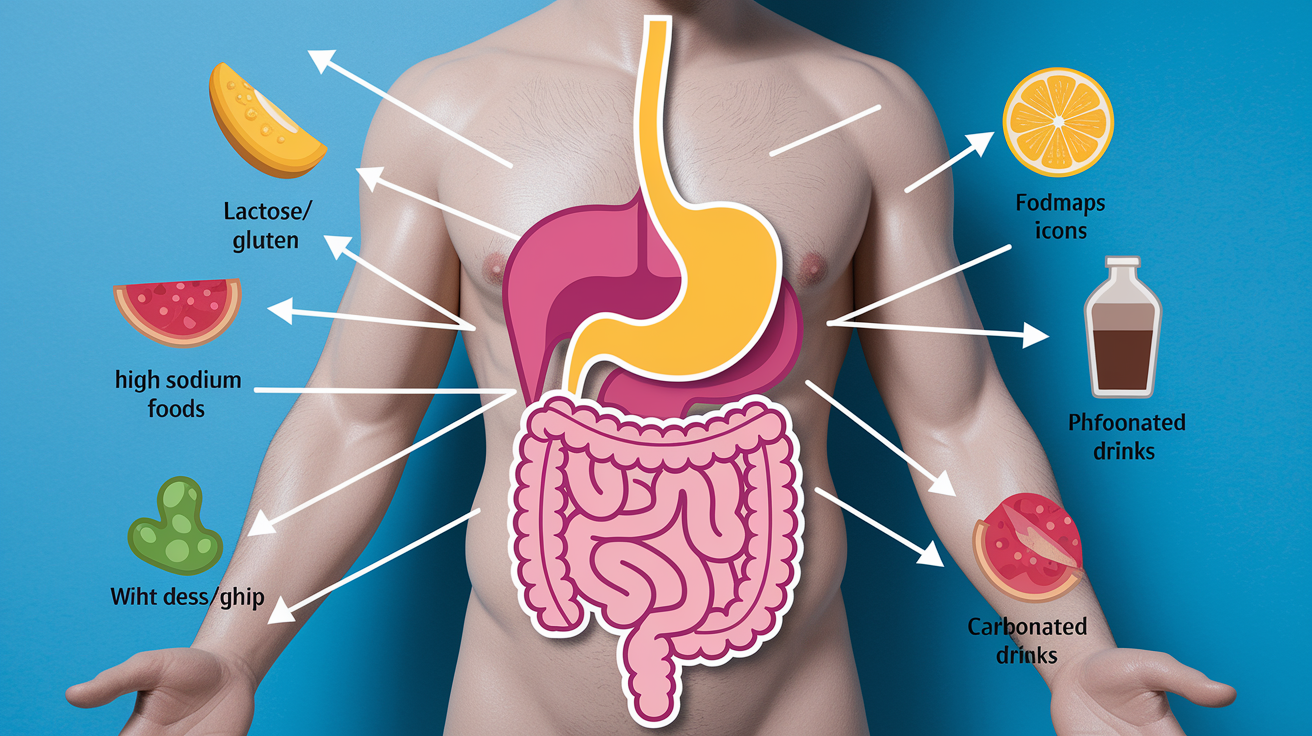
Bloating happens when your GI tract fills with more gas or air than usual, or when your body holds onto extra water. Gas is a normal byproduct of digestion. Bacteria in your colon break down food and release gas as they work. But when that process speeds up, slows down, or gets thrown off balance, you end up with more gas than your body can comfortably handle. The result? That stretched, full feeling, sometimes with visible puffiness across your belly.
Food intolerances are one of the most common culprits. If your body struggles to break down lactose, gluten, or certain carbohydrates (especially the ones called FODMAPs), undigested food reaches your colon and ferments. That fermentation creates extra gas. High sodium meals cause a different kind of bloating. Your body tries to dilute the salt by holding onto water, which shows up as puffiness and tightness. Carbonated drinks add literal bubbles of air to your digestive system. And constipation traps gas behind stool that isn’t moving, creating pressure and discomfort.
How you eat matters as much as what you eat. When you rush through a meal, you swallow more air with each bite. Chewing gum does the same thing. Every time you chew and swallow, a little air goes down with your saliva. Sitting still for hours after eating means your digestive muscles aren’t getting the help gravity and movement provide. Poor hydration thickens digestive contents and slows everything down, giving bacteria more time to produce gas. If you notice bloating shows up around the same meals, the same time of day, or after certain behaviors, you’re looking at a pattern worth tracking.
Dietary Adjustments to Reduce Bloating Naturally
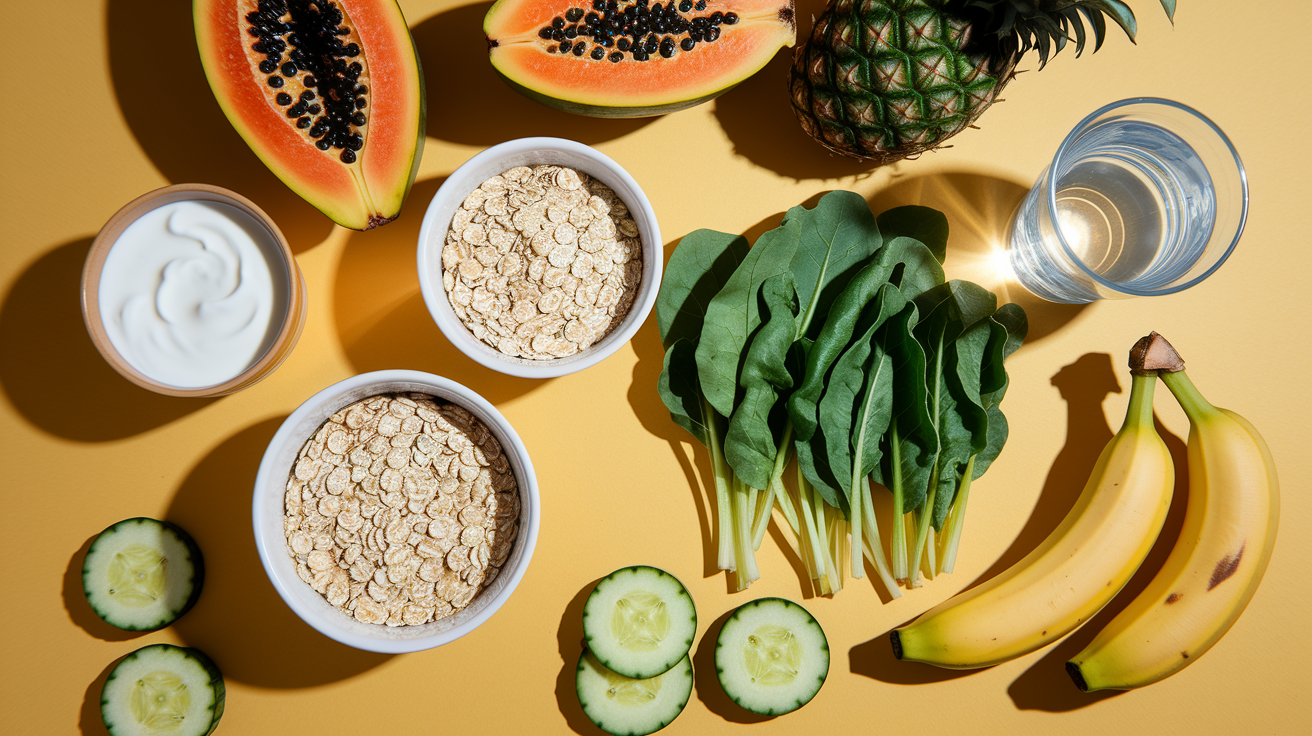
What you put on your plate directly affects how much gas your gut produces and how easily food moves through your system. Some foods create more fermentation, others help sweep things along, and a few actively counter the fluid retention that makes bloating worse. Small, strategic swaps can make a noticeable difference within a few days.
Start by recognizing that fiber is helpful, but only when you add it slowly. A sudden jump from low fiber meals to a bowl of beans and broccoli will overwhelm your gut bacteria and create more gas, not less. Potassium rich foods like bananas, avocados, sweet potatoes help your body release excess sodium and the water that comes with it. High water foods like cucumbers, celery, and melons keep digestion moving and prevent the sluggish backup that traps gas.
Foods that tend to reduce bloating:
Plain yogurt with live cultures supports healthy gut bacteria.
Cooked oats provide gentle fiber that soothes rather than irritates.
Papaya and pineapple contain natural enzymes that aid protein digestion.
Leafy greens like spinach offer fiber and magnesium without excess fermentation.
Ginger and peppermint both relax digestive muscles and reduce cramping.
Foods that commonly trigger bloating:
Beans, lentils, and cruciferous vegetables like broccoli and cabbage are high in fermentable carbs.
Dairy products if you’re lactose sensitive. Undigested lactose ferments in the colon.
Artificial sweeteners, especially sorbitol and xylitol. Your body can’t fully absorb sugar alcohols.
Fried and high fat foods slow stomach emptying and create that heavy, stuck feeling.
How you structure your meals also plays a role. Eating four to five smaller meals instead of two or three large ones keeps your stomach from stretching too much at once and reduces the air you swallow when you’re ravenous and rushing. Chew each bite thoroughly. Aim for food to be soft and almost liquid before you swallow. It sounds basic, but most people chew only a few times and then gulp. That leaves bigger chunks for your stomach and intestines to handle, and it brings more swallowed air into the mix. Slowing down and chewing well is one of the simplest, most effective changes you can make.
Herbal and Natural Remedies That Ease Bloating
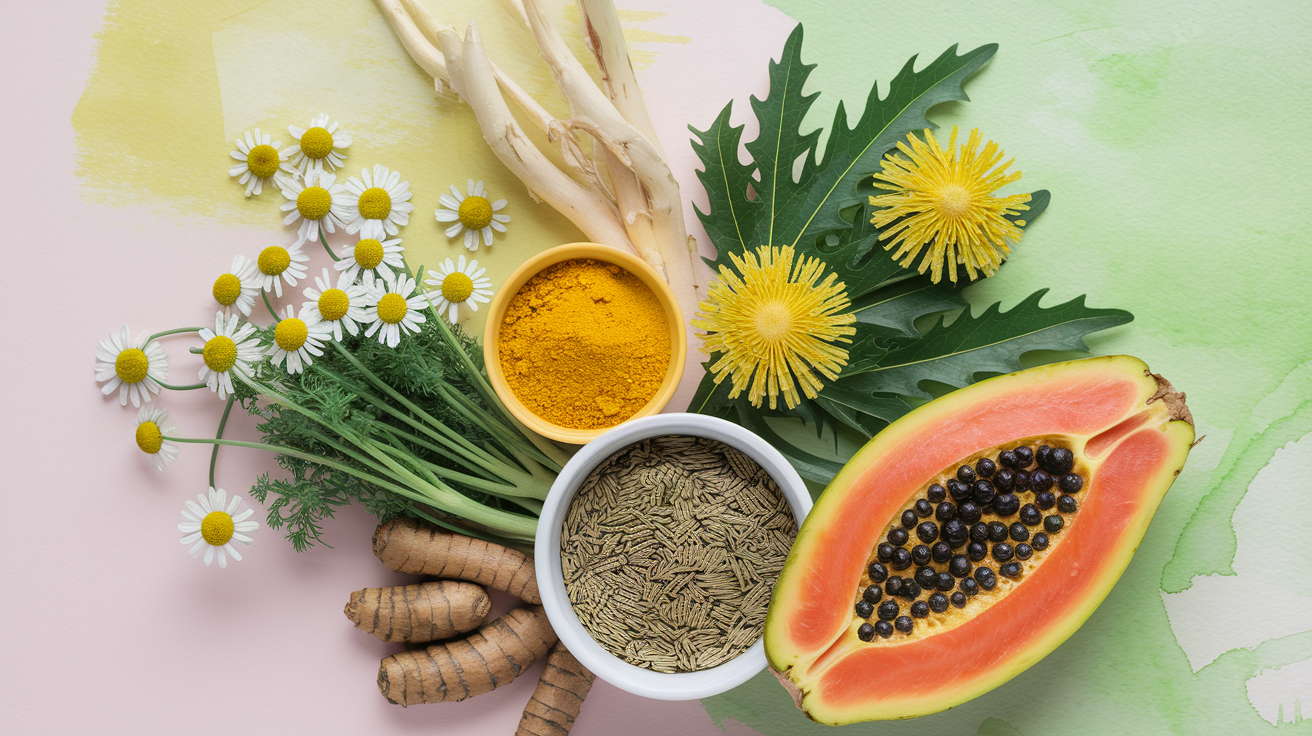
Certain plants have been used for centuries to calm digestive discomfort, and many of them work by relaxing the smooth muscle in your intestines, reducing inflammation, or gently encouraging your body to release trapped gas and excess fluid. Chamomile tea has mild anti inflammatory compounds that soothe an irritated digestive lining and help your whole system settle. Fennel seeds contain oils that relax intestinal spasms and reduce the cramping that often comes with bloating. Chewing a teaspoon of seeds after a meal or steeping them in hot water can bring relief within 20 to 30 minutes.
Turmeric contains curcumin, a compound that reduces inflammation throughout the digestive tract and may help if your bloating comes with low grade discomfort or a gurgly, unsettled belly. Dandelion root acts as a mild diuretic, meaning it helps your kidneys release extra water without harsh side effects. If your bloating feels more like puffiness and water weight than gas, a cup of dandelion tea in the afternoon can make a difference by the next morning.
Natural digestive enzymes, found in papaya (papain) and pineapple (bromelain), can help break down proteins and reduce the digestive workload that leads to gas buildup. If you tend to feel bloated after heavier meals, having a small serving of fresh pineapple or papaya as dessert, or taking a plant based enzyme supplement with your meal, may prevent that sluggish, overfull feeling. These aren’t quick fixes for chronic issues, but they’re useful tools when you know a meal is going to challenge your system.
Gut Health and Probiotics for Long Term Bloating Reduction
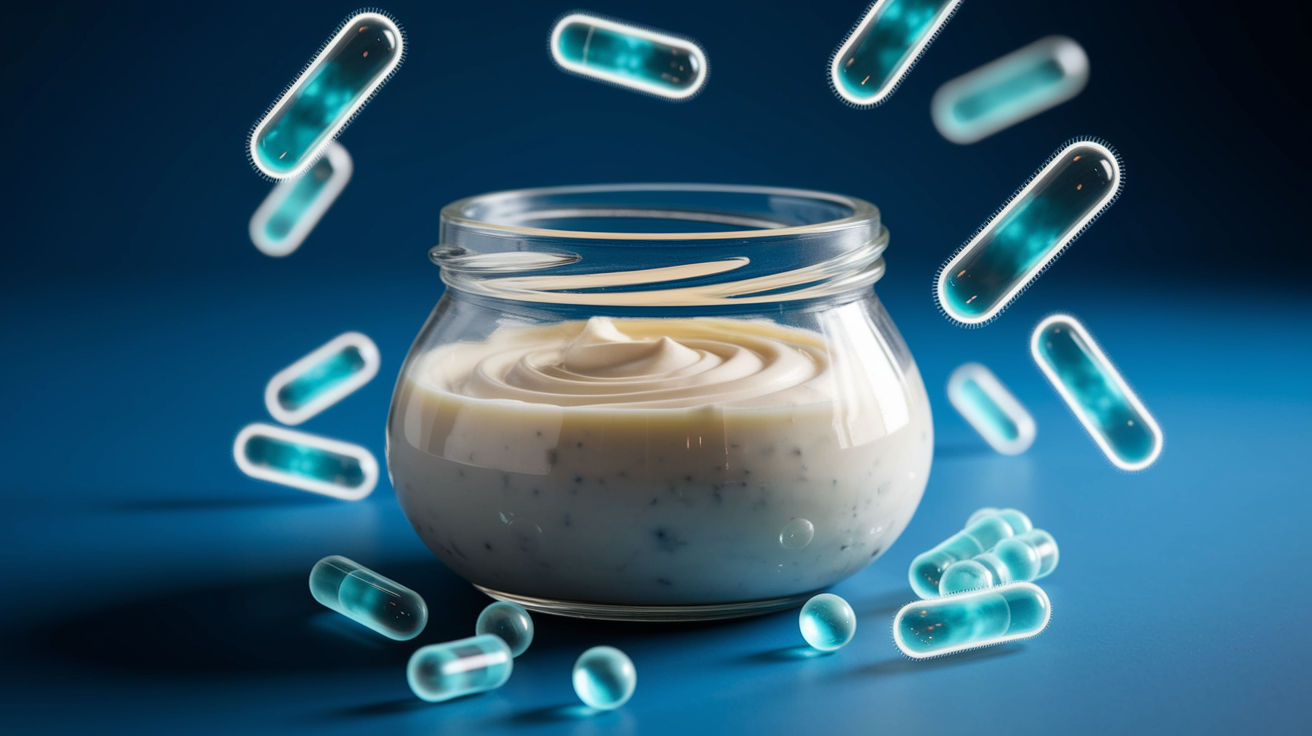
Your gut is home to trillions of bacteria, and the balance between helpful and less helpful strains has a direct impact on how much gas you produce, how well you absorb nutrients, and how smoothly food moves through your intestines. When that balance tips (often after antibiotics, a bout of food poisoning, or weeks of stress and poor sleep), you may notice more frequent bloating, unpredictable digestion, and discomfort that doesn’t respond well to the usual fixes.
Probiotics are live beneficial bacteria that help restore that balance. Research shows that certain strains, especially Lactobacillus and Bifidobacterium species, can reduce gas production and improve overall gut function. You might notice less bloating, more regular bowel movements, and fewer episodes of cramping or urgency. It usually takes a few weeks of consistent use to see a meaningful shift, so probiotics work best as a long term strategy, not a same day remedy.
Probiotic rich foods to include regularly:
Plain yogurt with live active cultures. Check the label for specific strains.
Kefir, a fermented milk drink with a broader range of bacterial strains than yogurt.
Sauerkraut and kimchi. Choose unpasteurized versions for live cultures.
Miso and tempeh, fermented soy products common in Asian cuisines.
If you’re considering a probiotic supplement, look for products that list the specific strains and guarantee at least 1 billion CFUs (colony forming units) per dose. Refrigerated options tend to maintain potency better, though some shelf stable brands use protective coatings that work just as well. Start with one capsule daily and give it at least two to three weeks before deciding if it’s helping. If bloating persists or worsens, it may be worth trying a different strain or talking to a provider who can recommend a targeted option.
Lifestyle Habits That Prevent Recurring Bloating
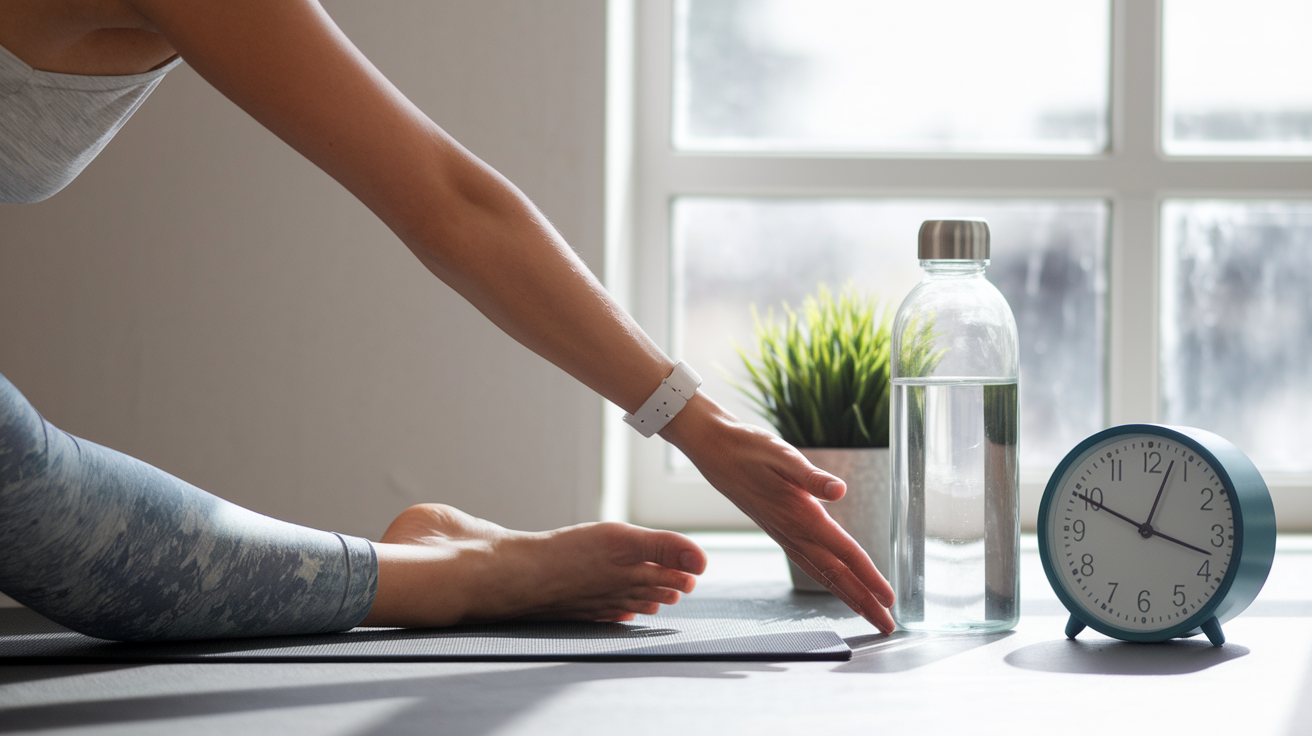
Regular physical activity does more than burn calories. It stimulates the muscles in your intestines, encourages gas to move through your system, and reduces the sluggishness that leads to constipation and bloating. You don’t need intense workouts. A 10 minute walk after lunch, a few minutes of stretching in the morning, or even standing and moving around every hour can keep your digestion from stalling. Aim for at least 20 to 30 minutes of gentle movement most days, and notice if your bloating improves on the days you move more.
Chronic stress impacts your gut in surprisingly direct ways. When you’re anxious or overwhelmed, your body shifts into fight or flight mode, which slows digestion and alters gut bacteria balance. Over time, that can show up as more frequent bloating, irregular bowel habits, and a belly that feels unsettled even when you haven’t eaten anything unusual. Simple daily stress relief (like five minutes of deep breathing, a short walk outside, or a few stretches before bed) can help your nervous system settle and give your digestion room to work normally.
Hydration and sleep round out the basics. Drinking enough water throughout the day keeps food moving smoothly and prevents the thick, slow digestion that traps gas. Poor sleep disrupts hunger hormones, increases stress hormones, and throws off the rhythm of your digestive system, all of which can lead to more bloating. Most people need about seven to eight hours of sleep to keep their metabolism and digestion running well.
Four daily habits that reduce bloating over time:
Drink water steadily throughout the day. Aim for a glass every couple of hours rather than chugging a liter all at once.
Take a short walk or do light stretching after your largest meal to help digestion along.
Practice a few minutes of slow, belly focused breathing when you feel stressed or rushed.
Go to bed and wake up at roughly the same time each day to support your body’s natural digestive rhythm.
Final Words
When bloating hits, try peppermint tea, ginger, a short walk, gentle abdominal massage, drink water, and skip carbonated or salty foods right away.
You now know common triggers—food intolerances, fast eating, extra sodium—and practical fixes: diet swaps (low‑FODMAP, potassium foods), herbs like chamomile or fennel, and probiotics to help balance your gut.
Start a simple 3–7 day plan: use quick remedies, slow your meals, add a probiotic or herbal tea, and move more. This is a realistic way to learn how to reduce bloating naturally. Small changes add up—feel lighter soon.
FAQ
Q: What reduces bloating fast? How to get unbloated in 5 minutes at home?
A: Fast bloating relief comes from simple actions: sip peppermint or ginger tea, take a short walk, do a gentle belly massage, and drink water — these often ease pressure within minutes.
Q: Can hot water reduce bloating?
A: Hot water can reduce bloating by relaxing gut muscles and speeding digestion; sipping warm water or herbal tea helps move gas and soothes a tight belly, especially when you also walk a bit.
Q: How to flush gas out of your stomach?
A: Flushing gas from your stomach works best with gentle belly massage, walking, lying on your left side with knees pulled in, and sipping warm ginger or peppermint tea to encourage gas to move.