

What if the foods in your kitchen could end a week of being stopped up better than a pill?
Constipation often shows up as hard stools, straining, and a puffy, heavy feeling you can’t shake.
For most people, small food swaps, adding fiber-rich fruits, veggies, beans, seeds, and a bit more water, help within days.
This post lays out practical swaps, why they work, what to try first, and a simple 3–7 day plan so you can get moving again.
What Constipation Actually Feels Like (And When Food Can Help)

You know the feeling. Three days go by, maybe four, and nothing. When you do try, it’s uncomfortable. Straining, hard stool, or just this sense that things aren’t moving the way they should. You feel bloated. Heavy. Off.
That’s constipation, and it’s more common than you’d think. About 16 in 100 adults in the U.S. deal with it regularly. The clinical definition is usually fewer than three bowel movements per week, but even if you’re going more often, symptoms like hard stool or excessive straining still count.
Here’s the good news: for most people, constipation responds well to diet changes. Especially when you add the right kinds of fiber and pair them with enough water. This isn’t about a perfect meal plan or cutting out entire food groups. It’s about small, practical swaps that help your digestion move more easily.
If you’ve gone more than three days without a bowel movement and it’s causing significant discomfort, or if you see blood, unexplained weight loss, or severe pain, reach out to a healthcare provider. For everyone else dealing with sluggish digestion, let’s start with what’s on your plate.
How Fiber Moves Things Along (Without the Confusion)

Fiber is the part of plant foods your body can’t fully digest. Instead of breaking down, it travels through your digestive system and does two helpful things: it adds bulk to your stool and it holds onto water. Both make bowel movements easier and more regular.
There are two types of fiber, and they work in different ways.
Insoluble fiber doesn’t dissolve in water. It adds volume to stool and speeds up how quickly food moves through your intestines. Think of it as the broom that keeps things moving. You’ll find it in whole grains, vegetable skins, nuts, and seeds.
Soluble fiber absorbs water and forms a soft, gel-like texture. This helps soften stool so it’s easier to pass. It’s in foods like oats, beans, apples, pears, and chia seeds.
You need both types. Most high-fiber foods contain a mix of the two. The problem? Most of us aren’t getting nearly enough. About 90% of women and 97% of men don’t meet the recommended daily fiber intake. That shortfall is one of the main reasons constipation is so widespread.
The typical fiber target is around 25 grams per day for women and 38 grams per day for men. A more flexible rule of thumb is 14 grams of fiber for every 1,000 calories you eat. If that sounds like a lot, don’t worry. Small changes add up faster than you’d think.
The Fruits That Actually Work
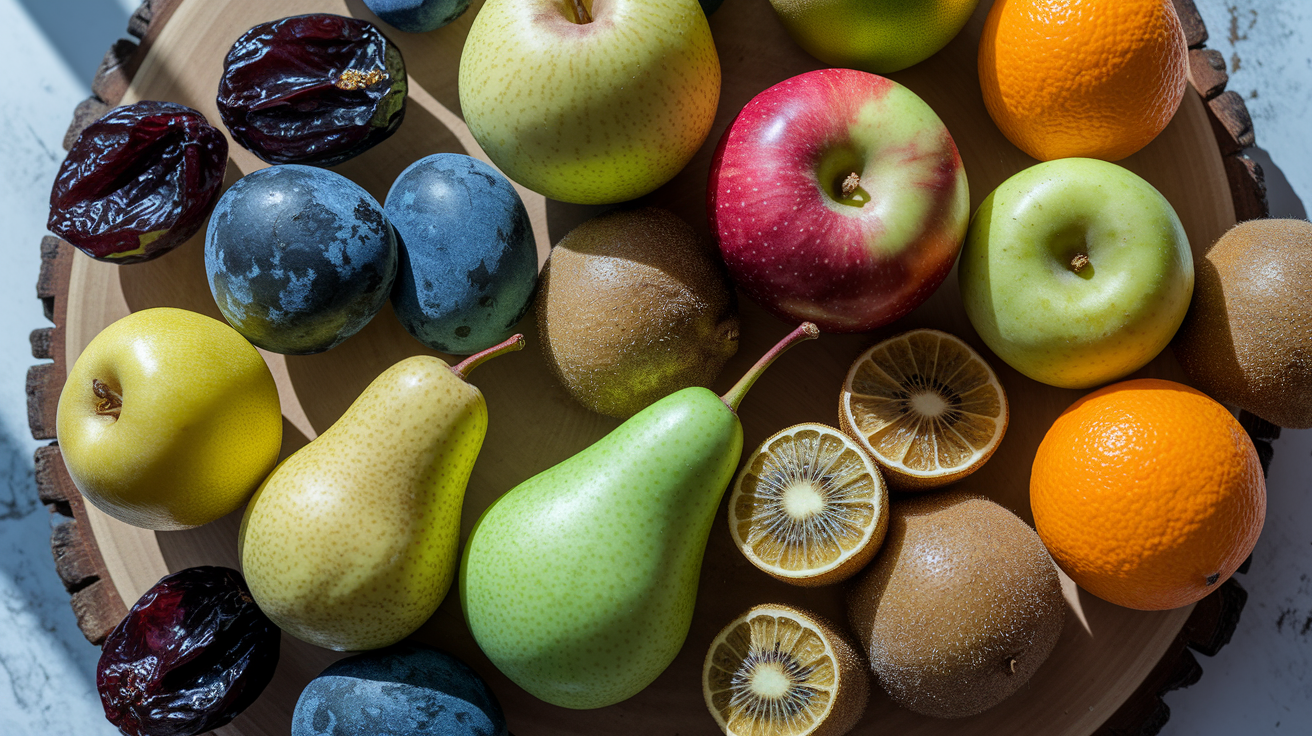
Fruit is one of the easiest ways to add fiber to your day, and some varieties are especially helpful when you’re dealing with constipation. The key is choosing whole fruit with the skin on when possible, and paying attention to what’s inside. Some fruits contain natural compounds that gently encourage your digestive system to move.
Prunes (dried plums) are the classic go-to for a reason. A quarter cup, about 40 grams or roughly six prunes, gives you around 3 grams of fiber. But prunes also contain sorbitol, a sugar alcohol that pulls water into your intestines and has a mild laxative effect. Many people notice results within 24 to 72 hours of adding prunes to their routine. You can eat them plain, stew them, or blend them into smoothies.
Apples are another reliable choice. A medium apple with the skin on (about 200 grams) delivers close to 5 grams of fiber. The skin holds most of the insoluble fiber, and the flesh is rich in pectin, a type of soluble fiber that softens stool. Keep the peel on. That’s where a lot of the benefit lives.
Pears work in a similar way. One medium pear (about 178 grams) gives you around 5.5 grams of fiber, plus sorbitol and fructose, both of which can help draw water into your bowel. Like apples, pears are most effective when you eat them with the skin.
Kiwi is smaller but surprisingly powerful. One kiwi (about 75 grams) has around 2.3 grams of fiber, and it also contains an enzyme called actinidin that may improve gut motility. Some studies have found that eating two kiwis a day can help people with chronic constipation have more frequent, easier bowel movements.
Dried figs pack a lot of fiber into a small serving. Half a cup (50 grams) has about 7.3 grams of fiber. They’re sweet, portable, and easy to add to oatmeal, yogurt, or trail mix.
Citrus fruits like oranges and grapefruit also contribute. A medium orange (154 grams) has around 3.7 grams of fiber, and a whole grapefruit (308 grams) has about 5 grams. The membranes and white pith contain pectin, which helps with stool consistency. Don’t just drink the juice. Eat the fruit whole to get the fiber.
If you’re not used to eating a lot of fruit, start with one or two servings a day and build from there. Pair fruit with a glass of water or add it to meals that already include fat or protein to slow digestion and keep your energy steady.
Vegetables That Do the Heavy Lifting
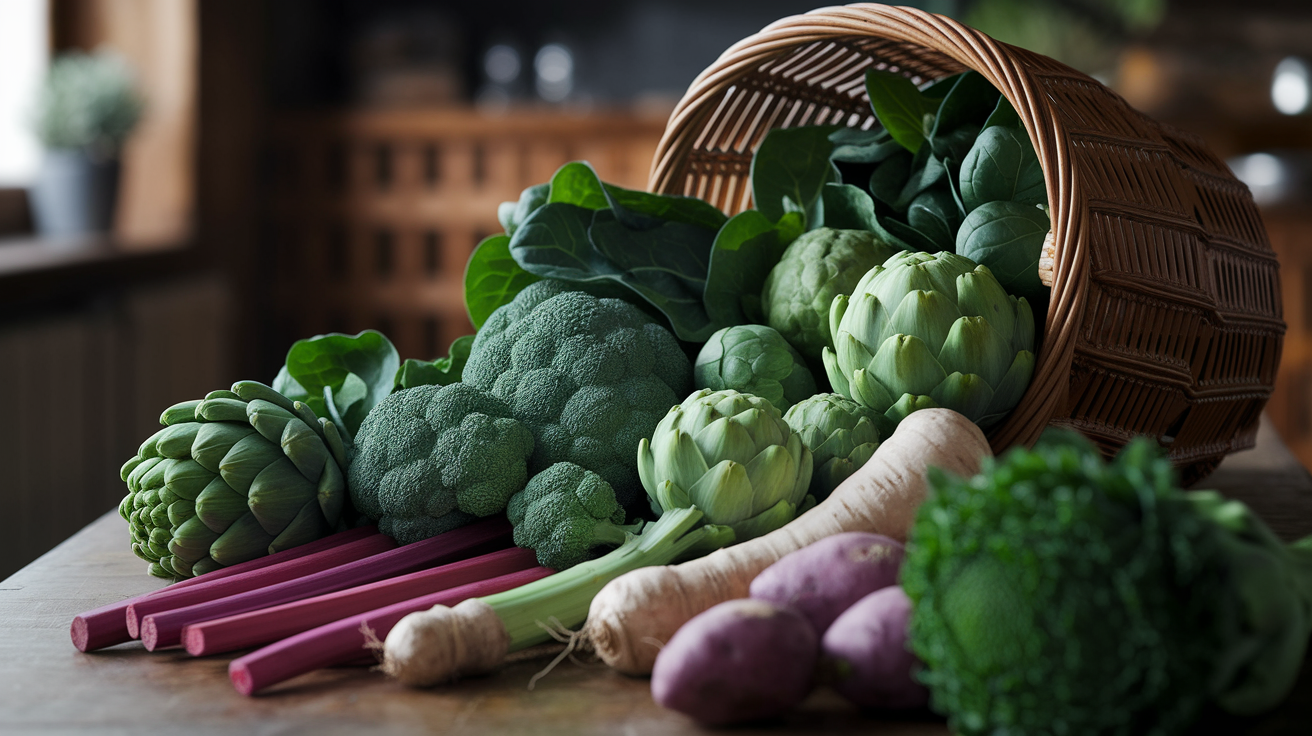
Vegetables are some of the most fiber-dense foods you can eat, and they’re easy to fit into almost any meal. The trick is choosing the ones that pack the most fiber per serving and eating them regularly, not just once in a while.
Cooked spinach is more concentrated than raw. One hundred grams of cooked spinach (about half a cup) gives you around 1.6 grams of fiber. It’s mild, versatile, and easy to add to eggs, soups, or pasta.
Brussels sprouts are small but mighty. Five cooked Brussels sprouts deliver about 3.5 grams of fiber. Roast them with a little olive oil and salt, and they become a side dish that actually moves the needle on your daily fiber total.
Broccoli is another solid choice. One cup of cooked broccoli (91 grams) has around 2.4 grams of fiber. It’s high in both soluble and insoluble fiber, and it’s one of those vegetables that shows up easily in stir-fries, casseroles, or alongside grilled protein.
Jerusalem artichokes and chicory root are less common, but they’re worth knowing about if you’re dealing with stubborn constipation. Both are rich in inulin, a type of soluble fiber that feeds beneficial gut bacteria and can improve stool frequency and softness. In one study, people who took 12 grams of chicory-derived inulin per day (about 0.4 ounces) saw noticeable improvements. You can find Jerusalem artichokes at some farmers’ markets or specialty grocery stores. Roast or sauté them like potatoes.
Artichokes (the regular kind) are also high in fiber. A medium artichoke (128 grams) has close to 7 grams of fiber, plus prebiotic compounds that support digestion. Steam or roast them and eat the tender parts of the leaves and the heart.
Rhubarb is tart and often overlooked, but one cup of cooked rhubarb (122 grams) has about 2.2 grams of fiber. It also contains a compound called sennoside A, which may help keep stool softer by affecting water balance in the intestines. Use it in compotes, add it to oatmeal, or bake it into a low-sugar crumble.
Sweet potatoes are an easy, filling option. One medium sweet potato (150 grams) delivers around 3.6 grams of fiber. A mix of insoluble fiber in the skin and pectin in the flesh. Bake or roast them with the skin on for the full benefit.
Aim to include at least one or two of these vegetables in your lunch and dinner. If you’re not a huge vegetable eater, start with the ones you already like and build from there. Cooked vegetables are often easier to digest in larger amounts than raw, especially when you’re ramping up fiber.
Beans, Seeds, and the Fiber Power Players
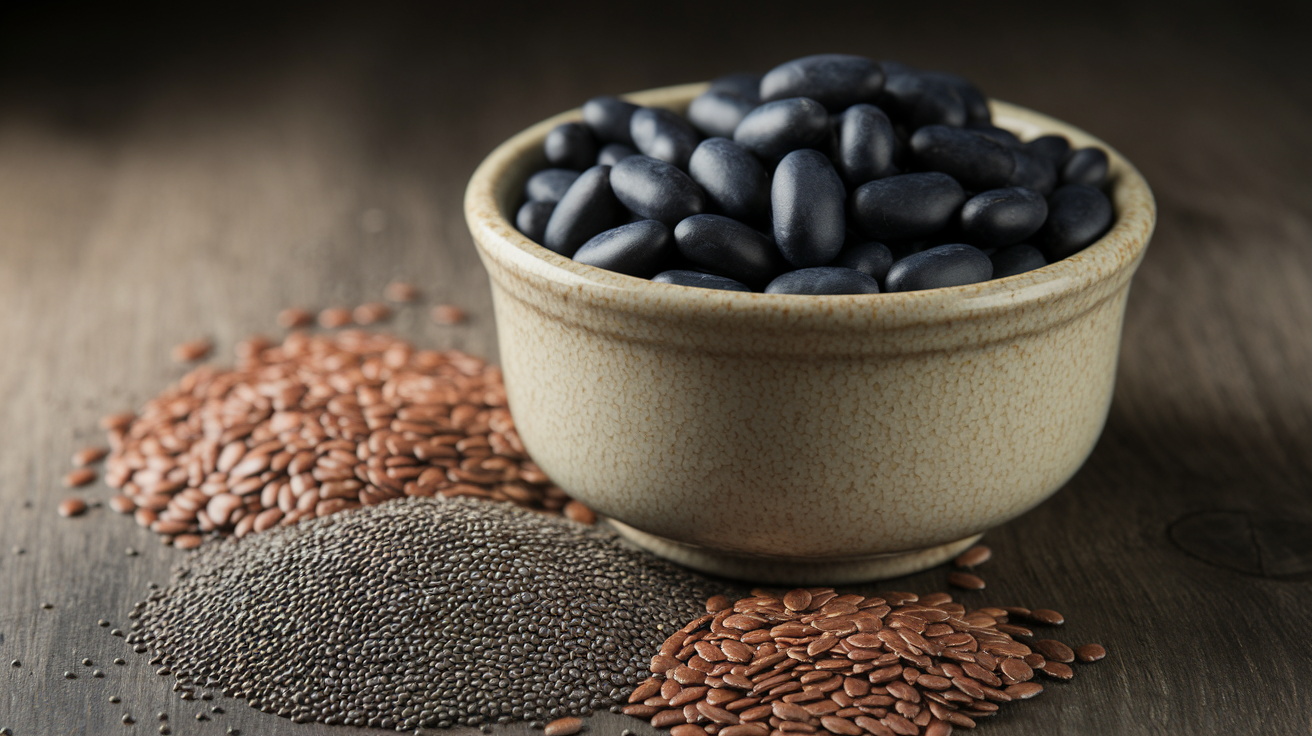
If you want to make a big jump in your daily fiber intake without eating huge portions, beans and seeds are your best tools. They’re some of the most fiber-dense foods available, and they’re also packed with protein, healthy fats, and minerals that support overall digestion.
Navy beans top the list. One cup of cooked navy beans (182 grams) has about 19 grams of fiber. More than half the daily target for most women and nearly half for men. If a full cup feels like too much, start with a half cup in soup, chili, or a grain bowl.
Lentils are another high-yield option. Half a cup of cooked lentils (99 grams) gives you around 7.8 grams of fiber. They cook faster than most beans, they’re mild in flavor, and they work in everything from salads to curries to simple side dishes.
Other legumes (chickpeas, black beans, pinto beans, kidney beans) all fall in a similar range, with about 6 to 9 grams of fiber per half-cup cooked serving. If you’re new to beans, introduce them slowly. A sudden jump can cause gas and bloating, but your digestive system usually adapts within a week or two.
Chia seeds are small but incredibly effective. One ounce (about two tablespoons, or 28 grams) contains close to 10 grams of fiber. Chia seeds can absorb up to twelve times their weight in water, forming a gel that softens stool and makes it easier to pass. Add them to smoothies, yogurt, or oatmeal, and make sure you’re drinking plenty of water alongside them. If you eat chia dry without enough liquid, it can actually make constipation worse.
Flaxseeds work in a similar way. One tablespoon of whole flaxseeds (9 grams) has about 2.5 grams of fiber, a mix of soluble and insoluble. Grinding flaxseeds makes the fiber and healthy fats more accessible. You can buy them pre-ground or grind them yourself in a coffee grinder. Store ground flax in the fridge to keep it fresh. In one 12-week study, people with chronic constipation who added flaxseed to their diet saw meaningful improvements in bowel frequency and stool consistency.
A simple daily habit: add one tablespoon of ground flax or one to two tablespoons of chia to your breakfast. That’s an easy 5 to 10 grams of fiber right there, with almost no effort.
If beans cause discomfort, try rinsing canned beans thoroughly before cooking, or start with lentils, which tend to be gentler. Over time, your gut bacteria will adjust, and the bloating usually improves.
The Grains and Fermented Dairy That Ease Things Along
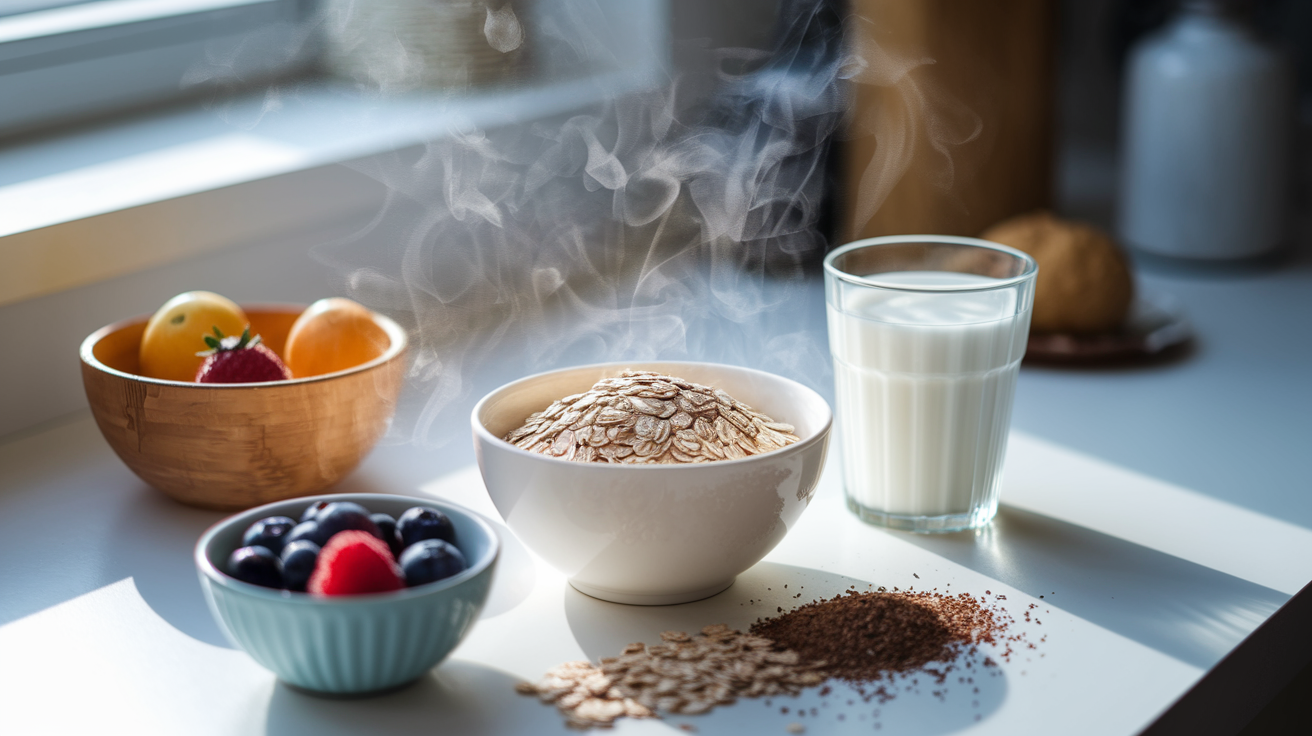
Whole grains and fermented dairy don’t always get the same attention as fruits and vegetables when people talk about constipation, but they’re quietly effective. And easy to work into meals you’re already eating.
Whole-grain rye bread is especially helpful. Two medium slices (about 64 grams) give you around 3.7 grams of fiber, and rye is particularly high in soluble fiber. That means it can form softer, larger stools that move through your system more easily. If you’re used to white bread or refined wheat bread, swapping in rye for even one meal a day can make a noticeable difference.
Oat bran is another strong option. A third of a cup of raw oat bran (31 grams) has close to 5 grams of fiber, compared to about 2.7 grams in the same portion of quick oats. Oat bran has a finer texture and a higher concentration of soluble fiber, which is why it’s often recommended for digestive health. You can cook it like oatmeal, stir it into smoothies, or sprinkle it over yogurt.
Regular whole-grain oats still count. A half cup of dry oats (40 to 50 grams) has around 4 grams of fiber. Overnight oats with chia seeds, berries, and a drizzle of almond butter can easily get you to 10 grams of fiber in one bowl.
Other whole grains (brown rice, quinoa, farro, barley) contribute between 3 and 5 grams of fiber per cooked cup. The key is choosing whole grains over refined ones. White rice, white bread, and regular pasta have had most of their fiber stripped away, which is why they don’t help (and can sometimes make things worse).
Kefir is a fermented milk drink that’s similar to drinkable yogurt but with a wider range of probiotic strains. Probiotics help balance the bacteria in your gut, and some research suggests they can improve bowel regularity, especially in people with digestive conditions. In one study, participants drank 13.5 ounces (400 milliliters) of kefir twice a day and saw improvements in gut microbiome composition and reduced abdominal discomfort. You don’t need to drink that much to see benefit. Starting with one cup (240 milliliters) a day is a reasonable, low-pressure goal.
If dairy doesn’t agree with you, look for non-dairy kefir made from coconut or almond milk. The probiotic content is usually similar.
A simple grain-and-dairy habit to try: swap your usual breakfast for a bowl of oat bran or whole-grain oats topped with kefir, berries, and a tablespoon of ground flax. That one meal can give you 12 to 15 grams of fiber and a dose of probiotics to support your gut.
The Foods That Slow You Down (And Why)
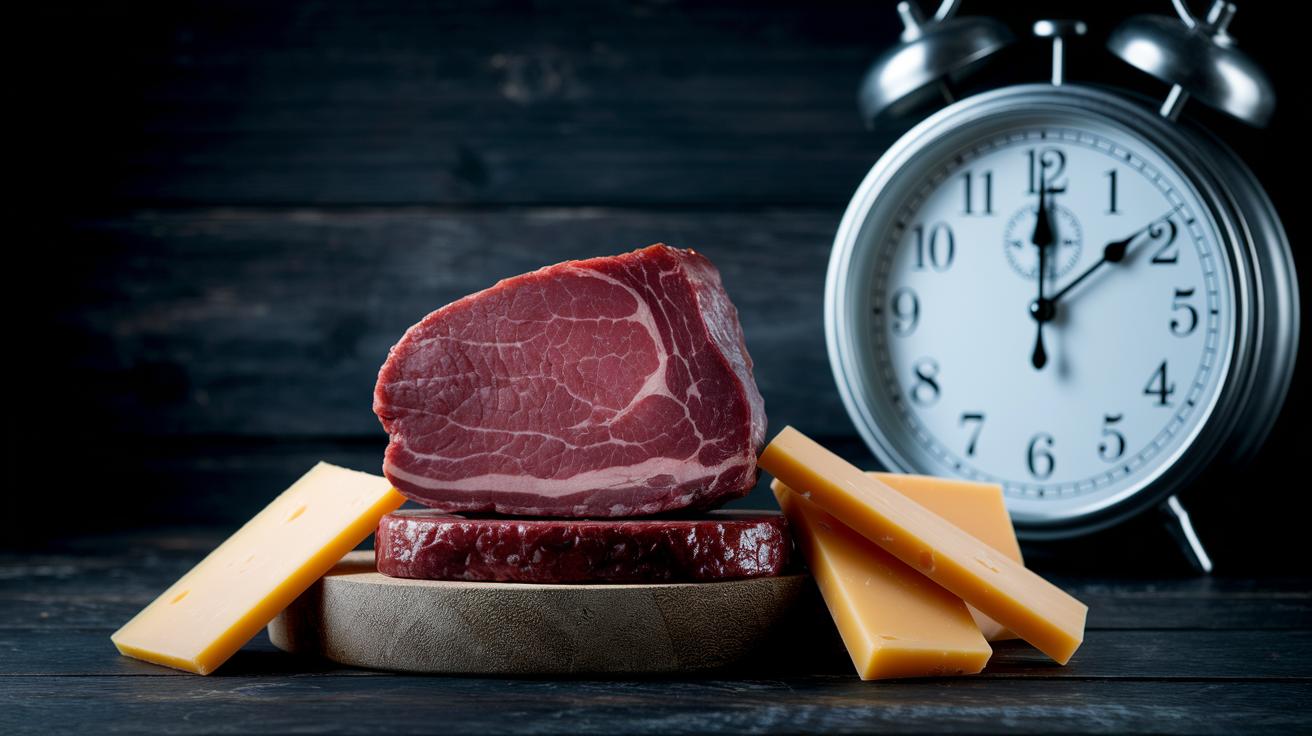
While some foods help move things along, others can make constipation worse. Or at least not help at all. You don’t need to eliminate these foods entirely, but cutting back or swapping them out during a constipation flare can make a real difference.
Refined grains are the biggest culprit. White bread, white rice, regular pasta, crackers, and baked goods made with white flour contain very little fiber. They’ve been processed to remove the bran and germ, which is where most of the fiber lives. If your meals are built around these foods, you’re missing out on the bulk and water-holding capacity that helps stool move.
For some people, gluten-containing foods can worsen constipation, especially if there’s an underlying sensitivity or intolerance. If you’ve noticed that bread, pasta, or baked goods seem to make symptoms worse, it’s worth trying a week or two without them to see if things improve. Gluten itself isn’t inherently constipating, but the way your body reacts to it might be.
Milk and unfermented dairy can be tricky. Some people, especially those who are lactose intolerant or sensitive to dairy proteins, find that milk, cheese, and ice cream slow their digestion. Cheese in particular is low in fiber and high in fat, which can delay stomach emptying. If you eat a lot of cheese and you’re dealing with constipation, try cutting back to one serving a day or switching to fermented options like kefir or yogurt, which are easier to digest and contain probiotics.
Foods high in saturated fats and trans fats (fried foods, fatty cuts of red meat, processed snacks, baked goods with shortening or margarine) are also linked to slower digestion. High-fat meals take longer to leave your stomach, and some research suggests that diets heavy in saturated fat are associated with a higher risk of constipation.
Red meat shows up in some studies as a potential contributor, especially when it’s eaten in large amounts and replaces fiber-rich plant foods. A diet heavy in red meat and low in vegetables and whole grains tends to move more slowly through the digestive tract. You don’t have to give up red meat completely, but balancing it with high-fiber sides and limiting portion sizes (aim for 3 to 4 ounces per serving) can help.
Highly processed foods in general (packaged snacks, frozen meals, fast food) tend to be low in fiber and high in refined carbs, salt, and unhealthy fats. They’re not doing much to support your digestion.
Instead of thinking about what to cut out, think about what to swap in. Replace white bread with whole-grain rye. Swap white rice for brown rice or quinoa. Add a side of roasted vegetables to your dinner instead of fries. Trade cheese and crackers for hummus and veggie sticks. Small, consistent swaps add up faster than big, sweeping changes that are hard to stick with.
How to Actually Increase Fiber Without Feeling Worse

Adding fiber is one of the most effective ways to relieve constipation, but if you do it too fast, it can backfire. Sudden jumps in fiber, especially without enough water, can cause bloating, cramping, and gas. That’s not a sign that fiber doesn’t work. It’s a sign your digestive system needs time to adjust.
Here’s how to do it safely.
Start slow. Aim to increase your fiber intake by about 5 grams every three to four days. If you’re currently eating around 10 to 15 grams of fiber a day, don’t jump straight to 30 grams. Add one high-fiber food at a time and see how your body responds. For example, add a tablespoon of ground flax to your breakfast for three days. Then add a half cup of lentils to your lunch. Then swap white rice for brown rice at dinner. Gradual changes give your gut bacteria time to adapt and reduce the chance of uncomfortable side effects.
Drink more water. This is not optional. Fiber works by absorbing water and adding bulk to stool. If you’re dehydrated, fiber can make constipation worse instead of better. A general baseline is about 8 to 12 cups (64 to 96 fluid ounces, or roughly 2 to 3 liters) of water per day. If you’re adding concentrated fiber sources like chia seeds, psyllium, or oat bran, bump that up even more. A good rule: every time you eat a high-fiber meal or snack, drink a full glass of water with it.
Spread fiber throughout the day. Instead of loading all your fiber into one meal, aim for about 7 to 12 grams at each meal and another 3 to 5 grams at snacks. That keeps things moving steadily without overwhelming your system. For example:
- Breakfast: oatmeal with berries and flax = 10 to 12 grams
- Snack: apple with almond butter = 5 to 6 grams
- Lunch: lentil soup with a side salad = 10 to 15 grams
- Snack: handful of almonds or a few prunes = 3 to 4 grams
- Dinner: brown rice, roasted broccoli, and chickpeas = 12 to 15 grams
That puts you around 40 grams for the day, which is solidly within the recommended range for most adults.
Pay attention to how you feel. Some bloating and gas is normal in the first week or two as your gut bacteria adjust to the higher fiber load. But if you’re in significant discomfort, scale back a bit and increase more slowly. Everyone’s tolerance is different.
Choose whole foods over supplements when possible. Whole fruits, vegetables, beans, and grains come with vitamins, minerals, and phytonutrients that fiber supplements don’t have. That said, if you’re struggling to get enough fiber from food alone, a supplement like psyllium husk can help. Start with about 5 grams once a day (follow the product label) and mix it into at least 8 ounces of water. Psyllium is a soluble fiber that forms a gel and softens stool. Just make sure you drink plenty of fluids with it. Psyllium without water can make constipation worse.
Don’t forget fat and protein. Fiber is important, but meals that are only fiber can leave you feeling unsatisfied and can actually slow digestion if they’re too low in fat. A little healthy fat (olive oil, avocado, nuts, seeds) helps with nutrient absorption and keeps meals balanced. Protein also supports steady energy and helps you feel full. A good plate looks like this: a palm-sized portion of protein, a fist-sized portion of whole grains or starchy vegetables, and one to two fists of non-starchy vegetables, with a thumb-sized portion of healthy fat.
If you’ve been stuck at a low-fiber intake for a long time, give yourself a solid two weeks to ramp up. Most people start noticing improvements in bowel frequency and stool consistency within three to seven days of hitting their fiber target, as long as they’re also drinking enough water and moving their body regularly.
Hydration, Timing, and the Little Habits That Help

Fiber gets most of the attention when people talk about constipation, but hydration and timing matter just as much. You can eat all the oats and beans in the world, but if you’re not drinking enough water or if your body doesn’t have a predictable routine, things still won’t move the way they should.
Water is non-negotiable. Aim for about 8 to 12 cups (64 to 96 fluid ounces) of plain water each day as a baseline. If you’re physically active, live in a hot climate, or have a larger body, you’ll need more. When you increase fiber, especially from concentrated sources like chia, flax, or psyllium, bump your water intake up even further. A simple check: your urine should be pale yellow. If it’s dark or you’re not urinating much, you need more fluids.
Prune juice can be helpful if plain water feels boring or if you want a little extra push. Prune juice contains sorbitol and fiber in liquid form, which can stimulate bowel movements. A small glass (4 to 6 ounces) in the morning or before bed is a common starting point. Don’t overdo it. Too much can cause cramping or loose stools.
A warm beverage first thing in the morning can help wake up your digestive system. Coffee works for a lot of people because caffeine stimulates the muscles in your colon. But even warm water with lemon or herbal tea can trigger the gastrocolic reflex, which is the signal your body sends to your bowel after your stomach starts filling up. This reflex is strongest in the morning, so giving it a little nudge with a warm drink and a fiber-rich breakfast can set you up for a bowel movement within 15 to 45 minutes.
Eat breakfast. Skipping breakfast means skipping one of the best opportunities your body has each day to move your bowels. A high-fiber breakfast (oatmeal with fruit and seeds, whole-grain toast with avocado and an egg, or kefir with granola and berries) gives your digestive system both the fuel and the signal it needs to get moving.
Don’t ignore the urge. When you feel the need to go, go. Holding it in because you’re busy or uncomfortable using a public restroom can weaken the signals between your brain and your bowel over time. The longer stool sits in your colon, the more water gets absorbed out of it, making it harder and more difficult to pass. If you need to, set a reminder to sit on the toilet for 5 to 10 minutes after breakfast, even if you don’t feel a strong urge. Sometimes just giving your body the time and space is enough.
Move your body. Physical activity helps stimulate the muscles in your intestines. You don’t need to run a marathon. Research shows that even short, 10- to 15-minute walks after meals can improve bowel regularity. Aim for about 30 minutes of moderate activity most days of the week. Walking, yoga, swimming, cycling. Anything that gets you moving counts.
Be consistent. Your digestive system likes routine. Try to eat meals around the same time each day, drink water steadily throughout the day (not all at once), and give yourself time in the morning to use the bathroom without rushing. Consistency helps train your body to move on a more predictable schedule.
If you’ve been increasing fiber and drinking more water for a week and you’re still not seeing improvement, double-check your fluid intake. Dehydration is one of the most common reasons fiber-rich diets don’t work. If hydration isn’t the issue, it’s worth talking to a healthcare provider to rule out other causes.
Quick Relief Options (When You Need Results Faster)
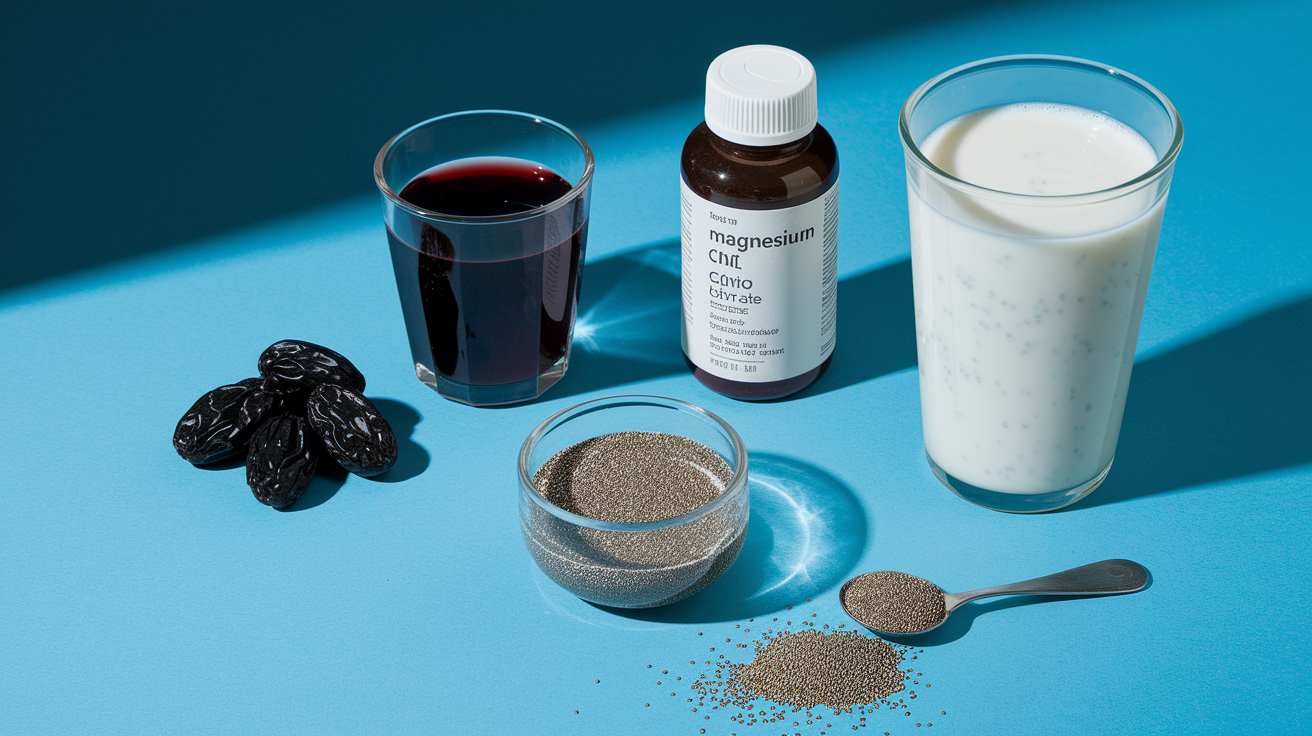
Sometimes you need relief now, not in three to five days. If you’re dealing with acute discomfort (bloating, cramping, or it’s been more than three days without a bowel movement), there are a few food-based and over-the-counter options that can help speed things along.
Prunes or prune juice are the fastest food-based option. Eating 6 to 12 prunes (about 50 to 100 grams) or drinking 4 to 8 ounces of prune juice can produce results within 6 to 24 hours for many people. The sorbitol in prunes draws water into your intestines, and the fiber adds bulk. If you’re not used to them, start with a smaller amount to avoid cramping.
Chia seeds mixed with water can also work relatively quickly. Combine 1 to 2 tablespoons of chia with at least 8 ounces of water, stir, and let it sit for 10 minutes until it forms a gel. Drink it down and follow with another glass of water. The gel can help soften stool and move it through your system within 12 to 48 hours. This works best if you’re already well-hydrated.
Kefir or yogurt with live probiotics won’t produce instant relief, but some people notice improvement within a day or two. The probiotics help balance gut bacteria, which can improve motility. Try 1 to 2 cups of plain, unsweetened kefir or yogurt daily for a few days.
Psyllium husk is a fiber supplement that can help in the short term. Mix 1 teaspoon (about 5 grams) into 8 to 12 ounces of water, stir quickly, and drink it right away. Follow with another glass of water. Psyllium swells and forms a gel that softens stool. Most people see results within 12 to 72 hours. Start with a smaller dose if you’ve never used it before, and never take psyllium dry. It needs liquid to work safely.
Magnesium citrate is an over-the-counter option that works by pulling water into your intestines. You can find it in liquid form or as a powder to mix with water. Follow the dosage on the label, and expect results within 30 minutes to 6 hours. It’s safe for occasional use, but don’t rely on it regularly without talking to a healthcare provider.
Over-the-counter laxatives like bisacodyl (Dulcolax) or senna (Senokot) are stimulant laxatives that work by triggering muscle contractions in your intestines. They’re effective and usually produce a bowel movement within 6 to 12 hours. Use them only when needed, not as a daily solution. Overuse can make your bowel dependent on them and worsen constipation over time.
Stool softeners like docusate (Colace) work by helping water and fat mix into stool, making it softer and easier to pass. They’re gentle and take 12 to 72 hours to work. They’re a good option if you’re recovering from surgery, childbirth, or another situation where straining could be harmful.
Enemas and suppositories (glycerin or bisacodyl) can provide relief within minutes to an hour. They’re useful in more urgent situations, but they’re not a long-term fix.
A few important cautions:
- If you’re using any kind of laxative or stool softener regularly (more than a few times a month), talk to a healthcare provider. Chronic reliance on laxatives can signal an underlying issue that needs attention.
- Don’t combine multiple laxatives at once without medical guidance.
- If you have severe abdominal pain, vomiting, rectal bleeding, or if you haven’t had a bowel movement in more than a week despite trying these options, seek medical care right away.
Quick relief is helpful when you need it, but the goal is to build daily habits (fiber, water, movement) that keep your digestion regular so you don’t need quick fixes as often.
A Simple 1-Day Meal Plan to Get You Started
Sometimes the easiest way to see how all of this fits together is to look at a full day of eating. This sample plan is designed to deliver about 35 to 40 grams of fiber, plenty of fluids, and balanced meals that are realistic and easy to prepare.
Breakfast
- 1/2 cup dry oats (about 40 grams) cooked with water or milk → 4 grams fiber
- 1 tablespoon ground flaxseed stirred in → 2 to 3 grams fiber
- 1 medium apple, sliced, with skin → 4 to 5 grams fiber
- 1 cup kefir or unsweetened yogurt on the side → probiotics + hydration
- 12 ounces water or herbal tea
Fiber total: ~10 to 12 grams
Mid-Morning Snack
- 1 ounce almonds (about 23 almonds) → 3 to 4 grams fiber
- 8 ounces water
Fiber total: ~3 to 4 grams
Lunch
- Large mixed-green salad with spinach, shredded carrots, cherry tomatoes, and cucumber
- 1/2 to 1 cup cooked chickpeas or black beans → 6 to 9 grams fiber
- 1 tablespoon olive oil and vinegar dressing
- 1 slice whole-grain rye bread → 2 to 3 grams fiber
- 12 ounces water
Fiber total: ~10 to 15 grams
Afternoon Snack
- 1 cup mixed berries (blueberries, raspberries, or strawberries) → 4 to 8 grams fiber
- OR 4 to 6 prunes → 3 to 4 grams fiber
- 8 ounces water
Fiber total: ~4 to 8 grams
Dinner
- 3/4 to 1 cup cooked quinoa or brown rice → 3 to 4 grams fiber
- 1 cup steamed or roasted broccoli → 4 to 5 grams fiber
- 1/2 cup cooked lentils or a palm-sized portion of baked salmon or chicken
- (If you use lentils: add another 6 to 8 grams fiber)
- Side salad or roasted Brussels sprouts → 2 to 3 grams fiber
- 12 ounces water
Fiber total: ~12 to 17 grams (higher if you include lentils)
Evening (optional)
- Herbal tea or warm water with lemon
- 1 kiwi or a small handful of walnuts if you’re still hungry → 2 to 3 grams fiber
Daily fiber total: ~35 to 45 grams
Daily fluid total: ~60 to 80 ounces (about 2 to 2.5 liters), not including water from food
This plan is flexible. You can swap the oats for oat bran, the chickpeas for navy beans, the quinoa for farro, or the apple for a pear. The point is to include a high-fiber food at every meal and snack, drink water consistently, and choose whole foods over processed ones.
If this feels like too much food, start with two or three swaps. Maybe the oatmeal breakfast, the lentil or bean addition at lunch, and the switch from white rice to brown rice at dinner. Even those three changes can get you close to 25 grams of fiber, which is a solid starting point.
When to Stop Trying to Fix It Yourself
Diet changes work for most people dealing with occasional or mild constipation, but they’re not a cure-all. There are times when constipation is a sign of something else going on, or when food alone isn’t enough.
See a healthcare provider if:
- You haven’t had a bowel movement in more than a week, despite increasing fiber, fluids, and activity.
- You have severe abdominal pain, cramping, or bloating that doesn’t improve.
- You see blood in your stool or on the toilet paper (even a small amount).
- You’re losing weight without trying.
- Your constipation started suddenly and is different from your normal pattern.
- You have a history of inflammatory bowel disease, irritable bowel syndrome, or another digestive condition and your symptoms are worsening.
- You’re relying on laxatives more than a few times a month.
Some people have conditions (hypothyroidism, diabetes, neurological disorders, pelvic floor dysfunction) that can cause or contribute to chronic constipation. In those cases, diet is still important, but it’s part of a bigger treatment plan that might include medication, physical therapy, or other interventions.
High-fiber diets don’t work for everyone. For a small percentage of people, especially those with slow-transit constipation or certain types of IBS, adding more fiber can actually make symptoms worse. If you’ve tried increasing fiber gradually, drinking plenty of water, and moving your body regularly for two to three weeks and you’re not seeing any improvement (or you feel worse), it’s time to talk to a doctor or a registered dietitian. They can help figure out what’s going on and adjust your plan.
A registered dietitian nutritionist can be especially helpful if you’re dealing with multiple food intolerances, if you’re not sure how to build balanced meals, or if you need a more personalized approach. Many insurance plans cover nutrition counseling for digestive issues.
Final Words
You’ve seen clear, simple reasons your bowels feel sluggish and what that tends to feel like day to day. We walked through common drivers—low fiber, not enough fluids, irregular meals, and stress—and why food plus basic habits matter.
You also got practical fixes: add fiber slowly, swap in whole grains and beans, keep water nearby, move after meals, and try a short daily routine for a few days. Small steps add up.
Try these steps for a week to see how to fix constipation with diet changes. You’re giving your body useful tools to feel better—steady progress is possible.
FAQ
Q: How to fix constipation while dieting?
A: Fix constipation while dieting by adding gentle fiber (fruits, veggies, oats), drinking more water, including healthy fats, moving daily, and trying fermented foods or a probiotic; increase fiber slowly to avoid gas.
Q: What is the 3 to 3 poop rule?
A: The 3 to 3 poop rule means having bowel movements anywhere from three times a day to three times a week is normal; watch for new changes, pain, or lots of straining as signs to get help.
Q: How do Japanese people avoid constipation?
A: Japanese people often avoid constipation by eating high-fiber foods like seaweed, beans and vegetables, choosing fermented foods such as miso and pickles, keeping regular meals, drinking warm tea, and staying active.
Q: What simple trick empties your bowels immediately?
A: A simple trick that can empty your bowels immediately is a warm drink or coffee in the morning to trigger the gastrocolic reflex, plus trying a squatting posture and a gentle belly massage.