

Incentives alone won’t fix a broken culture but they can nudge people into healthier habits.
Too many programs flop because rewards feel irrelevant, rules are confusing, or claiming the prize is a hassle.
Here I’ll walk through practical steps: survey employees, offer choices, write clear rules, communicate everywhere, and measure what matters so your incentives actually boost participation.
You’ll get a short, realistic plan to try over the next seven days and simple checks to know if it’s working.
Key Steps to Using Wellness Incentives Effectively in the Workplace

Wellness incentives are rewards that get employees to join health activities and make small changes that stick. The programs that work best share a few things: high value (or at least high perceived value), nobody’s forced to join, and the rules are clear enough that you don’t need a lawyer to decode them. When the incentive feels worth it and the path to earning it is simple, people show up. That 85% stat from Gallup? 85% of employees said incentives would make them more likely to join a wellness program. So yeah, they work when you remove the friction and keep it fair.
Two models drive most programs. Participation-based incentives reward anyone who joins or finishes an activity, no matter the result. Results-based incentives reward hitting a specific target like lowering cholesterol, reaching a step goal, or acing a biometric screening. Starting with participation tends to pull in more people early because the bar’s lower and nobody feels locked out before they even try.
Here’s how to do it:
- Survey what your people actually want. Ask which rewards and activities matter.
- Set goals you can measure: participation rates, health outcomes, cost savings.
- Pick incentives that fit your budget and align with what employees said they care about.
- Write eligibility rules in plain language. If you need a manual to understand it, rewrite it.
- Launch communication everywhere: email, posters, Slack, team meetings.
- Measure monthly and quarterly. Track who’s engaging, absenteeism trends, biometric shifts, satisfaction scores.
Measurement keeps the program useful. Watch participation to see who’s in and who’s not. Track absenteeism and biometric data for health improvements. Collect feedback so you know if the incentives still land. Review every quarter and adjust based on what you learn. Swap rewards that flop, add activities people ask for, simplify redemption if it’s too messy.
Types of Wellness Incentives That Increase Participation and Results
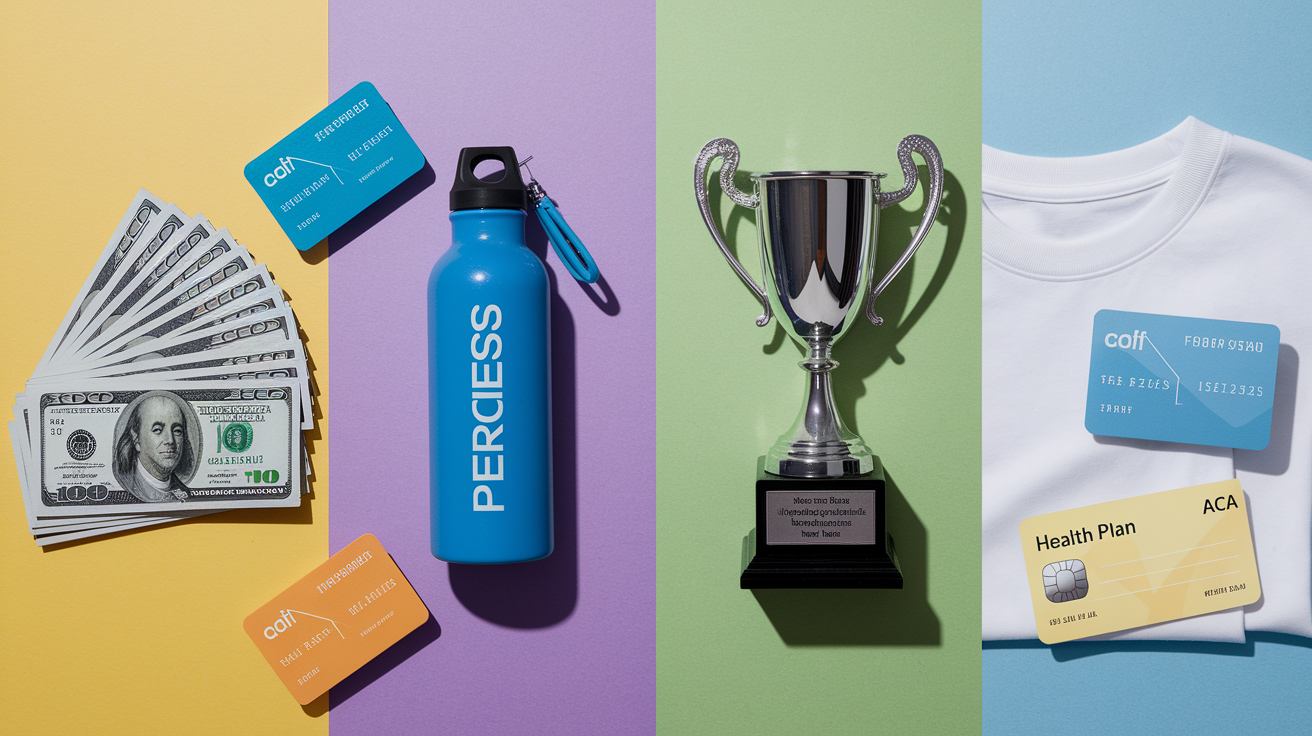
Offering different incentive types brings in more people because your employees aren’t all motivated by the same thing. Some want cash. Others value time off or public recognition way more than a gift card. When you give options across categories, more people find something that gets them to join.
Financial Wellness Incentives
Cash and cash equivalents: bonuses, gift cards, prepaid Visa or Mastercard cards, reimbursements for fitness expenses. These are taxable income, so treat them like bonuses and report on the W-2. Examples: $50 Visa card for finishing a month of weekday workouts, or a $200 gift card awarded with a quarterly wellness day. Reimbursements work when you want employees to pick their own fitness class or gear but need to cap spending. Set an annual limit (say $300) and let people submit receipts. Financial incentives give immediate, flexible spending power, which is why they consistently win in preference surveys.
Fringe and Merchandise Incentives
Fringe benefits stay under IRS rules and should remain separate from your group health plan to cut compliance risk. Common examples: branded water bottles, mugs, T-shirts, employer-paid gym memberships, personal training sessions, employee discounts, trophies, raffle prizes, trip to a health spa. These often cost less per person than cash but carry high perceived value when they’re useful or exclusive. A yoga mat or wellness journal feels personal. An employer-sponsored gym membership removes a monthly bill. Raffles add fun without a big budget—one prize motivates many entries.
Recognition-Based Wellness Incentives
Public or private recognition costs almost nothing and delivers strong results for people who value being noticed. Examples: shout-outs in newsletters, awards at team meetings, names on break room posters, digital badges on the intranet. Recognition works especially well when paired with small tangible rewards—a trophy plus a featured story in the monthly update. Some people care more about acknowledgment than dollar value, so don’t skip this low-cost category.
Health Plan–Based Wellness Incentives
Group health plan incentives include premium discounts, reduced copays, extra flexible spending credits, additional HSA or HRA contributions. These can be non-taxable when you structure them right, which makes them attractive tax-wise. But they carry higher federal compliance risk because they involve eligibility rules, privacy protections, and continuity requirements under ACA, HIPAA, and EEOC guidelines. Talk to your broker or legal counsel before offering health-plan incentives to make sure you meet all federal standards and provide required accommodations.
Match your incentive type to employee preferences and your budget. If funds are tight, prioritize low-cost recognition and fringe items with high perceived value. If your budget allows and your workforce values direct money, add cash or gift cards. When designing the program, ask employees which rewards they care about most. What motivates one team may not work for another.
Designing a Wellness Incentive Program That Works

Aligning program design with employee needs and organizational goals is the foundation. When employees feel the program was built with their input and the rewards match their lives, participation climbs. When goals are clear and tied to measurable outcomes (like 35% participation in month two or 10% reduction in absenteeism by year-end), you can track progress and prove value.
Essential design elements:
- Needs survey: Ask what health activities people want support for and what rewards would motivate them.
- Clear goals: Set specific, measurable targets for participation, health outcomes, or cost savings.
- Incentive tiers: Use participation, progress, performance, and results-based structures to reward different levels of effort.
- Fairness rules: Write eligibility criteria everyone can meet. Don’t design something that excludes certain groups or shifts.
- Choice menus: Offer multiple reward options so employees pick what matters (gift card retailer, cash deposit, donated to charity).
- Administrative simplicity: Keep sign-up, tracking, and redemption as simple as possible. Complex processes kill engagement.
Inclusivity and legal compliance protect both employees and the organization. The ADA requires reasonable accommodations for employees with disabilities, so your program must offer alternative ways to earn incentives if someone can’t meet a physical activity standard due to a health condition. GINA prohibits using genetic information in wellness programs, which means you can’t condition incentives on family medical history or genetic test results. Document your privacy practices, keep health data separate from employment records, and make participation voluntary to reduce legal risk and build trust.
Communication Strategies for Wellness Incentives That Boost Engagement
Communication clarity affects participation because employees won’t join a program they don’t understand or didn’t hear about. When eligibility rules are vague or the steps to redeem a reward feel hidden, even interested employees give up. Clear, repeated messages across multiple channels remove that barrier and keep the program visible.
Use multi-channel communication to reach every employee where they already spend time. Send launch emails with the program’s purpose, benefits, eligibility, tracking instructions. Post reminders in Slack or Teams. Update the intranet with FAQs and step-by-step guides. Hang posters in break rooms, locker rooms, common areas. Mention the program in team meetings and share quick wins (like “12 people completed the walking challenge this week”). Internal recognition amplifies engagement: when leaders publicly acknowledge participants or share a quick shout-out, it signals the company values the effort and others notice.
Mobile-friendly tracking platforms and simple redemption instructions matter just as much as the initial announcement. Employees should check their progress, log activities, and claim rewards from their phone in under two minutes. If redemption requires printing forms, mailing receipts, or navigating a confusing portal, participation drops no matter how good the incentive is. Test the full user journey before launch and fix any step that feels slow or unclear.
Legal and Tax Essentials for Using Wellness Incentives Safely

Major laws shape how you can design and run wellness incentives. The ADA requires reasonable accommodations, so if an employee can’t meet a physical fitness standard due to a disability, you must offer an alternative way to earn the same reward. GINA prohibits conditioning incentives on genetic information, which means you can’t ask about family medical history or require genetic testing. HIPAA protects health information privacy, so any biometric screening data or health risk assessment results must be kept confidential and separate from employment files. EEOC guidelines define what counts as voluntary participation. If your incentive is so large that employees feel they have no real choice, the program may be considered coercive and legally risky. ACA wellness program rules set maximum incentive limits when rewards are tied to health plan benefits (generally up to 30% of the cost of employee-only coverage, or 50% for programs designed to prevent or reduce tobacco use).
Tax rules determine whether employees owe taxes on the rewards they receive. Cash bonuses, gift cards, and prepaid cards are taxable income and must be reported on the employee’s W-2. You’ll need to withhold federal income tax, Social Security, and Medicare taxes. Some health-plan incentives (like premium discounts or HSA contributions tied to completing a biometric screening) may be non-taxable when structured properly, but that depends on how the program connects to your group health plan and whether it meets IRS and DOL requirements. Always consult a tax professional or benefits attorney to confirm the tax treatment before you launch.
| Incentive Type | Tax Status | Compliance Risk |
|---|---|---|
| Cash, gift cards, prepaid cards | Taxable (W-2 wages) | Low (standard payroll reporting) |
| Fringe benefits (merchandise, gym membership) | Often taxable (consult IRS rules) | Low to moderate (must stay independent of health plan) |
| Group health plan incentives (premium discounts, HSA contributions) | May be non-taxable | High (ACA, HIPAA, EEOC, ADA rules apply) |
Measuring ROI and Success Metrics for Wellness Incentives

ROI logic is straightforward: the total cost of your incentives must be less than the savings and value you generate through fewer medical claims, reduced absenteeism, lower disability and workers’ comp costs, and improved productivity and morale. Many wellness programs take several years to develop a positive ROI because health improvements build slowly and claims trends lag behind behavior changes. Set realistic timeline expectations. Don’t expect a full return in year one.
Essential KPIs to track:
- Participation rate: percentage of eligible employees who enroll and engage in program activities.
- Milestone completion rate: how many participants finish challenges or hit specific targets.
- Health risk assessment completion: number and percentage of employees who complete the HRA. This data drives future program design.
- Biometric improvements: changes in cholesterol, blood pressure, BMI, or other clinical measures among participants.
- Absenteeism reduction: compare sick days and unplanned absences before and after the program launch.
- Medical claims trends: review overall plan costs and high-cost claims to spot early signs of savings.
- Employee satisfaction and retention: use surveys, Net Promoter Scores, and Glassdoor benefits ratings to measure how employees feel about the program and whether it influences their decision to stay.
Pull quarterly reports so you can spot trends early and make mid-year adjustments. Every three months, pull participation data, review biometric screening results if available, compare absenteeism rates to the prior quarter, and collect employee feedback through pulse surveys or focus groups. Share summary results with leadership and use the findings to refine reward amounts, swap out unpopular activities, simplify redemption steps, or add new challenges employees are requesting. Iterative improvement keeps the program fresh and responsive.
Budget Planning and Funding Models for Wellness Incentives

Budget drivers include the size of your workforce, the type of rewards you offer, and how often you distribute them. A 500-person company offering monthly $50 gift cards to 25% of employees will spend roughly $75,000 per year on that one incentive. Add gym reimbursements capped at $300 per person for 100 employees and you’re up another $30,000. Knowing these numbers up front lets you set realistic promises and avoid budget surprises mid-year.
Cost modeling starts with your goals and expected participation. If your target is 35% enrollment in month two, calculate the maximum cost if everyone who enrolls earns every available reward, then build a cushion for higher than expected uptake. Use annual caps on reimbursements to control variable costs (employees can claim up to $300 per year for fitness expenses, but no more). Points-based systems also limit spend because you control the dollar value of each point and set redemption thresholds. Scalability matters when you want to expand the program to additional sites or departments. Design your budget so adding 100 more employees doesn’t require a complete financial redesign.
Pilot before expanding. Start with a single department or location, track costs per participant, measure engagement and satisfaction, and calculate early ROI signals like absenteeism changes or screening completion rates. Use what you learn to refine the incentive mix and redemption process before rolling out company-wide. A small pilot reduces financial risk and gives you real data to justify a larger investment.
Real‑World Wellness Incentive Examples That Work
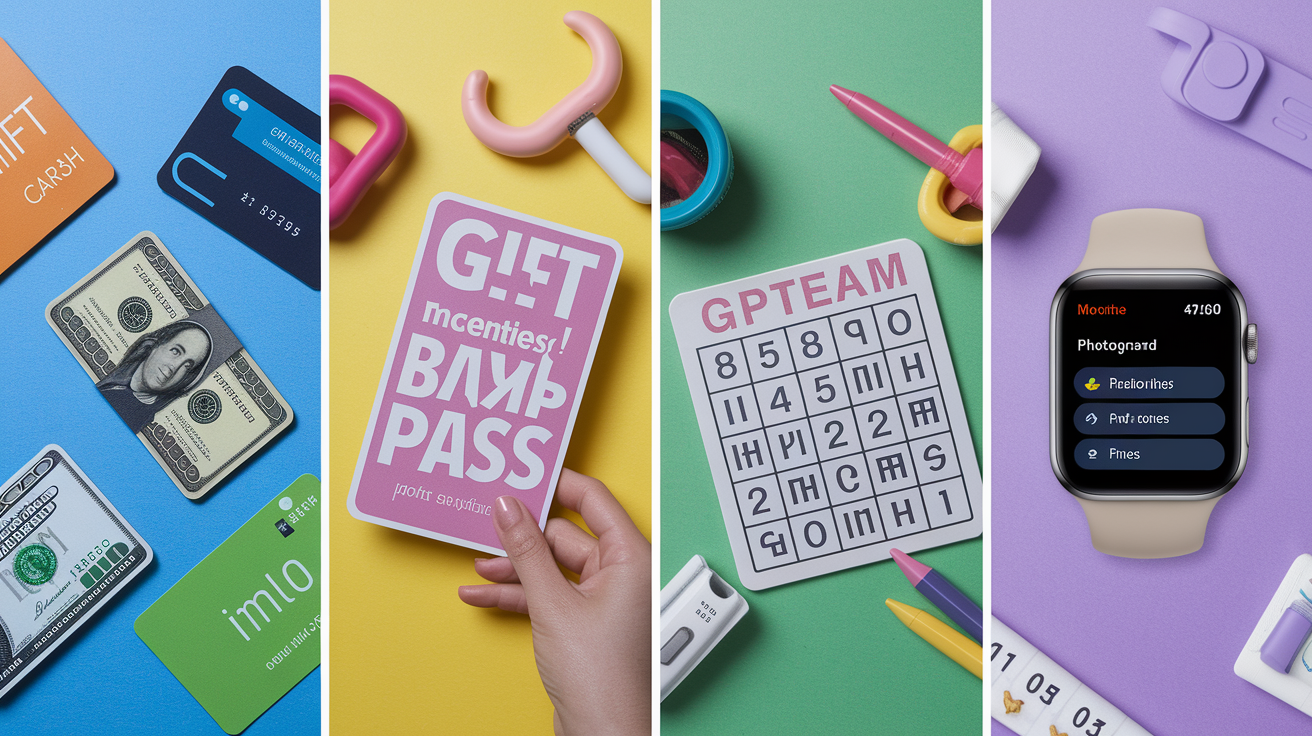
Real-world templates reduce administrative burden because you can adapt proven designs instead of building from scratch. The examples below come from employers who track participation, satisfaction, and cost-effectiveness, so you know they deliver results in practice.
Monetary Incentive Examples
Gift card drawings tied to monthly milestones work well for ongoing engagement. Employees who log 10,000 steps per day for at least 20 days in a month enter a drawing for a $50 Visa card. You control total spend by limiting the number of winners, and the chance element keeps it exciting even when the prize pool is modest. Reimbursements with annual caps let employees purchase what they need (fitness trackers, running shoes, yoga classes, or a meditation app subscription), and you reimburse up to a set limit, often $200 to $300 per year. Cash bonuses for completing specific activities (like finishing a smoking cessation program or attending six nutrition classes) reward sustained effort and can be structured as one-time payments to keep costs predictable.
Non‑Monetary and PTO‑Based Incentive Examples
Wellness days off deliver high perceived value at relatively low direct cost. A quarterly wellness day lets employees take a paid day for any health-related activity (a doctor’s appointment, a mental health day, or time to reset). Flexible or hybrid schedule perks, like an optional flex day every two weeks, give employees control over their time without adding cash expense. Built-in paid wellness hours (one or two hours per week that employees can use for exercise, meditation, or appointments) normalize health activities during the workday and reduce the “I don’t have time” barrier.
Team and Gamification Incentive Examples
Team competitions with shared prizes build camaraderie and accountability. Challenge teams to collectively walk 500,000 steps in a month. The winning team earns a group lunch or outing. Wellness BINGO boards with rows of activities (drink eight glasses of water, take a 15-minute walk, try a new vegetable, get seven hours of sleep) let employees earn small prizes for completing a row and larger prizes for a full board. Leaderboards with quarterly bonuses recognize top performers publicly and add a competitive edge. Offer small bonuses, trophies, or exclusive perks like premium parking for the quarter’s top three participants.
Technology‑Driven Incentive Examples
Wearable integrations and step-goal programs sync with Fitbit, Apple Watch, or Garmin devices to automatically track activity and award points. Employees earn points for every 1,000 steps or for hitting daily goals, then redeem points for gift cards, wellness products, or charitable donations. Points-based redemption models let you control per-activity costs and offer a menu of rewards at different point thresholds, so employees can save up for something meaningful or cash in small wins along the way.
Mental Health and Holistic Incentive Examples
Therapy stipends cover part of the cost of counseling or mental health apps like Calm or Headspace. Offer a monthly or annual stipend ($50 to $100 per month is common) that employees use for therapy sessions, app subscriptions, or stress management programs. Meditation and mindfulness app subscriptions provided at the employer level cost less per person than individual purchases and signal that mental health is a priority. Wellness subscription services (streaming fitness platforms, healthy meal kits, or online yoga classes) give employees ongoing support and variety without requiring them to commit their own money up front.
Rotate example programs quarterly to keep engagement fresh. Launch a step challenge in Q1, a team BINGO competition in Q2, a mental health stipend pilot in Q3, and a year-end points redemption event in Q4. Employees stay interested when the activities and rewards change, and you gather data on which formats work best for your workforce.
Final Words
Start by picking clear, high-value rewards and simple rules that make it easy to join. We covered participation vs results models, the six-step launch checklist, and matching incentive types to employee needs.
Keep communication multi-channel, track participation and health metrics each quarter, and mind tax and legal details as you design tiers and budgets.
Run a short pilot, collect feedback, and iterate. Small steps help you learn how to use wellness incentives effectively and build steady momentum.
FAQ
Q: Where can I use my wellness incentives card?
A: The wellness incentives card can be used at your program’s approved vendors—think gym memberships, fitness classes, wellness apps, nutrition counseling, health screenings, and qualifying retail purchases; always check your plan’s eligible list.
Q: What can I use my wellness stipend for?
A: The wellness stipend can be used for items or services your employer approves—like gym fees, therapy, fitness gear, meditation apps, nutrition counseling, massages, or wellness classes; confirm allowed expenses before buying.
Q: What are the 7 pillars of wellness?
A: The seven pillars of wellness are physical, emotional, intellectual, social, spiritual, occupational, and environmental wellness—areas that together shape daily energy, resilience, relationships, and overall health.
Q: What are some downsides to using incentives as part of a wellness program?
A: Some downsides to using incentives in wellness programs are short-term motivation, rewarding participation over real health change, fairness concerns, privacy and legal risks, tax consequences, and extra administrative burden.