

Simple deep-breathing exercises can calm anxiety in minutes.
Sounds too easy?
You’re not imagining it, the right breathing pattern tells your body it’s safe and slows your heart and thoughts.
This short guide shows four practical techniques, box breathing, diaphragmatic (belly) breathing, paced breathing, and alternate nostril breathing, that you can do anywhere.
Each one includes quick steps, when to use it, and a small 3 to 7 day practice plan so you actually feel the change.
Think of breathing as a first, fast tool in your stress toolkit.
Quick-Action Breathing Technique for Immediate Anxiety Relief

When anxiety hits and you need something fast, box breathing gives you a rhythm to hold onto. It’s a simple pattern: inhale, hold, exhale, hold. Each step gets the same count, which slows your heart rate and pulls your attention away from whatever’s spinning in your head.
You can get through four full cycles in about a minute. Most people notice their chest loosens up by the end of the first round.
Here’s how you do it:
- Inhale through your nose for 4 seconds. Let your lungs fill slowly.
- Hold for 4 seconds. Keep your shoulders loose while you pause.
- Exhale through your mouth for 4 seconds. Let the air out gently.
- Hold again for 4 seconds before starting the next cycle.
Use this when you feel anxiety creeping in before a meeting, while you’re stuck in line, or anytime your breathing starts to speed up. It works best sitting or standing still so you can focus on the rhythm. Repeat it as many times as you need. Four to ten rounds is a solid range. The more you practice, the faster your body catches on.
Diaphragmatic Breathing for Deeper Calm
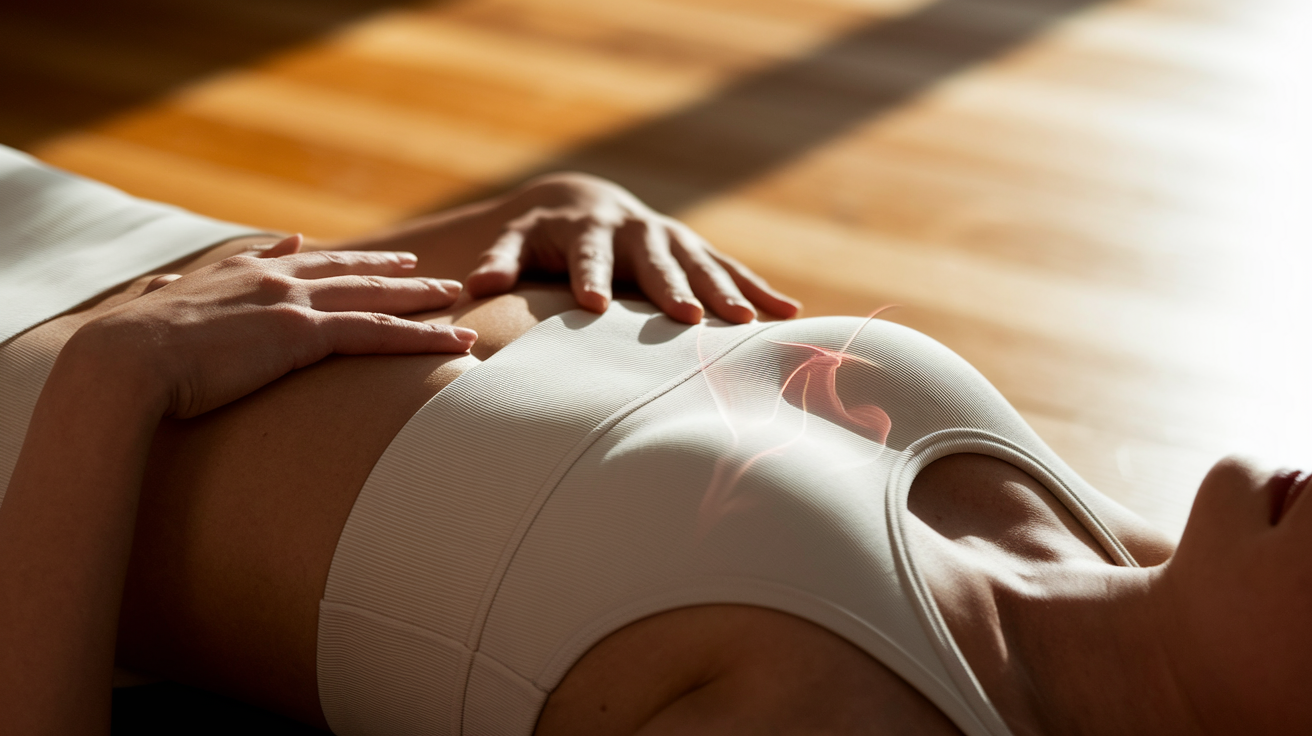
Diaphragmatic breathing (or belly breathing) teaches your body to breathe from the diaphragm instead of your chest. When you’re anxious, you probably breathe shallow and fast, pulling air into your upper chest. That keeps the stress response running. But when you breathe deep into your belly, you activate the parasympathetic nervous system, the part that handles rest and calm.
This kind of breathing slows your heart rate, drops your blood pressure, and signals your brain that things are safe. It takes a bit of practice if you’re used to chest breathing, but after a few tries, your body starts to remember.
Here’s the process. Try for about six to ten full breaths per minute, which is slower than normal. Do this for five to ten minutes once or twice a day to build the habit.
• Sit or lie down somewhere comfortable. Standing works too, but sitting makes it easier to focus at first.
• Put one hand on your chest, one on your belly. This way you can feel where the movement’s happening.
• Breathe in slowly through your nose. Your belly should rise more than your chest. Think of filling up a balloon low in your stomach.
• Exhale slowly through your mouth. Let your belly drop as the air leaves. Your chest should stay pretty still.
• Keep your shoulders relaxed. If they’re lifting with each breath, you’re still breathing from your chest.
You’re doing it right when the hand on your belly moves more than the one on your chest. If it feels weird at first, don’t worry. Your body’s just relearning something stress pushed aside.
Why Deep Breathing Reduces Anxiety: The Physiology
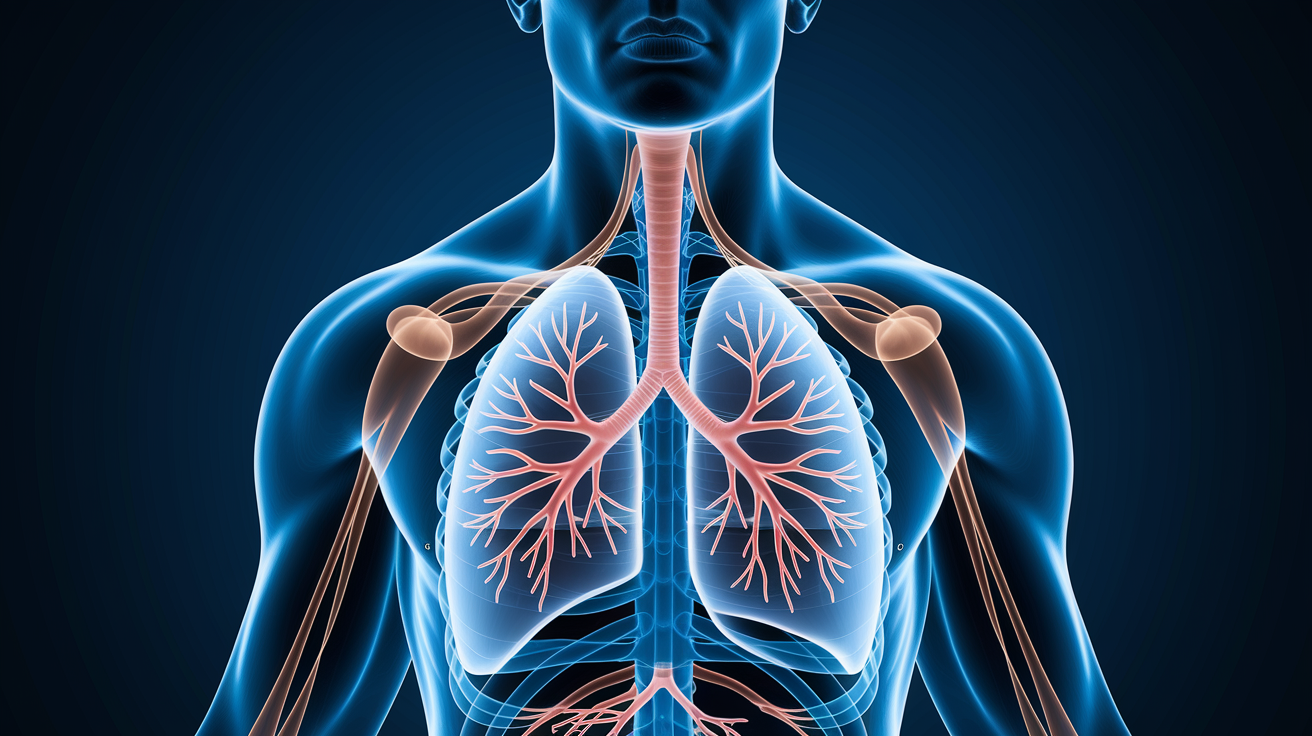
Deep breathing works because it talks directly to your autonomic nervous system, the part managing automatic stuff like heart rate and digestion. When anxiety shows up, your sympathetic nervous system jumps in with the fight or flight response. Heart rate climbs, muscles tighten, stress hormones like cortisol and adrenaline flood in. Slow, controlled breathing flips the switch to the parasympathetic side, which handles rest and digest.
The vagus nerve is a big part of this. It’s a long nerve running from your brain through your chest and abdomen. When you take slow, deep breaths, you stimulate it, and it tells your body to bring heart rate and blood pressure down. This is called increasing vagal tone. Higher vagal tone connects with better emotional control and lower baseline anxiety.
Slow breathing also shifts your heart rate variability, or HRV. That’s the variation in time between heartbeats. Higher HRV means your nervous system is flexible and resilient. When you practice deep breathing regularly, you’re training your body to handle stress more calmly over time, not just in the moment.
Additional Breathing Techniques for Different Anxiety Situations
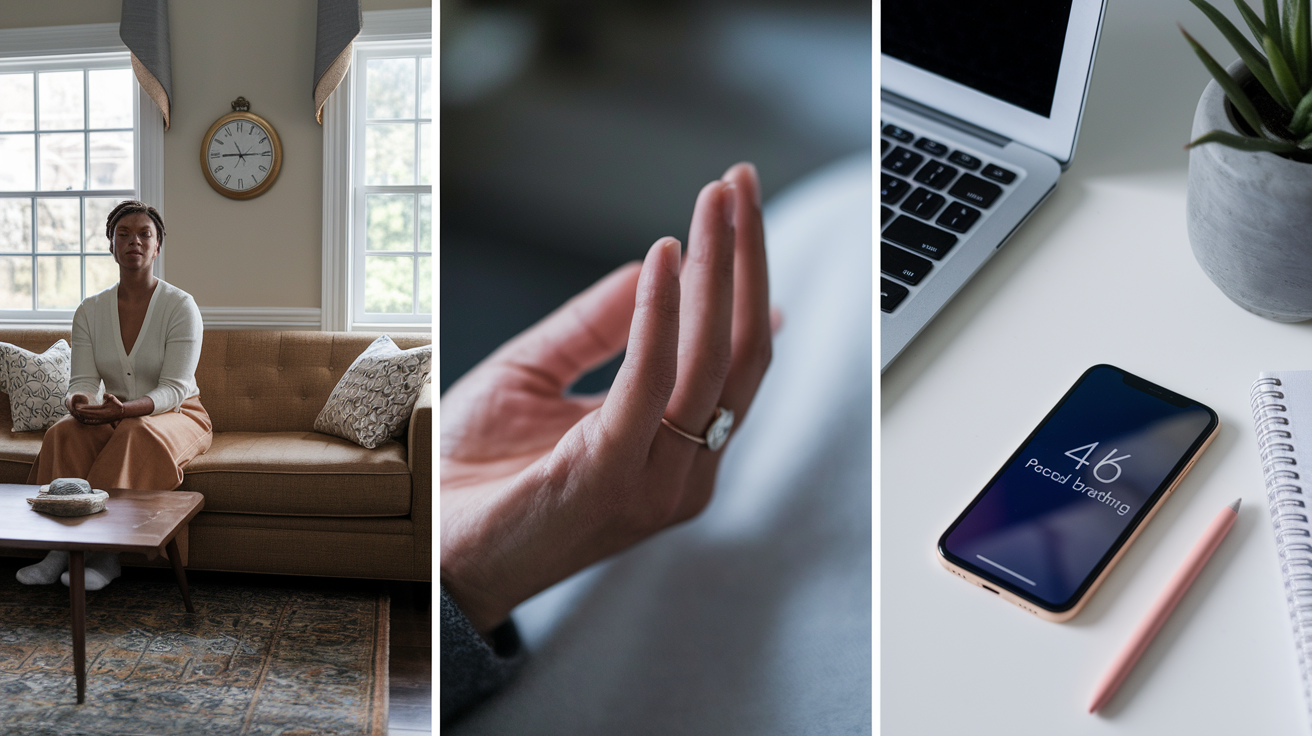
Mindful Breathing
Mindful breathing is about paying full attention to each inhale and exhale without trying to control the rhythm. Instead of forcing anything, you just notice where the air enters your nose, how your chest or belly moves, the tiny pause between breaths. This cuts through anxious thought loops by anchoring you in the present. When your mind drifts to worry or “what if” territory, you bring your attention back to the feeling of breathing. It’s especially useful when anxiety tangles up with racing thoughts or when you need to settle your mind before bed.
Alternate Nostril Breathing
Alternate nostril breathing (or nadi shodhana) is a yogic technique that balances the left and right sides of your nervous system. Sit comfortably and use your right thumb to close your right nostril. Inhale slowly through your left nostril, then close your left nostril with your ring finger and exhale through your right. Inhale through the right, close it, and exhale through the left. That’s one cycle. Repeat for several rounds. It’s got a rhythmic, meditative feel that a lot of people find grounding. Takes a little coordination at first, but once you get the pattern, it becomes a calming ritual you can use during quieter moments at home.
Paced Breathing
Paced breathing means breathing at a steady, controlled rate, usually around five or six breaths per minute. That’s way slower than the typical resting rate of twelve to twenty. You can use a timer or count silently to keep it consistent. Inhale for about five seconds, then exhale for six or seven seconds. The longer exhale is what matters. It tells your body to relax more deeply. This technique works well during panic surges or when your breathing feels like it’s spiraling. It gives you a clear, simple pattern when everything else feels chaotic.
When Deep Breathing Helps Most and When It May Not Be Enough
Deep breathing works best for mild to moderate anxiety. The kind you feel before something stressful, during a tense conversation, or when your mind starts spinning in the middle of the day. It’s also solid for situational anxiety, like nervousness before a presentation or restlessness at night. Most people feel a shift within thirty seconds to two minutes of starting, and the calming effect deepens if you keep going for several minutes.
For chronic anxiety or severe panic attacks, breathing exercises help, but they might not be enough on their own. If your anxiety is intense, frequent, or messing with daily life (like avoiding places, losing sleep regularly, or feeling unable to function), breathing should be part of a bigger plan. That might include therapy, medication, or other coping strategies.
Think of deep breathing as a first response. You can do it immediately, anywhere, with nothing. But if you’re using it constantly just to get through the day, or if it’s not making a real difference after a few weeks of practice, it’s time to reach out for more support.
Safety Notes and When to Seek Professional Support
Deep breathing is safe for most people, but some techniques can make you lightheaded or dizzy, especially if you breathe too fast or hold your breath too long. If you feel faint, tingly, or your vision starts narrowing, stop and breathe normally until it passes. Start with shorter breath holds and slower rhythms if you’re new to this.
Breathing exercises aren’t a substitute for professional treatment when anxiety is severe or persistent.
Talk to a healthcare provider or therapist if:
• Anxiety is getting in the way of work, relationships, or daily activities
• You’re having frequent panic attacks or avoiding places because of fear
• Breathing exercises aren’t helping after consistent practice for several weeks
• You have chest pain, heart palpitations, or symptoms that feel more physical than emotional
These techniques manage symptoms. They don’t cure them. If anxiety feels unmanageable, reaching out for professional support is the right next move.
Final Words
In the action: try a quick box or 4‑7‑8 breathing round to calm a spike, then use diaphragmatic breathing for longer calm. The post also explains the how and why, plus mindful, alternate nostril, and paced options.
Next step: practice a short 4‑step technique when stressed and a few minutes of belly breathing daily. Watch for lightheadedness and ask for help if anxiety stays intense.
Keep returning to these steps. With gentle practice, deep breathing exercises for anxiety relief become easier and more reliable. Small wins each day.
FAQ
Q: Can ibuprofen help anxiety?
A: Ibuprofen does not treat anxiety; it may ease physical pain that lowers anxious feelings, but it won’t fix the nervous-system causes of anxiety. See a healthcare provider for proven anxiety treatments.
Q: How to calm anxiety quickly?
A: To calm anxiety quickly, try a fast breathing exercise (box or 4‑7‑8), ground using your five senses, sip water, or walk briefly to interrupt the stress cycle.
Q: What vitamins are good for panic attacks and anxiety?
A: Vitamins and nutrients that may help include vitamin D, B vitamins, magnesium, and omega‑3s; they can support mood for some people but aren’t a replacement for therapy or medication.
Q: Can deep breathing get rid of anxiety?
A: Deep breathing can reduce anxiety and calm your nervous system quickly, but it usually won’t eliminate chronic or severe anxiety alone; combine it with other coping strategies or professional care.