

Skipping breakfast doesn’t save calories — it often makes you hungrier and eat more later.
You might feel shaky, foggy, or suddenly craving sweets and carbs by mid-morning.
Here’s the simple answer: skipping a morning meal lets blood sugar dip, and hormones like ghrelin (the hunger hormone) and cortisol (the wake-up stress hormone) ramp up, which creates stronger hunger and sharper cravings.
That combo often makes your first meal larger and quicker, and steers you toward high‑energy food.
In this post you’ll learn the blood sugar and hormone chain behind that, plus small fixes to try in the next week.
Core Physiology Behind Increased Hunger When Breakfast Is Skipped

When you wake up, you’ve gone about 8 to 12 hours without eating. Your blood glucose is probably sitting somewhere between 70 and 99 mg/dL, and your liver’s glycogen stores have dropped overnight. Skip breakfast and you’re tacking extra fasting hours onto that stretch. If you start moving around or thinking hard, there’s a decent chance your blood sugar dips below 70 mg/dL. When glucose drops, your body sends urgent hunger signals to get you to eat.
Morning insulin sensitivity is naturally higher, which sounds good until you skip breakfast. When you finally eat later, glucose and insulin can swing higher than they would’ve if you’d eaten something small earlier. Those big swings often trigger stronger appetite and cravings within an hour or two.
Your hormones shift in ways that intensify hunger when breakfast gets skipped. Ghrelin (the hunger hormone) rises before your usual meal times. If you normally eat breakfast at 7 am, ghrelin starts climbing around 5 or 6 am and stays elevated until you eat. Skip that meal and ghrelin keeps rising without getting its usual post-meal suppression, which is typically a drop of about 40 to 60 percent. Meanwhile, cortisol peaks naturally between 6 and 9 am. Higher cortisol during this window amplifies cravings and can make you feel jittery or irritable on an empty stomach. The combination of high ghrelin, high cortisol, and no incoming food creates a strong drive to eat. Often more than you would’ve eaten if you’d started the day with something small.
Here are six core mechanisms that explain why skipping breakfast makes you hungrier:
Blood glucose rebound. Lower morning glucose followed by a bigger spike at the first meal increases reactive hunger.
Cortisol peak. Morning cortisol surge without food magnifies appetite and stress-related cravings.
Ghrelin surge. Prolonged elevation of ghrelin until the first meal intensifies subjective hunger.
Larger post-meal insulin spike. Delayed eating causes a sharper insulin response, which can increase hunger an hour or two later.
Stomach contractions. An empty stomach contracts more vigorously after the overnight fast, sending physical hunger signals.
Circadian appetite effects. Your body clock expects food in the morning, and the mismatch between expectation and reality increases hunger drive.
These overlapping signals push you toward eating more at your next meal. The delay in eating means your first meal often becomes larger, faster, and weighted toward high-energy foods. Your brain’s reward pathways light up more strongly for fatty and sugary options when you arrive at that meal in a state of extended fasting. You don’t just get hungrier. You feel a stronger pull toward the exact foods that deliver quick energy and override your usual portion control.
Blood Sugar and Insulin Behavior After Skipping Breakfast
Fasting glucose normally holds steady overnight because your liver releases small amounts of glucose from glycogen stores. By morning, those stores are lower. Some people’s glucose drifts down closer to 70 mg/dL or just below. Skip breakfast and stay active, and glucose can drop further, triggering shakiness, difficulty concentrating, or a gnawing stomach feeling. That low point sets up a rebound.
When you finally eat (especially if the meal is carb-heavy), glucose climbs fast. Your pancreas releases insulin to bring glucose back down, but after a long fast, that insulin response can be more aggressive than usual. The spike and drop cycle tends to provoke hunger again within 90 minutes to two hours. Much sooner than if you’d eaten a smaller, earlier meal that kept glucose more stable.
Morning insulin sensitivity is higher, which usually helps because it means your body handles carbs efficiently. But when you skip breakfast, you lose that window. The first large meal later in the day hits when sensitivity is already declining, and the bigger insulin spike promotes glucose storage. More glucose stored as glycogen or fat means less glucose available in your bloodstream for steady energy. Your appetite cranks up again to restore balance.
Hunger Hormones: Ghrelin, Leptin, PYY, and GLP‑1
Ghrelin rises in waves before your expected eating times. If you usually eat breakfast, ghrelin starts climbing about an hour or two beforehand and peaks right around your normal breakfast time. When you skip the meal, ghrelin doesn’t get the usual signal to drop. It stays elevated well into mid-morning, keeping hunger front and center in your awareness. Studies show that eating a meal suppresses ghrelin by roughly 40 to 60 percent within 30 to 60 minutes. Without that meal, suppression never happens and the hormone keeps nudging you to find food.
Leptin (your satiety hormone) decreases when you delay eating. Lower leptin means weaker signals of fullness, so even after you do eat later, you may not feel as satisfied. Peptide YY (PYY) and glucagon-like peptide-1 (GLP-1) are gut hormones released when food enters your intestines. They slow gastric emptying and signal your brain that you’ve had enough. When breakfast is skipped, these hormones don’t get their morning release. By the time you eat lunch, the delayed arrival of PYY and GLP-1 can mean you overeat before your body registers fullness. The gap between starting to eat and feeling satisfied widens, and extra calories slip in during that window.
Cortisol and Circadian Appetite Timing
Cortisol follows a daily rhythm. It peaks in the early morning (usually between 6 and 9 am) to help you wake up and mobilize energy. This spike is normal and useful. But cortisol also increases glucose production in your liver and makes you more alert to food cues. When you skip breakfast during this high-cortisol window, your body is primed to seek energy. The absence of incoming calories can feel more urgent than it would at other times of day. Higher cortisol without food often translates to stronger cravings, especially for quick-energy foods like pastries, sweetened coffee drinks, or anything that promises an immediate lift.
Your circadian clock also regulates appetite. Internal timekeepers in your brain and gut expect meals at consistent times. If you’ve eaten breakfast regularly for years, your body anticipates food in the morning. When that food doesn’t arrive, the mismatch creates a heightened hunger signal. Over time, you can retrain your circadian appetite by consistently skipping breakfast. But in the short term, the expectation versus reality gap amplifies hunger. This circadian effect works together with cortisol and ghrelin to make the morning fast feel harder than an equivalent fast later in the day.
Compensatory Eating: Why Skipping Breakfast Leads to Larger Meals
When you finally sit down to eat after skipping breakfast, your body is in catch-up mode. Studies that track food intake across the day show that people who skip breakfast often increase their calorie intake at lunch or dinner, typically by somewhere between 100 and 300 extra calories compared to days when they eat breakfast. That compensation isn’t exact for everyone. Some people eat only slightly more, while others fully replace the skipped calories and then add more on top.
The longer you fast, the more your stomach and brain expect a big influx of energy. Portions grow. You tend to eat faster because hunger is more intense. Faster eating means you blow past your natural fullness signals before they have time to register.
High-fat and high-sugar foods become more appealing after a prolonged fast. Brain-imaging studies show that skipping breakfast increases activation in reward centers when people view images of calorie-dense foods. The combination of elevated ghrelin, lower leptin, and higher cortisol shifts your preferences toward options that deliver quick energy and strong flavor. You’re more likely to choose a pastry or a large sandwich with fries instead of a lighter, balanced meal. That preference isn’t just psychological. Your brain is responding to hormonal cues that say, “Get energy fast.” The result? Meals that are not only larger but also more energy-dense, which makes it easier to overshoot your calorie needs without feeling overly full.
Common compensation behaviors include:
Larger portions. Plate sizes and serving amounts increase at the first meal after fasting.
Faster eating. Intense hunger shortens the time between bites, reducing opportunities for fullness signals to arrive.
Preference for calorie-dense foods. Fat and sugar cravings spike, steering choices toward high-energy options.
Increased snacking. Mid-morning or afternoon snacking becomes more frequent to counter low energy.
Weakened fullness cues. Delayed satiety hormone release means you eat more before feeling satisfied.
Habit Loops and Learned Hunger Timing When Breakfast Is Missed

Hunger isn’t only about immediate fuel needs. A large part of appetite is learned. If you eat breakfast every day at 7 am, your body starts preparing for food around that time, even before your alarm goes off. Ghrelin begins its rise an hour or two in advance, stomach acid secretion increases slightly, and your brain anticipates the dopamine hit from eating. This anticipatory hunger is a conditioned response.
When you skip breakfast, that learned expectation doesn’t vanish overnight. Your body still goes through its pre-meal routine. Ghrelin climbs, and hunger arrives on schedule. The difference is that no food follows, so the hunger lingers and intensifies until you finally eat. This mismatch between expectation and reality is a big reason why the first few days of skipping breakfast feel harder than later weeks.
Over time, your hunger rhythm can shift. If you consistently skip breakfast for several weeks, ghrelin’s morning peak flattens, and your body learns to expect food later in the day. Many people who practice intermittent fasting report that morning hunger fades after about one to three weeks of consistent timing. The catch? During the transition period, hunger can feel worse than usual because your old pattern is still wired in. If you skip breakfast sporadically, your body never fully adapts, and you get stuck in a cycle of strong morning hunger followed by compensation. Consistency in meal timing matters more than the specific timing itself when it comes to managing hunger.
When Skipping Breakfast Does Not Increase Hunger

Not everyone who skips breakfast experiences intense hunger or compensatory overeating. Some people adapt well to time-restricted eating patterns, such as the popular 16:8 method, where all meals fall within an eight-hour window. After a few weeks of consistent fasting, ghrelin rhythms shift, morning cortisol’s effect on appetite becomes less pronounced, and subjective hunger during the fasting window decreases. These individuals often report feeling clear-headed and energized in the morning without food. They don’t experience the blood sugar dips or cravings that drive others to overeat later. Adaptation depends on consistency. Skipping breakfast one day and eating it the next keeps your body guessing and prevents the hormonal adjustment that reduces hunger.
Individual metabolic differences also play a role. People who naturally have later chronotypes (meaning they feel more awake and hungry later in the day) often tolerate morning fasting better than early risers. Late chronotypes may have lower morning ghrelin peaks and less reliance on breakfast for stable energy. Similarly, people who follow diets lower in refined carbs and higher in fiber and protein tend to have more stable blood sugar throughout the day, which reduces reactive hunger after fasting. If your overall diet minimizes blood sugar swings, skipping breakfast is less likely to trigger the intense appetite rebound that higher-carb eaters experience.
Four cases where hunger often decreases with breakfast skipping:
Adapted fasters. People who skip breakfast consistently for several weeks and allow ghrelin rhythms to reset.
Late chronotypes. Individuals whose natural appetite peaks later in the day and who feel less hungry in the morning.
Low-glycemic diet users. Those eating diets that stabilize blood sugar reduce reactive hunger after fasting.
People with stable sleep patterns. Consistent, adequate sleep regulates cortisol and ghrelin, reducing hunger intensity.
How to Reduce Intense Hunger If You Do Skip Breakfast
If you’re committed to skipping breakfast but struggling with intense mid-morning hunger or overeating later, hydration is your first move. Drink 300 to 500 milliliters (about one to two cups) of water as soon as you wake up. Thirst can masquerade as hunger, especially after a night without fluids. Water also helps your stomach feel less empty and can blunt some of the hunger signals your brain is receiving.
Black coffee or plain tea can help, too. Caffeine has a mild appetite-suppressing effect and can give you energy without breaking your fast. Just avoid adding sugar or large amounts of milk, which trigger an insulin response and can make hunger worse an hour later.
When you do eat your first meal, structure it to avoid a huge glucose and insulin spike. Aim for at least 20 grams of protein and 5 to 10 grams of fiber. Protein slows gastric emptying and increases satiety hormones like PYY and GLP-1. Fiber does the same and also moderates how quickly glucose enters your bloodstream. A first meal built around lean protein (chicken, fish, eggs, Greek yogurt, tofu), non-starchy vegetables, and a moderate portion of whole grains or starchy vegetables will keep you fuller longer and reduce the chance of another hunger wave two hours later. Keep portion size reasonable, even if you feel very hungry. A meal in the range of 400 to 600 calories is enough to stabilize blood sugar and satisfy hunger without overcompensating for the skipped breakfast.
Behavioral tactics help manage the mental side of hunger. Eat slowly. Put your fork down between bites and take at least 15 to 20 minutes to finish your meal. This gives your gut hormones time to signal your brain that food has arrived. Plan a small, protein-rich snack (15 to 20 grams of protein) for mid-morning if hunger becomes distracting before your first main meal. A hard-boiled egg, a small container of Greek yogurt, or a handful of nuts can take the edge off without adding a lot of calories or disrupting your fasting goals. Avoid reaching for high-sugar snacks or energy drinks. They spike glucose fast, crash it fast, and leave you hungrier within an hour.
Six quick tactics to manage hunger when skipping breakfast:
Protein-focused first meal. Include a palm-sized portion of lean protein to boost satiety.
Fiber pairing. Add vegetables, fruit, or whole grains to every meal to slow digestion.
Slow eating. Take at least 15 to 20 minutes per meal to let fullness signals reach your brain.
Planned snacks. Keep a 15 to 20 gram protein snack ready for intense mid-morning hunger.
Avoid high-sugar options. Skip pastries, sweetened coffee drinks, and candy, which trigger rebounds.
Pre-meal water. Drink a full glass of water 10 minutes before eating to reduce initial overeating.
Breakfast Options That Reduce Later Hunger
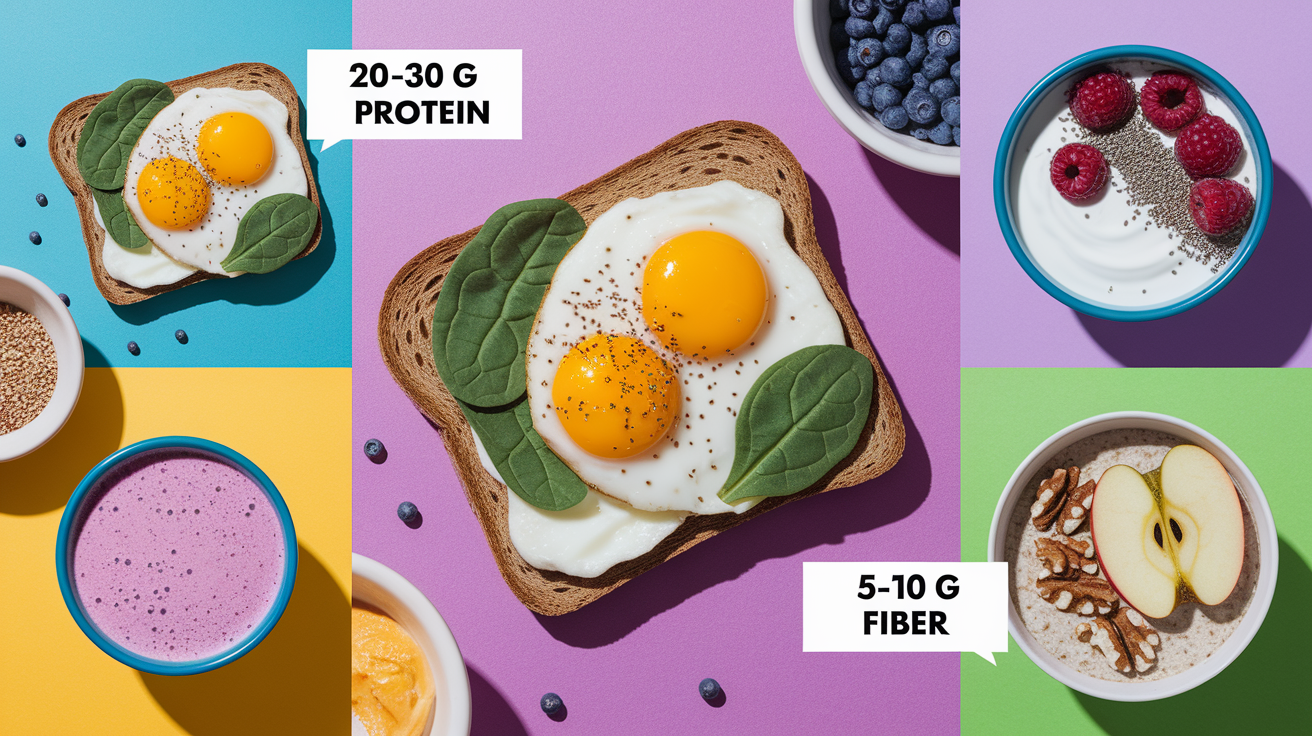
If you decide that skipping breakfast makes hunger too hard to manage, the type of breakfast you eat matters as much as whether you eat at all. Breakfasts high in protein (around 20 to 30 grams) consistently reduce hunger and calorie intake later in the day across multiple studies. Protein increases the release of satiety hormones and takes longer to digest than carbs alone. Fiber works in a similar way. Aim for 5 to 10 grams of fiber at breakfast from sources like oats, berries, vegetables, or whole-grain bread. Fiber slows how quickly your stomach empties and moderates the glucose response, which keeps insulin from spiking too high. The combination of protein and fiber creates a steady release of energy and a longer feeling of fullness, often lasting three to five hours.
Portion size and glycemic index also influence how long breakfast holds you. A balanced breakfast in the range of 300 to 500 calories is enough for most people to feel satisfied without feeling stuffed. Lower-glycemic-index carbs, such as steel-cut oats, whole-grain toast, or sweet potatoes, produce smaller glucose and insulin swings than white bread, sugary cereal, or pastries. Pairing carbs with protein and a small amount of healthy fat (avocado, nuts, seeds, olive oil) further blunts the glucose response and extends satiety. If your breakfast is mostly refined carbs and sugar, you’ll likely feel hungry again within two hours, even if the meal was large.
| Breakfast Option | Protein (g) | Fiber (g) |
|---|---|---|
| Two scrambled eggs with spinach and one slice whole-grain toast | 18 | 6 |
| Greek yogurt (200 g) with berries, chia seeds, and a handful of almonds | 25 | 9 |
| Protein smoothie: whey or pea protein, banana, spinach, flaxseed, almond milk | 28 | 8 |
| Oatmeal (50 g dry) cooked with milk, topped with sliced apple and walnuts | 15 | 10 |
Final Words
Here’s the quick recap: skipping breakfast can drop morning blood sugar and raise ghrelin and cortisol, so you’re likelier to feel ravenous and reach for sugary, fatty foods.
We covered how that leads to larger meals, habit-driven hunger, and when people can adapt with consistent meal timing.
If you’ve asked why does skipping breakfast make me more hungry, it’s mostly the blood sugar and hormone swings. Try one small fix: water on waking, a protein-and-fiber first meal, or slower eating. Small changes add up.
FAQ
Q: Does skipping breakfast make you hungrier?
A: Skipping breakfast can make you hungrier because it prolongs overnight fasting, raises ghrelin (hunger hormone), and may lower morning blood sugar, leading to stronger cravings and bigger meals later.
Q: What is the 30 30 30 rule for breakfast?
A: The 30 30 30 rule for breakfast is a simple guideline to aim for a roughly even split—about 30% of calories from protein, 30% from carbs, and 30% from healthy fats—to help steady blood sugar and reduce hunger.
Q: Is fasting from 7pm to 7am good?
A: Fasting from 7pm to 7am is a 12-hour overnight fast that can support sleep and cut late-night eating; it’s fine for many people but talk to a clinician if you have diabetes, low blood sugar, or take certain meds.
Q: What are the side effects of skipping breakfast?
A: The side effects of skipping breakfast include stronger hunger later, larger portion sizes, blood sugar dips, cravings for sugary or fatty foods, lower morning energy, and feeling irritable or foggy.