
Resting isn’t the best fix for joint pain — movement is.
If your knees, hips, or shoulders feel stiff, sore, or like they lock up during simple tasks, you’re not imagining it.
Gentle, targeted exercises can cut stiffness within a week and often lower pain over a few weeks if you stick with small, consistent steps.
This post gives a short warm‑up, simple strength moves, joint‑specific drills, gentle stretches, and low‑impact cardio you can try today.
Start with a five‑minute warm‑up and one joint exercise — that’s often enough to begin.
Immediate Low‑Impact Full‑Body Pain‑Relief Routine

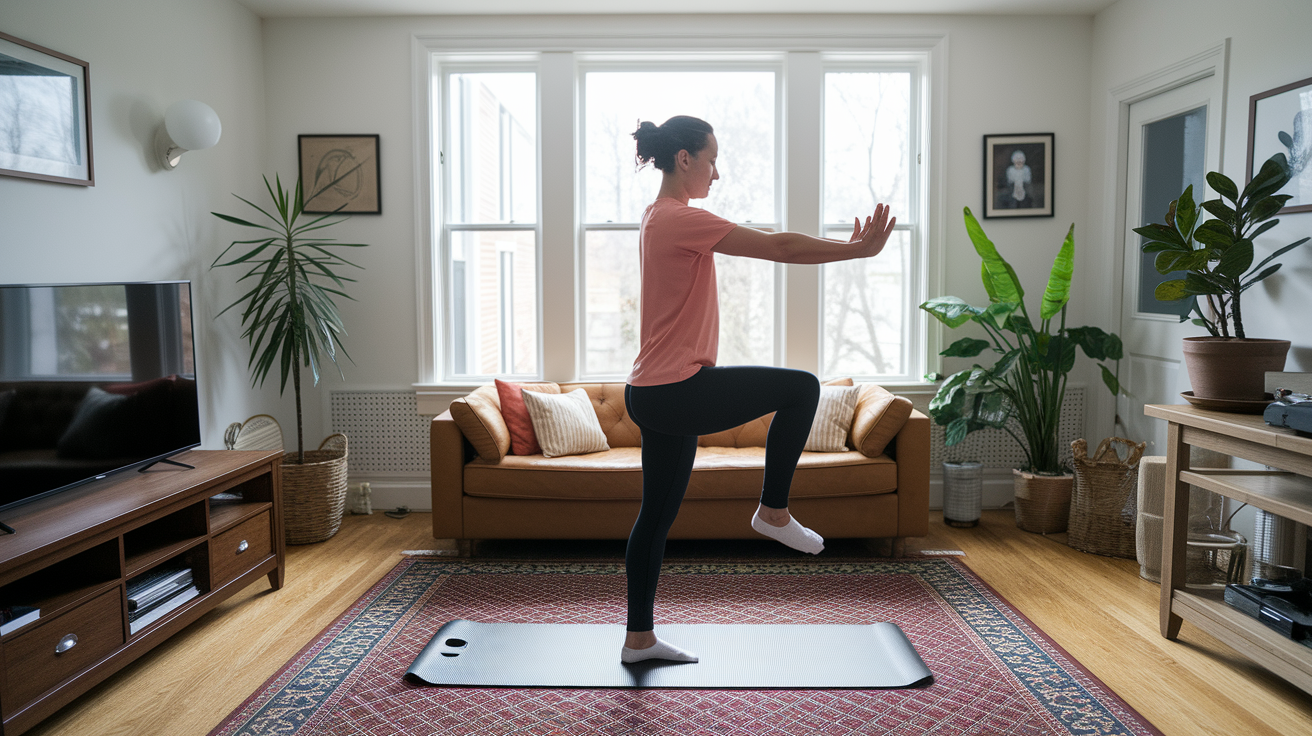
Start with five minutes of slow marching in place, gentle spine rotations to each side, and a few deep breaths that let your arms float up and down like you’re treading water.
This fast whole‑body warm‑up replenishes joint lubrication, increases blood flow to stiff tissues, and signals your nervous system to calm the pain response before you move harder. You’re not targeting one joint yet. You’re waking up the entire chain so every hinge and socket gets circulation and a chance to loosen.
Aim for 10 to 15 minutes several times a day when stiffness is worst, first thing in the morning, mid‑afternoon, or after sitting for an hour. You can cycle through these movements back to back or sprinkle them into your day whenever you feel tight.
Safe, universal starter movements that work for almost any joint pain level:
Slow marching in place. Lift one knee a few inches, then the other. Keep it gentle and controlled.
Gentle torso rotations. Stand with feet hip‑width and rotate your upper body slowly left, then right, keeping hips steady.
Slow step‑touch side steps. Step one foot to the side, bring the other to meet it. Repeat left and right to warm your hips and knees.
Shoulder rolls. Roll both shoulders backward in big, slow circles for 20 reps, then forward for 20.
Deep breathing with arm float‑ups. Inhale and raise both arms overhead like you’re reaching for the ceiling. Exhale and lower them slowly.
Light standing weight shifts. Shift your weight from one foot to the other, bending the knee slightly on the loaded side to wake up ankles and hips.
Strengthening Exercises to Support Painful Joints
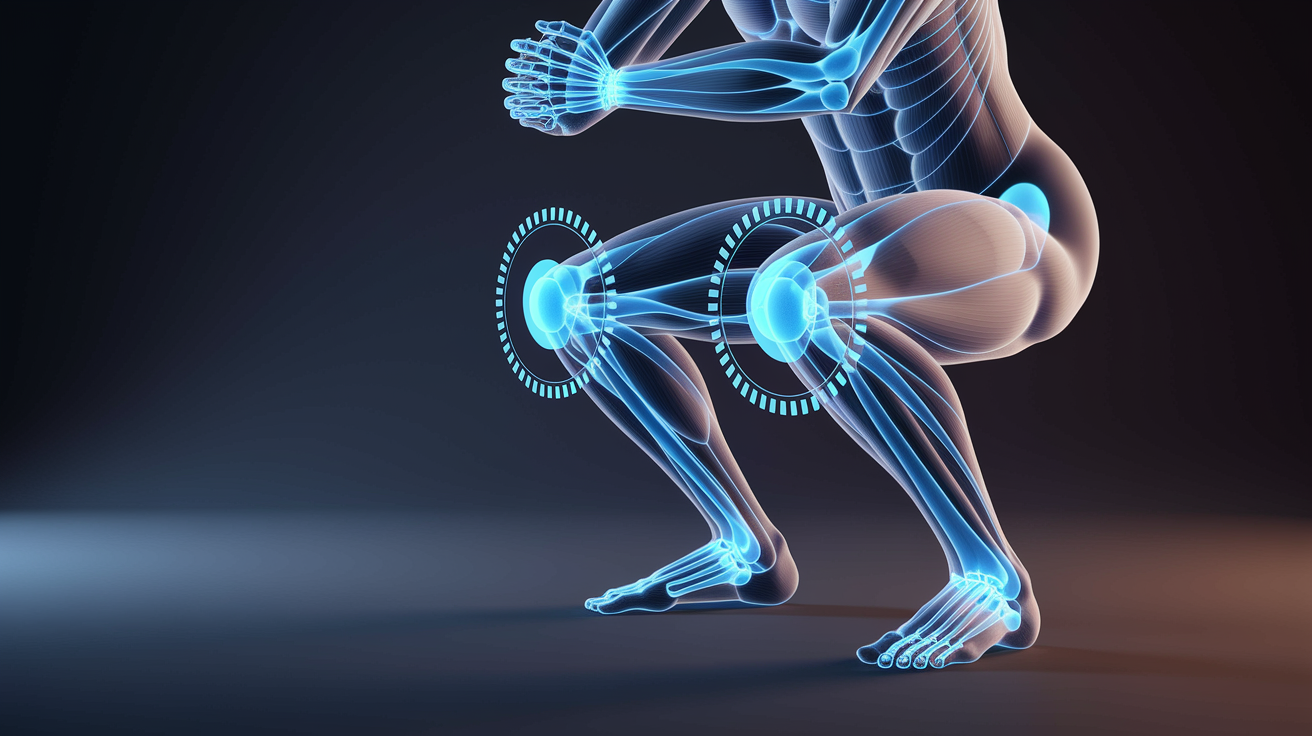
Muscle strength reduces the load that lands directly on inflamed or worn cartilage, so every rep you do is a layer of protection for the joint underneath.
The standard prescription is simple: 2 to 3 sets of 8 to 15 reps per exercise, done 2 to 4 times per week. If a movement feels sharp or causes swelling, cut the range of motion in half or drop the resistance until you can complete the reps with only mild discomfort. Aim for a 2 or 3 out of 10 on pain.
Control your tempo. Take about two seconds to lift or push, pause for a breath at the top, then two seconds to lower with control. That slower rhythm keeps tension on the muscle and off the joint itself.
Most people notice less stiffness within the first week and measurable pain reduction in 2 to 6 weeks if they stick to the plan without skipping sessions.
| Exercise | Target Joint | Sets/Reps | Notes |
|---|---|---|---|
| Mini‑squats (0–45°) | Knees, hips | 2–3 sets of 10–12 | Feet shoulder‑width; squat halfway down, no deeper than 10 inches |
| Glute bridges | Hips, lower back | 2–3 sets of 10–15 | Hold at the top for 2–3 seconds; keep core engaged |
| Clamshells (band optional) | Hips | 2–3 sets of 10–20 per side | Lie on your side, knees bent; lift top knee while keeping feet together |
| Straight leg raises | Knees, hips | 2–3 sets of 10 per leg | Supine, one knee bent; lift straight leg to height of bent knee, hold 5 seconds |
| Band external rotation | Shoulders | 2–3 sets of 10–15 | Elbow at side, rotate forearm outward against band resistance |
Joint‑Specific Pain Relief Exercises (Knees, Hips, Shoulders, Ankles, Wrists)

Each joint benefits from targeted motions that restore the exact angles and muscle patterns it uses every day. Generic stretches help, but joint‑specific drills rebuild the coordination and stability that actually take the ache away.
For knee pain, combine flexibility and strength: hold a standing quad stretch for 30 seconds on each leg, lie down and pull one thigh toward your chest for a hamstring stretch (30 seconds, twice per leg), then perform 2 sets of 10 straight leg raises on each side. Lie flat, lift the straight leg to the height of your bent knee, pause five seconds, and lower with control.
Hip routines center on glute activation and abduction. Glute bridges with a 2‑second hold at the top (2 to 3 sets of 10 to 15 reps), side‑lying leg raises on each side (2 sets of 10 reps, add a 5‑pound ankle weight when bodyweight feels easy), and standing clamshells with a resistance band looped above your knees (10 to 20 reps per side).
Shoulder mobility and stability work together. Start with 1 to 2 minutes of pendulum swings, bend forward at the waist, let one arm dangle, and gently circle it. Then do scapular squeezes against a wall (10 to 15 reps, hold each squeeze 3 to 5 seconds) and finish with wall slides to rebuild overhead range. Stand with your back against a wall, slide both arms up as high as you can without arching your lower back, 8 to 12 reps.
Ankle and wrist routines focus on circles and stretches. Sit and draw 10 to 20 ankle circles in each direction per foot, then stand and do 2 sets of 10 to 15 calf raises. For wrists and hands, hold a gentle flexor stretch (palm up, pull fingers back toward you) and an extensor stretch (palm down, push fingers toward the floor) for 20 to 30 seconds each, repeat twice.
One movement per joint to start today:
Straight leg raises (knee). 2 sets of 10 per leg, 5‑second hold at the top.
Clamshells (hip). 2 sets of 10 to 20 per side, squeeze at the top.
Wall slides (shoulder). 8 to 12 reps, slow and controlled, back flat against the wall.
Calf raises (ankle). 2 sets of 10 to 15, pause at the top, lower with control.
Wrist flexor stretch (wrist/hand). Hold 20 to 30 seconds, repeat twice per side.
Gentle Stretching and Mobility Work to Reduce Joint Stiffness
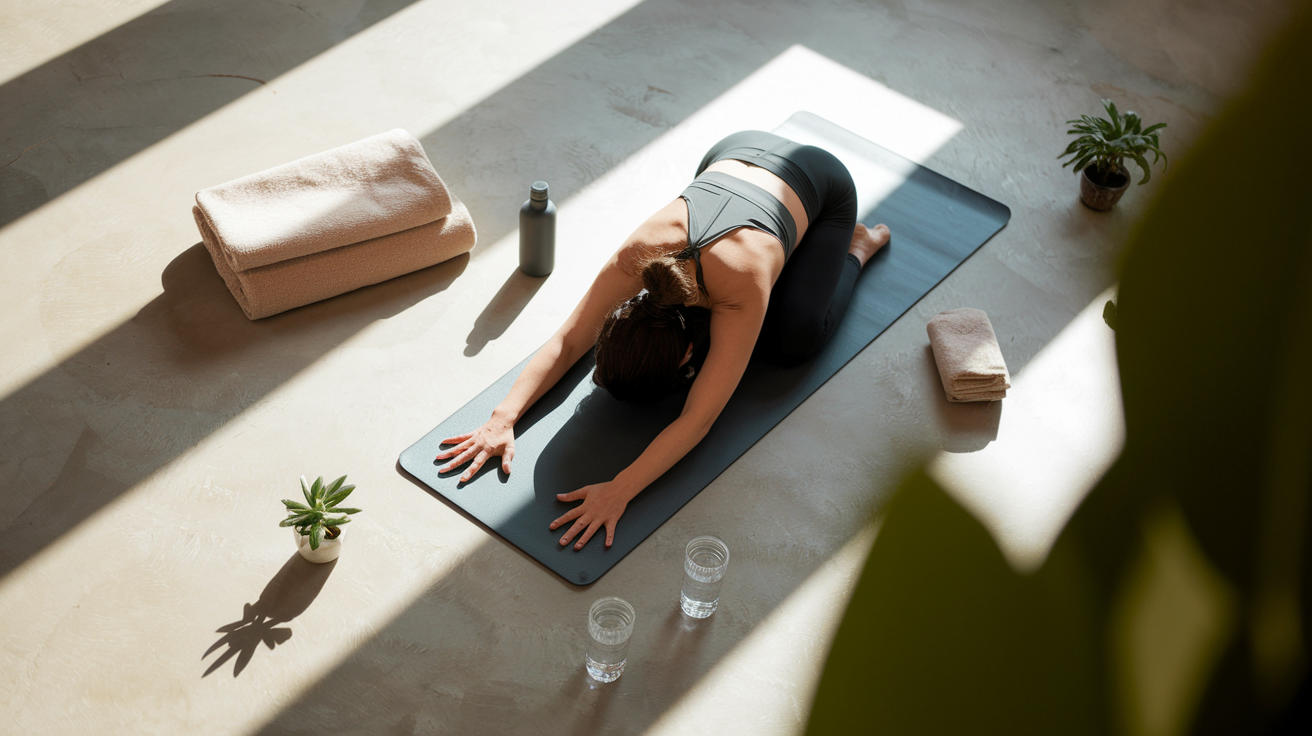
Stretching boosts circulation into tight tissues, pulls fluid through the joint capsule, and gives your brain updated information about where you can move without guarding.
Hold each stretch for 30 seconds, long enough for the muscle spindles to relax, and repeat it twice on each side. Calf stretches (stand facing a wall, one foot back, heel flat), quad stretches (pull your ankle toward your glutes while standing), and hamstring stretches (lie down, loop a towel behind one thigh, and gently pull the leg toward your chest) are the foundational three that ease stiffness in knees, hips, and lower back all at once.
Yoga poses and tai chi sequences layer dynamic mobility on top of static holds, so you’re stretching while moving through functional patterns your joints will actually use during the day. Try a few rounds of cat‑cow for spine mobility, child’s pose for hips and ankles, or slow tai chi weight shifts to rehearse balance and control.
Four mobility drills to add after your warm‑up:
Neck half‑circles. Tilt your head gently from shoulder to shoulder, tracing a slow arc across your chest. 5 reps each direction.
Thoracic rotations (open book). Lie on your side, knees bent. Open your top arm across your body like turning a page, follow it with your eyes. 8 reps per side.
Hip circles. Stand on one leg (hold a wall if needed), draw slow circles with the lifted knee. 10 circles each direction, each leg.
Ankle pumps and circles. Sit or lie down, point and flex your toes 20 times, then circle each ankle 10 times in each direction.
Low‑Impact Cardio Options That Protect Joints

Cycling strengthens the muscles and ligaments around your knees while taking them through a full range of motion under zero impact. Set the seat so your knee has a slight bend at the bottom of each pedal stroke and keep resistance light enough to spin smoothly for 15 to 30 minutes.
Swimming and water aerobics give you buoyancy‑supported full‑body training. The water holds about 90 percent of your body weight, so hips, knees, and ankles move freely without the pounding they’d take on land. Try 20 to 30 minutes of walking laps in the shallow end, flutter kicks with a kickboard, or a water aerobics class two to three times per week.
Walking reduces stiffness faster than rest does. Start with as little as 10 minutes several times a day if longer sessions hurt, and build up by 5 minutes per week. An elliptical machine mimics walking but keeps your feet planted, eliminating the heel‑strike impact that can flare knee or ankle pain. A treadmill is fine if you can walk pain‑free, but switch to the elliptical or a stationary bike the moment discomfort creeps above a 3 out of 10. For a detailed look at how cycling and swimming support joint recovery, see Exercises to Relieve Joint Pain.
Chair, Water, and Beginner‑Friendly Joint Relief Routines

Chair routines let you strengthen and stretch without balancing or loading painful weight‑bearing joints. Seated marches (lift one knee at a time while sitting tall), seated knee extensions (straighten one leg out in front, hold 5 seconds, lower, repeat 10 times per leg), and seated ankle pumps all build strength and circulation when standing feels too hard.
Water‑based routines drop joint compression to nearly zero, so every rep trains muscle without grinding cartilage. Try standing hip abduction in waist‑deep water (lift one leg to the side against the water’s resistance, 10 to 15 reps per side), gentle water walking with long strides, or holding onto the pool edge and doing slow flutter kicks. Isometric holds, push your palms together in front of your chest for 10 seconds, or press one knee into your clasped hands, build strength without moving the joint, which keeps flare‑up risk low when pain is high.
Beginner‑friendly options to try this week:
Seated marches. Sit tall, lift one knee a few inches, lower, alternate. 20 total reps.
Wall push‑ups. Stand arm’s length from a wall, lean in, push back. 2 sets of 10.
Supine pelvic tilts. Lie on your back, knees bent, gently tilt your pelvis to flatten your lower back against the floor. Hold 5 seconds, repeat 10 times.
Water walking. Walk forward and backward in waist‑ or chest‑deep water for 10 to 15 minutes, using the pool edge for balance if needed.
Risk‑Free Exercise Progression, Frequency, and Pain‑Scale Guidelines
Start with the easiest version of each exercise, bodyweight only, small range of motion, fewer reps, and add 2 to 5 reps per week or increase load by 5 to 10 percent every one to two weeks as long as pain stays below a 3 out of 10.
If an exercise causes sharp pain, a sudden pop, or swelling that lasts more than an hour after you finish, cut the range in half, drop any added weight, or switch to an isometric hold until your joint settles. Mild muscle ache the next day is normal. Joint pain that climbs above a 4 during the movement or lingers into the evening is your signal to back off.
Perform gentle mobility work daily. Those ankle circles, shoulder rolls, and hip stretches take 5 to 10 minutes and keep stiffness from creeping back overnight. Schedule strengthening sessions 2 to 4 times per week with at least one rest day between sessions for the same muscle groups, so tissues have time to repair and adapt.
Applying heat to knees, hips, or shoulders for 10 to 15 minutes before you start can reduce discomfort and make the first few reps feel less stiff. Use a warm towel, heating pad, or a few minutes in a warm shower, then move while your tissues are still warm. Don’t hold your breath during exertion. Exhale on the hard part of each rep to keep blood pressure steady and tension low.
Sample Joint Pain Relief Routines (10‑, 20‑, and 30‑Minute Options)
Walking for 10 minutes several times a day, morning, lunch, and evening, helps joint function more than one long session because you’re moving before stiffness sets in and keeping circulation high all day.
Strength improvements show up in 6 to 12 weeks when you combine daily mobility work with three strengthening sessions per week, so the fastest sustainable plan is short mobility every morning and a longer strength‑and‑stretch block every other day.
Sample weekly structure: Monday/Wednesday/Friday do a 20‑ to 30‑minute strengthening session (warm‑up, 3 to 4 exercises from the table above, cool‑down stretches). Tuesday/Thursday/Saturday/Sunday do 10 to 15 minutes of gentle mobility, stretching, or low‑impact cardio like cycling or water walking.
| Routine Length | Structure | Example Movements |
|---|---|---|
| 10‑minute daily mobility | Warm‑up 3 min, mobility drills 5 min, stretch 2 min | Marching in place, ankle circles, shoulder rolls, standing quad stretch, calf stretch |
| 20‑minute strength session | Warm‑up 5 min, 3 exercises 10 min, cool‑down stretch 5 min | Mini‑squats 2×10, glute bridges 2×12, straight leg raises 2×10 each leg, hamstring and quad stretches |
| 30‑minute full routine | Warm‑up 5 min, strength 4 exercises 15 min, cardio 5 min, stretch 5 min | Marching, mini‑squats, clamshells, wall slides, band external rotation, stationary bike or water walk, full‑body stretch sequence |
When Joint Pain During Exercise Requires a Specialist

Stop exercising and call your doctor or physical therapist if you experience sudden severe pain above a 7 out of 10, new or worsening swelling that doesn’t go down within a few hours, fever, numbness or tingling that spreads, unexplained joint instability (like your knee buckling), or any pain that started with a fall, twist, or direct blow.
Pain that stays the same or gets worse after 6 to 8 weeks of consistent exercise also signals the need for a professional evaluation. You may have a tear, advanced arthritis, nerve involvement, or another condition that requires imaging and a tailored treatment plan beyond home exercise.
Interventions like steroid injections, nerve blocks, spinal spacers, or peripheral nerve stimulation can reduce inflammation and interrupt pain signals when exercise alone isn’t enough, but those treatments work best when paired with the strengthening and mobility work you’ve already started. A physical therapist can adjust your routine to work around injuries, teach you better movement patterns, and track progress with objective measures like range‑of‑motion tests and strength benchmarks. Even if you need medical help, the exercises in this article remain part of your long‑term pain management plan.
Final Words
Start with the immediate low‑impact full‑body routine—10–15 minutes of slow marching, gentle torso rotations, and deep breathing—to loosen stiff joints fast.
Then add 2–3 short strength sessions per week, targeted drills for knees, hips, and shoulders, plus gentle stretches and low‑impact cardio like cycling or pool work.
Use the sample 10/20/30‑minute routines, progress slowly, and stop for sharp pain or swelling. Practice these joint pain relief exercises a little every day; small, steady steps often lead to real improvement.
FAQ
Q: What is the best exercise for joint pain?
A: The best exercise for joint pain is low-impact, whole-body movement such as walking, swimming, cycling, or tai chi. These boost joint lubrication, circulation, and reduce stiffness. Start with 10 minutes several times a day.
Q: What vitamin am I lacking if my joints hurt?
A: The vitamin you may be lacking if your joints hurt is often vitamin D. Vitamin C and some B vitamins also support connective tissue and inflammation. Ask your clinician for a blood test before starting supplements.
Q: What is the 3 3 3 rule for exercise?
A: The 3 3 3 rule for exercise often means doing three sets of three different exercises, three times a week. It’s a simple, gradual way to add strength while limiting joint overload.
Q: How can I lubricate my joints naturally?
A: You can lubricate your joints naturally by moving regularly, staying hydrated, eating omega-3 foods (fatty fish, flax), and keeping a healthy weight. Warm-ups and brief daily walking help increase joint fluid and reduce stiffness.