

Think skipping meals will help you lose weight?
It often just leaves you wired, shaky, and crashing by mid‑afternoon.
If you’re tired, foggy, or reaching for sugary snacks at 3 pm, your meal timing may be the reason.
This post shows how eating every three to four hours, starting within an hour or two of waking, and pairing protein, fiber, and a little healthy fat at each sitting keeps blood sugar steady and energy predictable.
Read on for simple schedules and swaps you can start this week.
How to Time Meals for All‑Day Energy

Your body runs on a steady supply of glucose, and how often you eat directly affects whether you feel alert or sluggish. Go longer than four or five hours without eating and blood sugar drops, cortisol and ghrelin rise, and you end up shaky, irritable, or craving whatever’s quickest. Eating every three to four hours keeps glucose stable, hormones calm, and your brain and muscles fueled without the rollercoaster.
This pattern typically means three solid meals plus one or two small snacks spread across your waking hours. Each time you eat, you’re giving your body a fresh dose of fuel before the tank runs low. The key is pairing protein, complex carbohydrates, and a little healthy fat at each sitting so digestion slows down and energy release stays even. Scrambled eggs, whole‑grain toast, and avocado will carry you much further than a muffin alone.
When you eat also matters as much as how often. Your metabolism and insulin sensitivity are highest in the morning, so front‑loading calories, especially at breakfast, supports better glucose control and energy through the afternoon. Skipping your first meal or waiting until mid‑morning often sets off a chain of compensatory hunger, cravings, and fatigue later in the day. Starting within an hour or two of waking anchors your circadian rhythm and primes digestion for the rest of the day.
Eat your first meal within one to two hours of waking to stabilize morning blood sugar. Space meals and snacks roughly three to four hours apart to prevent dips and spikes. Combine protein, fiber‑rich carbohydrates, and healthy fats at every eating occasion. Avoid gaps longer than five hours during your active day. They usually end in overeating or an energy crash. Keep your eating window consistent day to day so your body learns when fuel is coming.
Sample Daily Eating Schedules for Steady Energy

Office Worker (Sedentary to Lightly Active)
7:00 a.m. – Breakfast: Greek yogurt with berries, a handful of granola, and a drizzle of honey.
10:00 a.m. – Mid‑morning snack: Apple slices with almond butter.
1:00 p.m. – Lunch: Turkey sandwich on whole‑grain bread with lettuce, tomato, avocado, and a side of carrot sticks.
4:00 p.m. – Afternoon snack: Hummus with whole‑grain crackers or a cheese stick and a small banana.
7:00 p.m. – Dinner: Grilled salmon, quinoa, and steamed broccoli.
Active Individual (Regular Exercise or Physical Job)
6:30 a.m. – Breakfast: Overnight oats made with rolled oats, chia seeds, almond milk, and half a sliced banana.
9:00 a.m. – Pre‑workout snack: One slice whole‑grain toast with peanut butter.
10:30 a.m. – Post‑workout meal: Smoothie with protein powder, spinach, frozen berries, and one tablespoon flaxseed.
1:00 p.m. – Lunch: Grilled chicken breast, sweet potato, and a large mixed salad with olive oil.
4:00 p.m. – Snack: Hard‑boiled eggs and a handful of almonds.
7:30 p.m. – Dinner: Stir‑fried tofu with brown rice and mixed vegetables.
Shift Worker (Variable or Night Schedule)
Wake at 6:00 p.m., first meal 6:30 p.m. – Breakfast‑style meal: Scrambled eggs, whole‑grain toast, and sliced tomato.
9:30 p.m. – Snack: Cottage cheese with cucumber slices and a few whole‑grain crackers.
12:30 a.m. – Main meal: Baked chicken thighs, roasted vegetables, and a small portion of quinoa.
3:30 a.m. – Light snack: Protein bar with simple ingredients or a small handful of trail mix.
Sleep after shift; next meal upon waking – Maintain three‑ to four‑hour spacing relative to your wake time.
Foods That Provide Lasting Energy

Slow‑digesting carbohydrates, lean proteins, and healthy fats are the foundation of steady energy. Complex carbs break down gradually, releasing glucose into your bloodstream at a manageable pace instead of all at once. Fiber slows that process even more, keeping you full and your blood sugar stable for hours. Protein supports muscle repair and satiety, while fats provide concentrated fuel and help you absorb fat‑soluble vitamins.
Prioritize whole, minimally processed foods that combine these macronutrients naturally. A bowl of steel‑cut oats with walnuts and blueberries checks every box. So does a lunch of lentil soup with a side of whole‑grain bread and a drizzle of olive oil. When you reach for a snack, pair a carbohydrate with protein or fat. An apple alone will spike and drop faster than an apple with a tablespoon of almond butter.
Whole grains: Rolled oats, quinoa, brown rice, whole‑grain bread, barley.
Lean proteins: Chicken breast, turkey, eggs, Greek yogurt, canned tuna, tofu, tempeh.
Legumes: Lentils, black beans, chickpeas, edamame.
Nuts and seeds: Almonds, walnuts, sunflower seeds, chia seeds, flaxseed.
Healthy fats: Avocado, olive oil, nut butters, fatty fish like salmon or mackerel.
High‑fiber fruits: Apples, pears, berries, oranges.
Non‑starchy vegetables: Spinach, broccoli, bell peppers, carrots, zucchini, kale.
Pre‑ and Post‑Workout Meal Timing
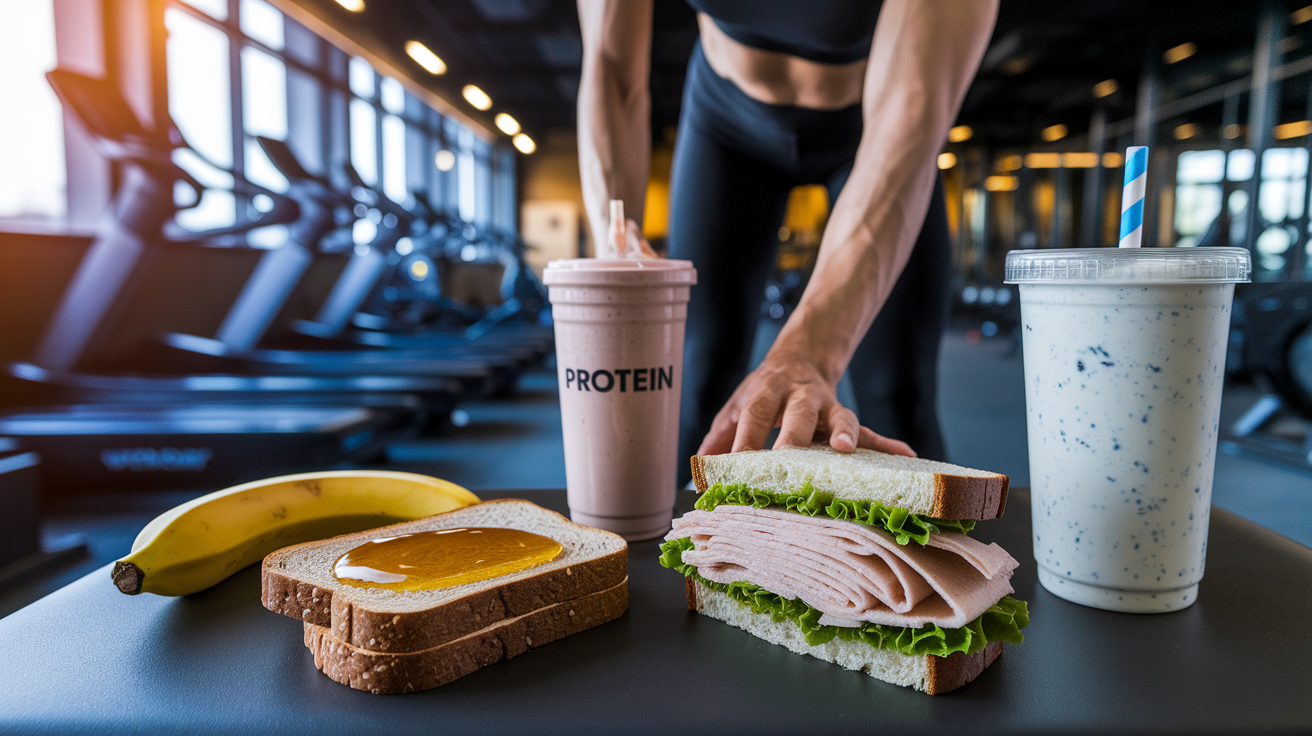
If you’re exercising within two hours of your last meal, you probably have enough stored energy to get through a moderate session without extra fuel. For longer or more intense workouts, a small snack eaten thirty to sixty minutes beforehand can top off your glycogen and keep performance steady. Something easy to digest like a banana, a slice of toast with honey, or a few rice cakes works well.
After you finish, your muscles are primed to absorb nutrients and rebuild. Aim to eat within one to two hours, combining protein to repair tissue and carbohydrates to refill glycogen stores. A post‑workout smoothie with protein powder, a banana, and a cup of milk hits both targets. So does a turkey sandwich on whole‑grain bread or Greek yogurt with granola and berries. The exact amounts depend on workout intensity and your overall calorie needs, but a twenty‑ to thirty‑gram protein serving and thirty to sixty grams of carbohydrates is a good starting point for most people.
| Timing | Recommended Foods |
|---|---|
| 1–2 hours before workout | Oatmeal with berries; whole‑grain toast with peanut butter; small smoothie with banana and protein powder |
| 30–60 minutes before workout | Banana; rice cakes; slice of toast with honey; energy bar with simple ingredients |
| Within 1 hour after workout | Grilled chicken and sweet potato; protein shake with fruit; Greek yogurt with granola |
| 1–2 hours after workout | Turkey sandwich on whole grain; salmon with quinoa and vegetables; tofu stir‑fry with brown rice |
Adjusting Your Eating Schedule to Fit Your Lifestyle

Consistency beats perfection when it comes to meal timing. If your workday changes from week to week, pick one or two anchor meals (breakfast and lunch, for example) and keep those times steady. Everything else can flex around meetings, commutes, or childcare without derailing your energy as long as you don’t skip the anchors or let gaps stretch past five hours.
Travel, shift work, and irregular schedules require a little more planning but the same principles apply. Pack portable snacks like nut butter packets, protein bars, cheese sticks, or trail mix so you’re never stuck relying on vending machines or skipping a meal entirely. If you’re crossing time zones, start shifting your eating window a day or two before you leave to ease the transition. Shift workers should eat relative to their wake time, not the clock. Space meals every three to four hours from the moment they get up, whether that’s six in the morning or six at night.
The goal isn’t rigid timing down to the minute. It’s creating a pattern your body can rely on so hunger cues, energy levels, and digestion stay predictable. Some days you’ll eat breakfast at seven, other days at eight. That’s fine. What matters is that you eat it, that it’s balanced, and that your next meal or snack follows a few hours later without long unpredictable gaps that leave you scrambling or overeating.
Common Meal Timing Mistakes That Drain Energy
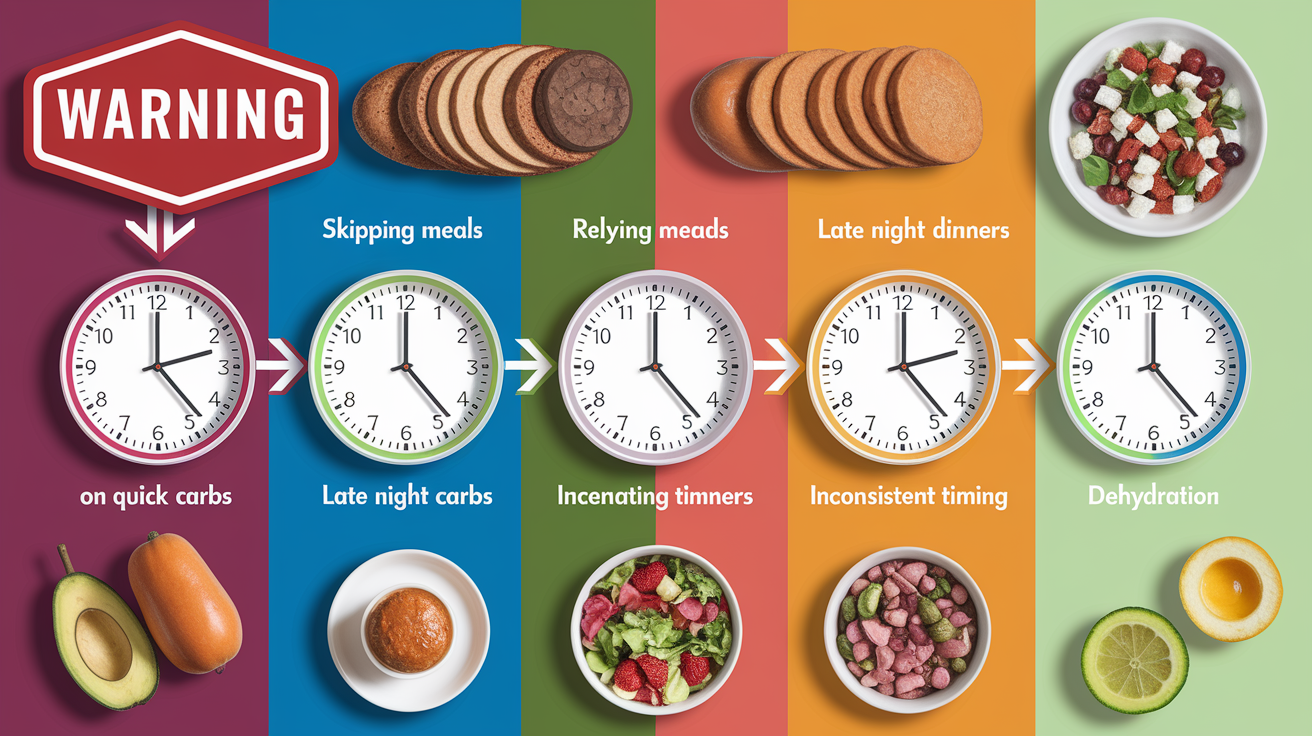
Small timing errors add up quickly, especially when they become habits. Skipping breakfast to save time or calories usually backfires by mid‑morning when low blood sugar triggers cravings for quick carbs and caffeine. Waiting too long between meals (say going from lunch at noon to dinner at eight) sets you up for intense hunger, poor food choices, and overeating once you finally sit down.
Skipping meals – Missing breakfast or lunch lowers blood sugar, spikes stress hormones, and often leads to binge eating later.
Relying on quick carbs alone – A pastry or granola bar without protein or fat causes a fast spike and an even faster crash.
Eating your largest meal late at night – Heavy dinners after eight o’clock can disrupt sleep and leave you sluggish the next morning.
Inconsistent timing day to day – Eating breakfast at seven on Monday and ten on Tuesday confuses hunger signals and metabolism.
Confusing thirst or boredom with hunger – Reaching for snacks when you’re actually dehydrated or understimulated wastes energy and adds empty calories.
Going longer than five hours without food during the day – Long gaps increase cortisol, tank focus, and make portion control much harder at your next meal.
Fix these by setting alarms or calendar reminders for meal times until the pattern becomes automatic. Keep a water bottle at your desk and sip throughout the day so thirst doesn’t masquerade as hunger. Prep grab‑and‑go options (hard‑boiled eggs, cut vegetables with hummus, or pre‑portioned nuts) so you’re never more than a few minutes away from balanced fuel. Consistency and a little planning turn timing mistakes into steady, reliable energy.
Final Words
Start by spacing meals every 3–4 hours and pairing protein, carbs, and healthy fat to steady blood sugar. You learned quick rules, sample daily schedules for different routines, go-to foods for slow-release energy, and how to time pre/post workouts.
Pick one small change this week—like eating within 1–2 hours of waking—and use the eating schedule for sustained energy as your daily guide. You’ve got this.
FAQ
Q: How often should I eat to keep my energy steady?
A: The best eating frequency to keep energy steady is about every 3–4 hours, which helps steady blood sugar; aim to include protein, fiber, and healthy fats at each meal to avoid crashes.
Q: Do I need to eat right after waking?
A: Eating within 1–2 hours of waking helps set your day’s energy rhythm; a small meal with protein and some complex carbs steadies mood and appetite and supports wake-up focus.
Q: What should I eat for lasting energy?
A: Foods that give lasting energy are slow-digesting choices like oats, legumes, nuts, lean proteins, high-fiber fruits, vegetables, and healthy fats; they prevent quick spikes and mid-day crashes.
Q: How should I time meals before and after workouts?
A: For workouts, eat carbohydrates about 1–2 hours beforehand for fuel, and have protein within 1–2 hours after to support recovery; small balanced snacks work for shorter sessions.
Q: Are snacks helpful or do they cause crashes?
A: Snacks can prevent energy dips when they’re small and balanced; pair protein with fiber or healthy fat and avoid sugary, pure-carb choices that create quick spikes and later crashes.
Q: How do I adjust meal timing for shift work or travel?
A: Adjusting meal timing for shifts or travel means keeping at least one anchor meal at a similar time, packing portable balanced snacks, and spacing meals about 3–4 hours when possible.
Q: What common meal timing mistakes drain energy?
A: Common energy-draining mistakes include skipping meals, long gaps between eating, relying on simple sugars, large late-night meals, inconsistent timing, and poor pre- or post-workout fueling.
Q: How can I start changing my meal timing this week?
A: Start by eating within 1–2 hours of waking, aim for 3–4 hour meal spacing, include protein and fiber each time, pack one healthy snack, and track how you feel for three days.
Q: Will eating more often make me gain weight?
A: Eating more often won’t automatically cause weight gain; total calories matter most. Regular balanced meals can control appetite and prevent overeating at later meals.